Category: Photo-journalism

  • Niger State ARC-P: Bridging the Healthcare Gap for Vulnerable Children Abubakar Sadiq Mustapha

    Niger State ARC-P: Bridging the Healthcare Gap for Vulnerable Children Abubakar Sadiq Mustapha

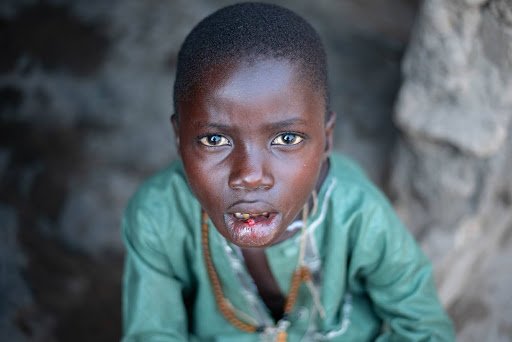
    Fatima Yusuf was in her room which she shared with her husband and five children and was getting ready to go to Kpakungu Junction in Minna, Niger State, where she begs for alms, when her children rushed into the room, crying and shouting. They informed her that her son, Hussaini Yusuf, had fallen from a tree and injured his lip. Fatima quickly rushed out of the room, her mind racing with worry. Having lost two of her seven children in the past, she couldn’t bear the thought of losing another. When Fatima met her son outside, his clothes were soaked in blood, and a sharp millet stem had pierced through his lip. She removed the stem and rushed him home, but due to financial constraints, she couldn’t take him to the clinic. Instead, she applied charcoal and local herbs to the wound, which marked the beginning of her nightmares. The wound refused to heal, even after a year, and Fatima and her husband’s financial situation remained dire; their income from begging barely covered food and rent, and seeking medical attention seemed like an unaffordable luxury.

    My husband and I are beggars, and we were unable to afford medical care for our son when he fell and injured his lip. I was worried when the wound failed to heal even after a year” Fatima Yusuf’s voice filled with concern as she narrated.

    Help Arrives

    In November 2024, Fatima was excited when she learned that the Niger State At-Risk Children Program, led by Aisha Umar Tafida, was visiting her neighborhood of Barkin Sale, Minna, Niger. The program, an initiative under the Niger State Ministry of Budget and Planning, aimed to rescue vulnerable children from the streets and provide them with free medical care, education and skills. Seizing the opportunity, she rushed Hussaini to the Barkin Sale Primary School, Minna, where the enrollment was taking place. Since then, Hussaini has received access to free medical care,

    “I heard rumors that a team would be visiting our neighborhood to register vulnerable children, providing not only education but also free medical care and skills training. I was skeptical, having heard empty promises before from many organizations. That morning, we made our way to Barkin Sale Primary School, and to my surprise, Hussaini was registered, and his treatment began immediately” Fatima Yusuf’s face lit up with a smile as she recalled. 

    Hussaini Yusuf, accompanied by his mother Fatima Yusuf, and siblings, on their way to visit the Primary Health Care Center in Kpakungu.

    Primary Health Care Center Kpakungu, Minna Niger state.

    Hussaini Yusuf, 7 years old, a beneficiary of the ARC-P, His Mother, Fatima Yusuf, and his siblings waiting for a nurse to attend to him at  the Primary Health Care Center Kpakungu

    Hussaini Yusuf’s treatment record book

    “I heard rumors that a team would be visiting our neighborhood to register vulnerable children, providing not only education but also free medical care and skills training. I was skeptical, having heard empty promises before from many organizations. That morning, we made our way to Barkin Sale Primary School, and to my surprise, Hussaini was registered, and his treatment began immediately” Fatima Yusuf’s face lit up with a smile as she recalled. 

    Hussaini Yusuf, 7 years old, a beneficiary of the ARC-P, receiving care from Nurse Fatima Dokochi, a staff of Primary Health Care Center Kpakungu, Minna Niger state.

    Hussaini Yusuf, 7 years old, a beneficiary of the ARC-P, receiving care from Nurse Fatima Dokochi, a staff of Primary Health Care Center Kpakungu, Minna Niger state.

    Before ARC-P’s intervention, Hussaini Yusuf endured pain, which made eating challenging. Even the slightest irritation, such as a speck of pepper entering the wound, would intensify his agony.

    “I used to feel pain and struggle to eat, but since I started treatment, I’m feeling much better,” Hussaini shared with a smile.

    HelpMopping Up Streets, Bringing Children Into School
    and Learning Hubs

    A 2023 UNICEF report revealed that about 42% of female children and 39% of male children in Niger State are out of school. This is an indication that there are tens of thousands of children missing out on education and may be potential recruits for street gangs within the Minna metropolis involved in crime and violence. The Niger State At-Risk Children Program adopted an inclusive strategy, partnering with key Ministries, Departments, and Agencies (MDAs) that are key to the implementation of the ARC program, this includes the Ministry of Health, Ministry of Basic and Secondary Education, Ministry of Agriculture and its sister agencies, Ministry for Religious Affairs, Ministry of Sport, SUBEB, FOMWAN, CAN, community and traditional leaders, and the CSO were able to register more than a thousand at-risk children in 3 pilot Local Government areas: Paikoro, Bosso and Chanchaga. After an intensive trauma and psychosocial evaluation, these children are enrolled in school and various learning hubs created by ARC-P providing free access to education. In the coming months, learning activities will commence at the hubs with focus on basic literacy and numeracy, home gardening, climate change awareness, health and nutrition, sports and wellness as well as guidance and counseling. 

    When I resumed office in 2024, we trained 20 facilitators across our 11 hubs in our 3 pilot LGAs in areas like basic literacy and numeracy, digital skills, home gardening and climate change, Health and nutrition, sports, and guidance and counseling. To identify vulnerable children 

    we got data on vulnerable households from the State Operating and Coordination Unit (SOCU), we did pre-intervention visits to communities in Paikoro, Bosso, and Chanchaga LGAs, and also through our youth facilitators who are from the communities. Through advocacy visits and community awareness campaigns, we have engaged with stakeholders and the results are huge. One of it is that we were able to get 1081 vulnerable children covered freely under the Niger State Contributory Health Agency Program (Nicare). By the second quarter of 2025, it is our hope to expand the number of hubs as well as the facilitators as we enroll more beneficiaries InshaAllah” Aisha Umar Tafida, the Niger State  ARC-P coordinator and team lead explained.

    Aisha Umar Tafida, the Niger State  ARC-P coordinator

    Grace Okpabi, Deputy Director at the Federal Ministry of Budget and Economic Planning, poses with staff from Niger State’s ARC-P team and 20 trained ARC-P Facilitators during the launch of the youth facilitator training program in Minna, Niger state.

    Empowering
    At-Risk Children’s Parents
    Through Incentivization

    Aisha Umar Tafida, Coordinator of the Niger State At-Risk Children Program (ARC-P), identifies economic vulnerability and poverty as the root causes of children’s vulnerability. To address this, ARC-P has implemented an incentivization program to empower parents of at-risk children.

    We recognize that the vulnerability of parents is a contributor to the vulnerability of their children,” Aisha Umar Tafida explained. “Through incentivization, we aim to provide parents with a means of survival and economic stability. Our program focuses on sustainable initiatives such as animal husbandry and home gardening.

    This corner of the room serves as the sleeping space of Fatima Yusuf, her husband, and her children.

    Some Items in Fatima Yusuf’s room.

    In February Hussini is expected to start school at the Barkin Sale Primary School, just a short walk from his home. With education, he may break free from the cycle of poverty and begging that has defined his parent’s lives.

    Some Items in Fatima Yusuf’s room.

  • Plastic Waste For Candy

    Plastic Waste For Candy

    Plastic Waste For Candy 

    Abdullahi Kano parked his waste cart by the side of the road, he pressed the air horn mock in his hand, and the popping sounds filled the air: Popopi! Popopi!. The sound is infectious, and soon, children start to emerge from their homes carrying plastic bottles. They giggled and smiled, drawn to the playful noise they gathered around him, one after another they handed him plastic bottles of different beverage companies, and in return, he handed them Alewan Mecca, a pinky local candy in northern Nigeria.  

    Abdullahi is a plastic and metal waste collector who left his home in Rijiyar Lemu in Kano State Northwest Nigeria for Lapai, in Niger State North Central Nigeria five years ago when he realized the economic opportunities in waste recycling. 

    “I left Kano after a friend, who owns a recycling business in Lapai, informed me about the opportunities in the sector. Since arriving in Lapai, there has been a change in my financial life,” Abdullahi said.

    Abdullahi Kano, a plastic and waste collector, with his waste cart parked by the side of the road waiting for the children. 
    Air horn mock
    A group of children gathered around Abdullahi Kano to hand out their plastic bottles.

     Luring Children With Candy 

    In Lapai, Abdullahi roams from one street to another, using the popopi sound of his air horn to inform the children of his arrival and the Alewan Mecca to lure them into helping him collect plastic waste.

    “As a waste collector, I exchange candies with children for plastic bottles, which I then sell to recycling companies in Ikorodu, Lagos State, or Sabon Wuse, Niger State. These companies transform the waste into new products,” he explained. “When I arrive in a neighborhood, I simply press my air horn, and children come out with plastic bottles in exchange for Alewan Mecca.”

    Abdullahi Kano, a plastic and waste collector, collects plastic bottles from a girl in exchange for candy. 
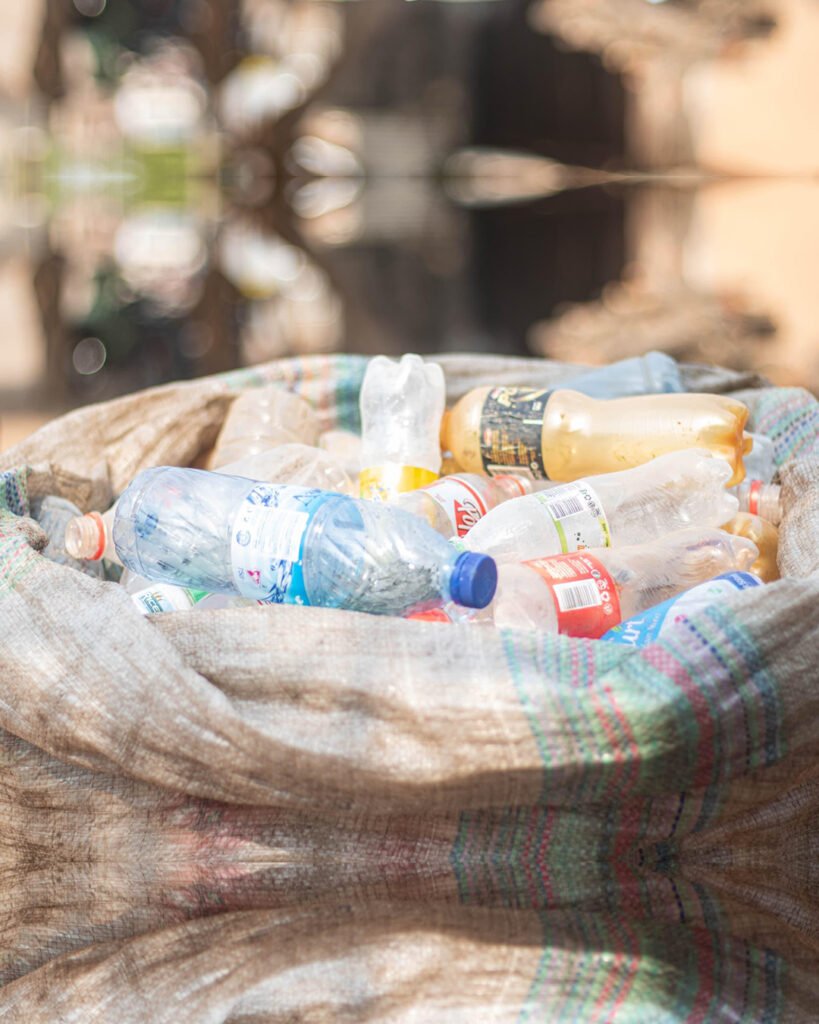
    Plastic bottles collected by Abdullahi 

    The children on Ibrahim Road, Lapai, Niger State, know the days Abdullahi usually comes and before then, they would have collected plenty of bottles from their homes or the neighborhood. Even when they forget, the sound of his air horn reminds them.

    “As soon as we hear the sound, we rush outside to meet him with our bottles,” Yukubu Umar, one of the children who exchanges plastic bottles for candy, mentioned. “He usually comes before we head to Islamiyah. Sometimes, I even collect bottles from the drainage where people dump them.”

    Abdullahi Kano hands children candy from a sack. 
    Yakubu Umar holding a candy after exchange with plastic bottles 
    Another child holds the candy after exchange with plastic bottles 
    Aisha Halihu waits to exchange a plastic bottle for candy. 
    Children posing with their candy after exchanging it with plastic bottles.

    Removing One Tonne of Plastic Bottles From the Environment Monthly 

    According to Shop Without Plastic (2023), approximately 1.6 billion plastic bottles are produced daily, polluting the environment throughout their lifecycle. Improper disposal of these bottles is a leading cause of marine wildlife deaths and contributes substantially to air pollution. Abdallahi Kano collects one tonne of plastic bottle waste monthly, equivalent to 74,074 plastic bottles of 50cl, by incentivizing children with candies to help remove these bottles from the environment.

    “It takes me a month to collect one tonne of plastic bottle waste, as they aren’t as heavy as metal waste. I sell a kilogram of bottle plastic waste for between ₦120-₦150, while shoes and other types of plastic waste fetch between ₦150-₦170. Now, I sell them at Sabon Wuse”

    A child hands Abdullahi plastic bottles for exchange with candy

     Abdullahi’s collection efforts extend beyond plastic bottles but include shoes and other household items. However, for these more valuable items, he pays the children in cash instead of candies. 

    “For heavy plastics, I pay with money because most of these items, like shoes, belong to the children’s mothers,” Abdullahi explained, as he carefully inspected a pair of shoes brought  by one of the children.

    shoe plastic waste 
    A boy hands Abdullahi an Old Plastic jar
    A boy carries a basket filled with old household items of plastic. 

    Unknown to Abdullahi Kano, his endeavor of collecting plastic waste not only earns him a living but also contributes to saving the world’s biodiversity from the impacts of plastic pollution.

  • Niger State ARC-P: Bridging the Healthcare Gap for Vulnerable Children Abubakar Sadiq Mustapha

    Niger State ARC-P: Bridging the Healthcare Gap for Vulnerable Children Abubakar Sadiq Mustapha

    Fatima Yusuf was in her room which she shared with her husband and five children and was getting ready to go to Kpakungu Junction in Minna, Niger State, where she begs for alms, when her children rushed into the room, crying and shouting. They informed her that her son, Hussaini Yusuf, had fallen from a tree and injured his lip. Fatima quickly rushed out of the room, her mind racing with worry. Having lost two of her seven children in the past, she couldn’t bear the thought of losing another. When Fatima met her son outside, his clothes were soaked in blood, and a sharp millet stem had pierced through his lip. She removed the stem and rushed him home, but due to financial constraints, she couldn’t take him to the clinic. Instead, she applied charcoal and local herbs to the wound, which marked the beginning of her nightmares. The wound refused to heal, even after a year, and Fatima and her husband’s financial situation remained dire; their income from begging barely covered food and rent, and seeking medical attention seemed like an unaffordable luxury.

    My husband and I are beggars, and we were unable to afford medical care for our son when he fell and injured his lip. I was worried when the wound failed to heal even after a year” Fatima Yusuf’s voice filled with concern as she narrated.

    Help Arrives

    In November 2024, Fatima was excited when she learned that the Niger State At-Risk Children Program, led by Aisha Umar Tafida, was visiting her neighborhood of Barkin Sale, Minna, Niger. The program, an initiative under the Niger State Ministry of Budget and Planning, aimed to rescue vulnerable children from the streets and provide them with free medical care, education and skills. Seizing the opportunity, she rushed Hussaini to the Barkin Sale Primary School, Minna, where the enrollment was taking place. Since then, Hussaini has received access to free medical care,

    “I heard rumors that a team would be visiting our neighborhood to register vulnerable children, providing not only education but also free medical care and skills training. I was skeptical, having heard empty promises before from many organizations. That morning, we made our way to Barkin Sale Primary School, and to my surprise, Hussaini was registered, and his treatment began immediately” Fatima Yusuf’s face lit up with a smile as she recalled. 

    Hussaini Yusuf, accompanied by his mother Fatima Yusuf, and siblings, on their way to visit the Primary Health Care Center in Kpakungu.

    Primary Health Care Center Kpakungu, Minna Niger state.

    Hussaini Yusuf, 7 years old, a beneficiary of the ARC-P, His Mother, Fatima Yusuf, and his siblings waiting for a nurse to attend to him at  the Primary Health Care Center Kpakungu

    Hussaini Yusuf’s treatment record book

    “I heard rumors that a team would be visiting our neighborhood to register vulnerable children, providing not only education but also free medical care and skills training. I was skeptical, having heard empty promises before from many organizations. That morning, we made our way to Barkin Sale Primary School, and to my surprise, Hussaini was registered, and his treatment began immediately” Fatima Yusuf’s face lit up with a smile as she recalled. 

    Hussaini Yusuf, 7 years old, a beneficiary of the ARC-P, receiving care from Nurse Fatima Dokochi, a staff of Primary Health Care Center Kpakungu, Minna Niger state.

    Hussaini Yusuf, 7 years old, a beneficiary of the ARC-P, receiving care from Nurse Fatima Dokochi, a staff of Primary Health Care Center Kpakungu, Minna Niger state.

    Before ARC-P’s intervention, Hussaini Yusuf endured pain, which made eating challenging. Even the slightest irritation, such as a speck of pepper entering the wound, would intensify his agony.

    “I used to feel pain and struggle to eat, but since I started treatment, I’m feeling much better,” Hussaini shared with a smile.

    HelpMopping Up Streets, Bringing Children Into School
    and Learning Hubs

    A 2023 UNICEF report revealed that about 42% of female children and 39% of male children in Niger State are out of school. This is an indication that there are tens of thousands of children missing out on education and may be potential recruits for street gangs within the Minna metropolis involved in crime and violence. The Niger State At-Risk Children Program adopted an inclusive strategy, partnering with key Ministries, Departments, and Agencies (MDAs) that are key to the implementation of the ARC program, this includes the Ministry of Health, Ministry of Basic and Secondary Education, Ministry of Agriculture and its sister agencies, Ministry for Religious Affairs, Ministry of Sport, SUBEB, FOMWAN, CAN, community and traditional leaders, and the CSO were able to register more than a thousand at-risk children in 3 pilot Local Government areas: Paikoro, Bosso and Chanchaga. After an intensive trauma and psychosocial evaluation, these children are enrolled in school and various learning hubs created by ARC-P providing free access to education. In the coming months, learning activities will commence at the hubs with focus on basic literacy and numeracy, home gardening, climate change awareness, health and nutrition, sports and wellness as well as guidance and counseling. 

    When I resumed office in 2024, we trained 20 facilitators across our 11 hubs in our 3 pilot LGAs in areas like basic literacy and numeracy, digital skills, home gardening and climate change, Health and nutrition, sports, and guidance and counseling. To identify vulnerable children 

    we got data on vulnerable households from the State Operating and Coordination Unit (SOCU), we did pre-intervention visits to communities in Paikoro, Bosso, and Chanchaga LGAs, and also through our youth facilitators who are from the communities. Through advocacy visits and community awareness campaigns, we have engaged with stakeholders and the results are huge. One of it is that we were able to get 1081 vulnerable children covered freely under the Niger State Contributory Health Agency Program (Nicare). By the second quarter of 2025, it is our hope to expand the number of hubs as well as the facilitators as we enroll more beneficiaries InshaAllah” Aisha Umar Tafida, the Niger State  ARC-P coordinator and team lead explained.

    Aisha Umar Tafida, the Niger State  ARC-P coordinator

    Grace Okpabi, Deputy Director at the Federal Ministry of Budget and Economic Planning, poses with staff from Niger State’s ARC-P team and 20 trained ARC-P Facilitators during the launch of the youth facilitator training program in Minna, Niger state.

    Empowering
    At-Risk Children’s Parents
    Through Incentivization

    Aisha Umar Tafida, Coordinator of the Niger State At-Risk Children Program (ARC-P), identifies economic vulnerability and poverty as the root causes of children’s vulnerability. To address this, ARC-P has implemented an incentivization program to empower parents of at-risk children.

    We recognize that the vulnerability of parents is a contributor to the vulnerability of their children,” Aisha Umar Tafida explained. “Through incentivization, we aim to provide parents with a means of survival and economic stability. Our program focuses on sustainable initiatives such as animal husbandry and home gardening.

    This corner of the room serves as the sleeping space of Fatima Yusuf, her husband, and her children.

    Some Items in Fatima Yusuf’s room.

    In February Hussini is expected to start school at the Barkin Sale Primary School, just a short walk from his home. With education, he may break free from the cycle of poverty and begging that has defined his parent’s lives.

    Some Items in Fatima Yusuf’s room.