Nnam River has, however, become an agent of death and poverty following its pollution by coal miners at Awha, a neighbouring community where the river passes. The company, Rathings, is alleged to have channelled waste from its coal site to the river, hence making the water toxic for human use and farming activities. Ben AROH …
By Chinedu Aroh
The Nnam River has been the sole source of water for over 15,000 inhabitants of the Mgbagbu-Owa Community in Ezeagu LGA of Enugu State. The arteries of the river connect all the villages of the community. The natives rely on it for drinking, domestic uses, and irrigation. It also provides a fishing career for the residents.
Nnam River has, however, become an agent of death and poverty following its pollution by coal miners at Awha, a neighbouring community where the river passes. The company, Rathings, is alleged to have channelled waste from its coal site to the river, hence making the water toxic for human use and farming activities. Ben AROH investigates how the pollution affects the inhabitants.
Our occupation is destroyed, Mrs Egwuatu, Abacha Seller
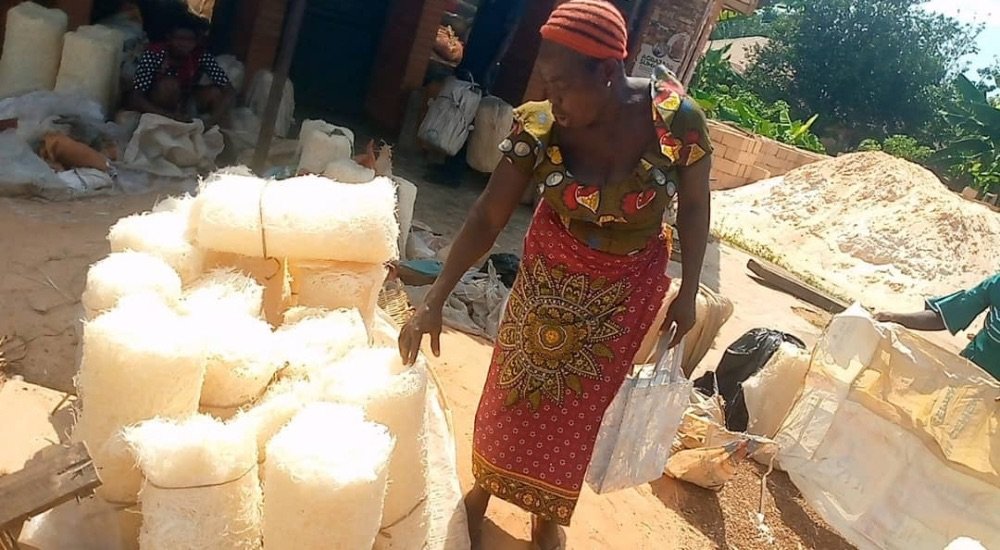
Mrs Loveth Egwuatu stands helplessly at Orie Mgbagbu-Owa, a popular market where abacha is sold in Ezeagu. She complains of poor patronage of her products due to the poor quality caused by the Nnam River’s water toxicity.
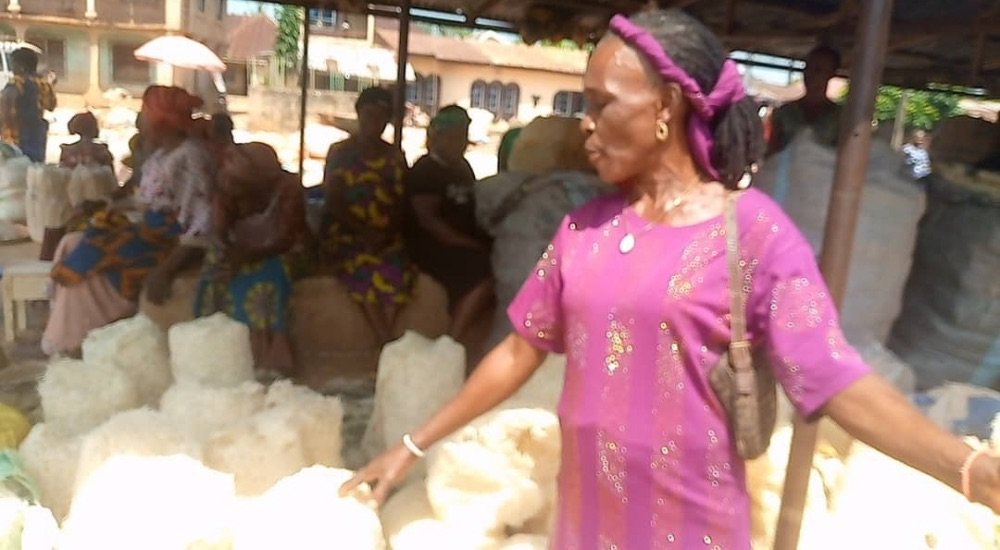
“I have been producing and selling abacha since my childhood,” Mrs Egwuatu says. “From the proceeds, I train my children and solve our family problems. But all is gone in the past months. Water from the Nnam River is now polluted. Coal miners at Awha channel their waste to the Nnam River. You can see that my abacha and others here are not looking good. Buyers have abandoned us. It has collapsed our occupation.”
Mrs Egwuatu explains that abacha is processed in water. “We wash them and set them to dry. Because of the waste being channelled to the Nnam River, when we use the water to wash our abacha, they lose their original colours and taste. We have endured this enough. The coal miners should channel their waste to other places, not the Nnam River.”
The plight of Mrs Egwuatu is shared by Mrs Elizabeth Aniamalu, another native. “I am from Ozom Mgbagbu-Owa,” she says. “Our abacha gets rotten after being washed with water from Nnam. Traders who buy would return to abuse us for faking Abacha. They won’t come back again. It is our only source of livelihood. Our water is polluted. At times it will become blackened and heavy.”
Mrs Aniamalu recalls when abacha produced at Mgbagbu-Owa was highly sought after. “Time was when you didn’t see space here because of the influx of Abacha major dealers coming from far and near. This market is called Ozom Mgbagbu-Owa Orie market. It is where local farmers market their products. It holds every four days. It attracts traders from Onitsha, Port-Harcourt, Enugu, Aba and even Abuja and Lagos. Our people use water sourced from the Nnam River to process abacha. The quality has been destroyed by this company at Awha. Our abacha is being rejected by buyers.”
Strange illnesses are being reported in Mgbagbowa, the Traditional Ruler
Chief Tony Emeka Okoye is the regent of Ozom Mgbagbu-Owa Kingdom. He says if urgent measures are not taken by relevant agencies, the people of his community, who are mainly farmers, might face health risks.
“It started about six months ago,” narrates Chief Okoye. “It is the major source of drinking water for the entire community. There are about 15,000 people in our community. We are now at health risks because our natural water has become impure. It can damage human organs. We have made appeals to the state government over this lingering issue. We shall continue to cry until something happens.”
He laments that despite the impurities of the river, the natives still source water from it. “As I speak,” says Chief Okoye, “My people are still drinking from the contaminated river. Our people are getting sick here and there. Many can’t afford to buy bottled water or ‘pure’ water daily. We don’t know what is being channelled for use. We are afraid of our health.”
Chief Okoye said the Abacha occupation of the natives is under threat. “It is in this river that our people wash abacha during processing. The pollution has contaminated our water, thus making our abacha rot shortly after washing. Traders no longer come to buy abacha from our people.”
Chief Okoye says the same toll is on the natives who are fishermen. “Very often you see corpses of fish floating on the sea due to water contamination.” He regretted that the Nnam River, which once served as a blessing to the people of the Mgbagbu-Owa community has been turned into a disaster by the mining company. “Nnam River has been there for a long time,” notes Okoye. “Our ancestors discovered the river from time immemorial, and have since then been preserving it for the benefit of the inhabitants. In fact, it is this river that attracted our ancestors to migrate from Imezi Owa, our ancestral home, to this place. The Nnam River has also attracted many non-native farmers to our community. Nnam River has been desecrated, and needs urgent cleansing.”
Okoye however admitted that his community has not formally informed the management of Rathings about the pollution. “I don’t know the name of the company,” he says. “But the government is aware of their mining activities. I earlier thought they were illegal. The truth is that the mining site is in another community called Awha. We are neighbours.”
They are pushing us to the wall, Community Leader
Engr Vitalis Ike is the chairman, Ogwofia Ozom Mgbagbu-Owa. He warns that the development might provoke the people of his community, especially the youths, who have perceived the reluctance of the mining company to correct the anomaly.
“We are law-abiding citizens,” Engr. Ike said. “We don’t take laws into our hands. It is not in our character to be violent. Our youths once threatened to destroy the equipment of the mining company to draw attention to our plight. But we have been restraining them. We know the implications of restiveness. We are wondering if these miners are doing legal work. We also wonder if they did their environmental impact assessment.”
According to him, nothing survives in the Nnam River anymore because of the pollution. “Our people also irrigate their farms from that river for all-year farming,” Ike states, adding that, “Those activities are now gone. Where will they eat and get resources to train their children?”
Some of the elders of the community, including Hyacinth Nwude, begged the state government and other relevant agencies to intervene. Quoting Nwude, “I beg the government to come to our rescue. Nnam is the only source of drinking water in Mgbagbu-Owa. The pollution is bad. Our fish and abacha are gone. The government should regulate these miners. Some people’s occupation is threatened. This community pays its dues to the government. This is the time for the state to come to our rescue. We can no longer help ourselves.”
It’s a spurious allegation, General Manager, Rathings
THE WHISTLER observed that two companies are involved in the business: Afri Metals Trading Company Ltd is the buyer of the coal while Rathings is the title-holder.
Mr Abdulazeez Olowokere is the General Manager, Rathings. He claims no water pollution has been reported to his company from the Mgbagbu-Owa people. “This Mgbagbu-Owa story is strange because we don’t know them,” Olowokere states. “It is only when one makes a case that we know how to alleviate the problem. They have never written to us on that. They know where our company is. We do receive letters from community stakeholders. Some demand road repairs, some boreholes, and we do intervene. We are not aware of such pollution.”
Olowokere said he is only familiar with Awha, the host community. “I didn’t know that there was another community aside from Awha. Let Mgbagbu_Owa people write to us officially. We will take our environmental experts and representatives of our supervising parastatals to evaluate their claims and determine what should be done. We have our workers who monitor the water every morning. Whenever there are changes, we address them. Mgbagbu_Owa never called our attention. The allegation is spurious.”
He claims that Rathings is a reputable mining company, and “among the best two operating in Enugu State”. In his words, “Rathings has the mining lease. We are the number one. We are licensed by the federal government and the state. Federal and state agencies monitor our activities. We try to resolve all issues to avoid problems. This Mgbagbu-Owa, I never heard anything like that before. Ask them if they had ever informed us.”
He however, admits reports of water pollution, though not from the Mgbagbu-Owa community. “We do send our experts to carry out inquiries,” he explains. “We have people mandated to bring water samples to us every morning. Is Mgbagbu-Owa under Awha?” he asks, noting that, “It is not enough for them to just make allegations in the media.”
The GM’s account slightly differs from the Manager, Human Resources of Afri Metals, Lawal Ahmed. “The pollution they talk about is only during the beginning of rainy seasons when rains flush some waste to the river,” says Lawal. “It changes the colour of the river, but it does not last for long. We have some people who bring us water on a daily basis for analysis. We do inform the natives that because of the mining, the water might change colours but it won’t last for long.”
He explained that following complaints by the natives, the government of Enugu State earlier directed his company to drill some boreholes in the affected communities. “We did,” he said. “You can verify from the people of Aguobu. We built four boreholes at Iwollo. They are solar-powered. At Awha, we are building two, one has been completed.”
He recalled that in July this year, there was a heavy downpour, which washed some impurities from the mining site into the river. “We are not deliberately polluting the water,” according to him. “We are abreast of the rule of engagement. The locals exaggerate it.”
Enugu State government keeps mum
A request for the position of the state government directed to Enugu State Commissioner of Environment under the provisions of the Freedom of Information Law, duly received on 24/11/2025, was not responded to. An insider in the ministry, on condition of anonymity, however, said “big people in the state are behind the mining activities in Ezeagu. The natives carry out protests from time to time, but the company is legitimate and highly protected by the government.”
Add-on
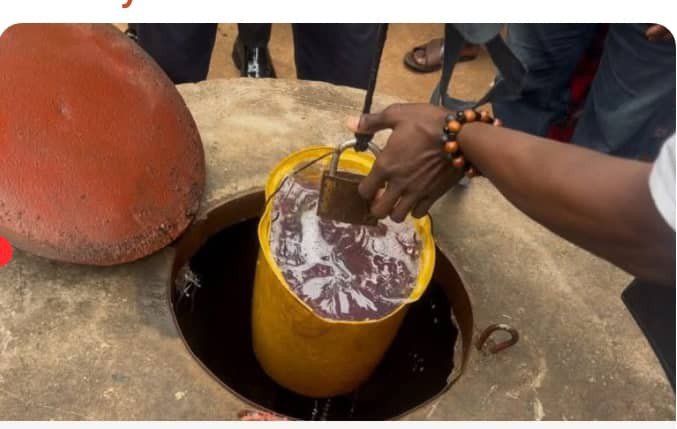
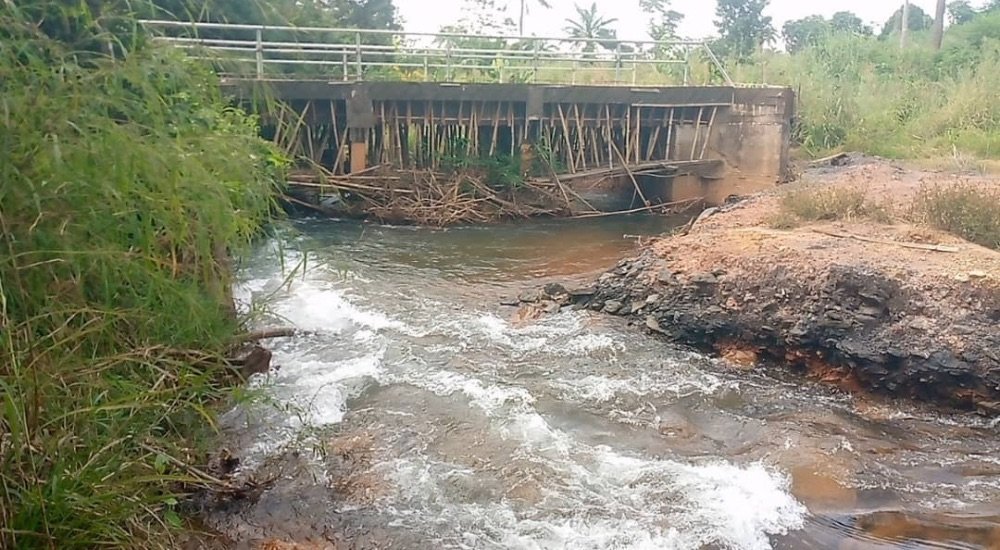
An assessment of Nnam River by this reporter showed the presence of black and brownish substances in it. The impurities were spotted at all the visited wings of the river that runs for kilometres. Some locations hitherto used for fishing were also abandoned, an indication that the fish might have been killed or forced to relocate.
This report was produced with support from Civic Media Lab under its Grassroot News Project (GNP).