Tag: Governance

Governance

  • From Lifeline to Liability: How Oil Pollution Ruined a Community’s 20-Year-Old Water Well.

    From Lifeline to Liability: How Oil Pollution Ruined a Community’s 20-Year-Old Water Well.

    By Omowumi Abraham

    The residents of Omikunle, Yemetu, in the Ibadan North Local Government Area of Oyo State, have cried out over the government’s failure to deliver on a promised borehole after their only reliable source of water became contaminated.
    Many residents have been waiting for a long time for the borehole, as they continue to suffer from a lack of potable water, essential for their daily survival in the community.

    “The government promised to provide a well, but we’ve not heard anything from them since then,” said a resident, Alhaja Falilatu Raji.

    “We want the government to help us build another well,” Ade Aderiyigbe in his statement, said this during a visit by this reporter to the community.

    HOW THE CRISIS BEGAN

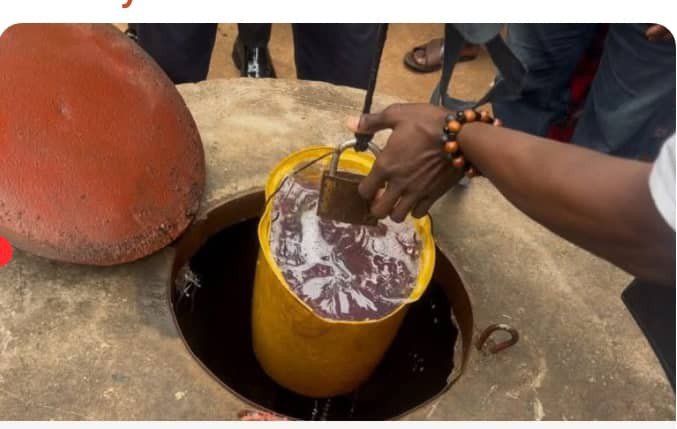
    On September 6, 2025, news spread about the discovery of crude oil in Yemetu. The Oyo State Police Command also confirmed a report at about 6:50 p.m. the same day, that an unusual liquid had appeared in a community well. Officers from the Yemetu Division arrived shortly after and discovered a thick, diesel-like substance inside the water source.

    As residents gathered around the well, some attempted to fetch the strange liquid, but the police cordoned off the area, while the Oyo State Ministry of Environment conducted tests confirming it was diesel, and not crude oil.

    As a temporary measure, the Oyo State Water Corporation supplied 5,000 liters of clean water to affected residents.

    However, what was once a hopeful assurance that clean water would soon return has turned into deep frustration, as months have passed without a single sign of progress and action.

    The affected well, co-owned by three wives in their 80s, who also now lack water supply, had served the community for more than two decades before suddenly turning oily and unsafe for use.

    One of the wives, and the spokesperson for the three women, Alhaja Falilatu Raji Faramade, narrated their ordeals despite government promises. She said, “We just woke up one morning to fetch water for ablution and discovered that our water had turned into something we could not comprehend (due to the oily substances). It was surprising, so we raised an alarm. It’s been 20 years since we drilled this well, and nothing of such had happened before.”

    Speaking of government intervention, the octogenarian said, “The government promised to provide a well, but we’ve not heard anything from them ever since. We had to start buying water at ₦200 per washing container, also known as Tub. That’s how we cook, bathe, feed, and do other necessary things that need water.”

    Alhaja Falilatu Raji Faramade

    Recounting their discomfort since the incident, Alhaja Falilatu said things have not been easy due to their old status. “The well, even though privately owned by us, serves the whole community. We used to cook with it, drink, bathe, and so on.  Now, the government instructed us not to drink it or use it for any purpose. They pumped out everything in the well, hoping to get fresh water, but the water remains contaminated.”

    The Nation newspaper had reported on the 17th of September that investigators under the directives of the Oyo state Ministry of the Environment also inspected a telephone mast located less than three meters from the affected well, but confirmed there was no evidence of linkage of the facility to the affected well.

    However, the owners of the mast have been directed by the ministry to provide a borehole for the community as part of their corporate social responsibility.

    As to whether the mast was being purportedly regarded as the source of the contamination, Alhaji Falilatu expressed uncertainty and appealed to the government for help.

    She said, “We cannot say for sure. Only the policemen and government agencies who came can confirm that. I don’t understand how it happened. The transformer beside it has been there for a long time and nothing happened until now. Getting water has been stressful for us at this age. The government should help us with a new borehole.”

    The elderly women, too frail to fetch water themselves, now depend on neighbors and daily purchases of water to survive, a burden made heavier by rising costs and limited finances available to them as they cannot work again to earn an income.

    NO ALTERNATIVE

    Sharing the events as they unfolded, a woman in her mid-40s, Ade Aderiyigbe, took a deep breath as she began to recount the events she witnessed.

    “The very day it happened; I went there to fetch water but was told some substances had been poured into the well. Surprisingly, when I tried, the first draw was like diesel, the same as the second draw.

    “Then we stopped and made a video of it that went viral and drew the attention of government agencies. When the government came, they drew out everything until it was dry. They also supplied us with a tank of water and promised to fix the well, but since then, we have not heard anything from them.”

    Recounting how useful the well had been and how difficult life has become without it, she said, “The well serves everyone in this community. We even drink from it, but now that there is no alternative, we’ve been left to fend for ourselves by buying water from another community. We want the government to help us build another well.”

    Another resident, Motunrayo Akanji, shared her ordeal, corroborating the accounts of other witnesses.

    “That day, we noticed that the surface of the water looked unusually shiny. Out of curiosity, we drew out what we thought was water, but it turned out to be pure diesel. The police later secured the well until government officials arrived. They evacuated the contaminated water and left it overnight to see if fresh water would emerge. Unfortunately, the new water that surfaced the next day was still contaminated. Since then, we have been left to our fate; the well has become completely useless.

    She further stressed that, “The owners of the well are elderly women who can no longer move around, so they depend on us, their neighbors’, to fetch water from another community not just for them but for ourselves as well

    Speaking of the effort of the Oyo State government, she said “After the government removed the oily substances and took it away, they supplied us with water that lasted only a day. Since then, we haven’t heard anything from them.”

    Another eyewitness, Kabirat Adebiyi, while expressing her distress, lamented the situation with clear frustration, saying, “It was like a miracle when we opened the well to fetch water that morning. We did not even know what it was, despite lots of speculations, until government agencies came and said it was diesel.

    “We thought it was the mast beside the well, but there is no link or connection between the mast and the well. Since then, we have not been able to use the water. Despite promises made by the government to build another well for us, nothing has been done.”

    “Please help us to do something about it. We are tired of buying water for our daily use. I sell tomatoes, and I need a lot of water to wash them before sale. Its not been easy,” she pleaded.

    A student, Olamide Faramade, who also is as a resident of the community, shared her ordeals during a brief interaction with this reporter.

    “The government promised to give us water, but we have not heard anything from them. They said the diesel was from the mast close to the well. They pumped out the content and left. It has been taking a toll on me in particular as a student because I have to buy water to cook and so on and I have no choice,”, she stated.

    According to Chapter II, Section 20 (Environmental Objectives) of the Federal Republic of Nigeria’s Constitution, “The State shall protect and improve the environment and safeguard the water, air and land, forest and wildlife of Nigeria.” This implies that the government is responsible for ensuring safe and adequate water resources.

    The Oyo State Water Corporation Edict (1977, amended 2006) also empowers the state government to provide potable water to residents.

    As the government-maintained silence on the stalled intervention, a call was placed to a top official in the state’s Ministry of Environment, who requested anonymity.

    In his brief response, he said: “I’m not permitted to speak on this matter, but as colleagues, I can tell you this: the crude-oil claim is a rumour. It appears someone may have poured something into the well; no crude oil was discovered. I’m also not aware that the government promised them another well. However, through the Ministry and the Oyo State Water Corporation, a water tanker was provided for the community’s use.”

    When asked if the mast owner had been directed to take responsibility for the well, as earlier reported by The Nation, he declined to respond, simply stating: “No comment.”

    When contacted, the Oyo State Commissioner of Information and Orientation, Prince Dotun Oyelade said he’s sure something is being done.

    Oyo State Commissioner of Information and Orientation, Prince Dotun Oyelade

    According to him, the government doesn’t promise something and does not fulfill it. So if it was claimed that crude oil was discovered and it was later disclaimed, not even that will stop the governor from fulfilling his promise if he had said so. “So, the only thing I can confirm for you is to seek an audience with the Ministry of Environment or Ruwassa, the people in charge of water in Oyo state, and I will do that presently. They are the only people that can confirm it. I’m sure something is being done.  I will confirm after my meetings today.  If the governor promises, the governor fulfills and that’s what he’s been doing for over six years.”

    In a separate interview with a water rights advocate, Gideon Adeyeni, he spoke about the contamination while sharing his experience in advocating for access to clean water.

    He said, “Based on my experience over the past years advocating for access to clean drinkable water, especially in marginalised communities, contamination, aside from privatisation (of public water assets) is another means through which communities are denied access to clean drinkable water.

    The water rights advocate noted it was the government’s responsibility while also highlighting the impact on the communities. He said, “Sometimes, as is the case here, contamination aids privatisation.  It is not uncommon to find communities where the underground water has been contaminated, usually with petroleum or some other chemicals, leaking through a poorly maintained or burst pipeline or storage.

    “Whichever way the underground water gets contaminated, it is the duty of the government to ensure that people have access to clean drinkable water by ensuring the prevention of such contamination or quick cleanup.

    “Unfortunately, the government and its agencies have been negligent in preventing or cleaning up such contamination, leaving many marginalised communities across the country without access to clean drinkable water for a long period of time.

    Adeyeni linked contamination to privatisation, calling for resistance to water injustice. “This often leads to a situation in which communities are left at the mercy of private water providers, indicating how contamination could aid privatisation in the denial of the right to clean drinkable water.

    “The denial of the right to clean drinkable water to any individual or community constitutes water injustice, and must be resisted. The way forward is for us to continue to demand water justice, that is, the fulfillment of the right to clean drinkable water for all, which means challenging water privatisation and calling out the government to prevent and clean up contamination, and thereby build the water justice movement.”

    An Environmental Health Officer, Daniel Akande, raised concerns from a professional standpoint. He said, “I must say that clean and safe water is a fundamental right, and continued exposure to petroleum-contaminated water can cause severe health challenges and environmental hazards. So, this needs urgent intervention.”

    Sharing his view on who should be taking the lead in addressing this issue, Akande said the government has a legal and moral responsibility to immediately provide a replacement borehole as promised, conduct proper remediation (risk assessment) of the polluted well, and hold whoever is responsible for the contamination accountable.

    He added, “The government directly or indirectly profits from the telecommunications that own the mast that is allegedly responsible for the pollution.”

    The Environmental Health Officer advised the community to take proactive measures by petitioning the Environmental Health Council of Nigeria or some climate change groups or NGOs, if the local or state government is already aware of the incident and takes no sustainable measures to address the menace.

    With the growing crisis of climate change, which has caused droughts in some communities, access to potable water continues to be a major concern for many, especially community dwellers who have always relied on local sources of water.

    ***************

    This report was produced with support from Civic Media Lab

  • Ondo Farmers Left Vulnerable Despite Agro-Ranger Promise

    Ondo Farmers Left Vulnerable Despite Agro-Ranger Promise

    During the campaign leading to the 2023 elections President Bola Tinubu, then the flag bearer of the ruling All Progressives Congress (APC) promised the establishment of the Agro- rangers to solve the incessant farmers-herders’ crises.

    Therefore when the Federal Government of Nigeria, in the middle of 2024, announced the deployment of 10,000 Agro Rangers, many of the farmers in Ondo State felt relieved.

    According to one of the president’s media aides Olusegun Dada who spoke via his X handle, the Agro Rangers are expected to solve the problem of incessant clashes and reduce food inflation

    “The Agro Rangers will, among other things, safeguard farmlands and protect farmers from escalating attacks, mediate conflicts between farmers and herders, and prevent malicious destruction of farmlands,” Dada said

    “While the food inflation crisis in the country is a function of many factors, insecurity has been a long-term challenge.
    “This collaboration between the NSCDC and the Federal Ministry of Agriculture and Food Security is expected to solve a major challenge faced by farmers across the country,” he said
    However, the relief was short-lived as kidnapping, killing of farmers, and clashes continued to happen in Ondo and Ekiti State.


    Death And Fear

    In August 2024, one Sunday Ayeni a native of Uba Akoko, Akoko Southwest Local Government was hacked to death by herdsmen.

    Ayeni who had previously complained about the destruction of his farms by herdsmen grazing their cattle on his farms and had received some compensation for his destroyed crop

    s, was murdered in cold blood by suspected herdsmen who were unhappy that he was compensated for his crops.

    Two weeks before the murder of Ayeni, Jatto Oluwaseyi another indigene of the community had also met his untimely death in the hands of suspected herders.

    A week after Ayeni’s murder 18 years 18-year-old Joshua Gbolahan was also killed by herdsmen in Ifira Akoko.

    On 7th of September 2024 less than a month after the 10,000 Agro Rangers were supposedly deployed across Nigeria three persons were killed by suspected herders of Fulani ancestry at Ago Oyinbo, Igbatoro Familugba Akure North Local Government.

    An unidentified commercial motorcyclist carrying one Sunday Oladele and a woman identified as Iya Samuel was waylaid and the three passengers were killed by the herdsmen.

    A female farmer at Dada camp who identified as Iya Bright told this reporter that kidnapping for ransom is very common.

    “ Farmers get kidnapped regularly here, some families had to sell their properties to get their loved ones freed. We don’t know who is next.”

    When Abiodun Akinwalere returned from Libya, where he had been trafficked by a man posing as a legitimate travel agent promising to give him passage to Europe, he decided to embrace Cocoa farming.

    “ My biggest regret is that I chose to invest in farming.I spent over 3 million on the farm in Ala Elefosan but I had to abandon it when herdsmen continued to set it ablaze repeatedly.

    “ Only the brave and armed moving in large numbers still go to that area to farm,many have been wounded and some persons have been killed too. I wished I had used my money to open a shop in town” he lamented.

    PC: People Gazette


    Amotekun And Hunters Bikers


    While the farmers go to farm scared, Ondo State owned Amotekun Corps was engaged in a superiority battle with the Ondo State branch of the Nigerian Hunter And Forest Security Services (NHFSS).

    A bill seeking the establishment of NHFSS has been before the federal parliament for over two years but has not received the needed approval.

    In a press statement released on the first day of October,the voluntary vigilante organisation accused the Amotekun Corps of taking the glory for their efforts without proper recognition for the organisation.

    “ Amotekun Corps Commander, Akogun Tunji Adeleye always claiming (sic)the credit of most successful operations without giving us adequate and correct mention.

    “Whenever he even wants to mention at all he just mention hunter, which is not supposed to be. The proper mention is Nigeria Hunters and Forest Security Service, NHFSS not just hunters because there are different groups claiming to be hunters nowadays, but NHFSS has been passed by the National Assembly.”

    The Organisation also claimed that many of the successes recorded by the Amotekun corps in Ondo State were the product of the organisation’s efforts.

    “I want to state that men of Nigeria Hunters and Forest Security Service carried out operations in Familugba forest and succeeded by nabbing kidnapping suspects and handed them over to Amotekun Corps.

    “Precisely last week, our men in Owo division rescued four kidnappers’ victims and apprehended one of the kidnappers and handed him over to Amotekun Corps, but unfortunately Amotekun Corps Commander, Akogun Tunji Adeleye claimed the credit.

    “Even, yesterday Monday 30th September, 2024, our men in Oba Akoko combed Oba forest on the information that someone had been kidnapped, they succeeded in the operation by rescuing the victim and apprehended the kidnapper, the kidnapper was handed over to Amotekun Corps in Akure.

    “I want to seriously state that if Akogun Tunji Adeleye, the Commander of Amotekun Corps can not be giving us correct mention on any operation succeeded by NHFSS and made handing over to them, then, it might be difficult to continue handing over suspects to them (Amotekun Corps), I want the government under the able leadership of Hon. Lucky Orimisan Aiyedatiwa to please come to our aide.”

    In his response, the commandant of the Amotekun Corps Adetunji Adeleye simply said “We are all hunters”.

    He implied that anyone who is keeping his environment safe is a hunter in Yoruba land and it will not be appropriate to arrogate the name to one group

    While these two organisations are engaged farmers move around in fear while no farmer spoken to by this reporter seems to have seen any Forest Ranger supposedly deployed by the Federal Government.

    Monarch and Politicians

    A native of Igbatoro who pleaded anonymity fingered traditional Chiefs in the area as part of the problem.
    “ Don’t let me deceive you,there are many angle to this problem. Many of the cattle used as a decoy by this criminals are owned by some traditional rulers in Akure North Local government.when your farm is destroyed and you report to them,yo will never get justice. Amotekun is trying but the problem lies with our traditional institution.”

    When asked if he has seen Agro Rangers in his community he said no.

    Like him many of the local farmers across the state have never seen an Agro Ranger, months after they were supposedly deployed.

    In a chat with the National Public Relations officer of the Nigeria Security And Civil Defence Corps Babawale Afolabi, the spokesperson confirmed that Agro Rangers are deployed in every state of the federation and they are present in Ondo State.

    On 29th of December 2024 the leader of herdsmen in Ondo state was attacked and killed by persons suspected to be cattle rustlers at ilu Abo junction,Akure North Local Government.

    The Commander of Ondo Amotekun Corps, Chief Adetunji Adeleye, who confirmed this said Yunusa was killed by individuals believed to be fellow Fulani herdsmen who wanted to rustle his cattle.

    They had earlier kidnapped his wife, but he fought them off and retrieved her.

    Unfortunately, they (gunmen) returned, overpowered, and killed him while trying to steal his cows.

    “A distress call was placed to the Amotekun Corps’ at the Ogbese outpost by fellow herdsmen who discovered Yunusa’s body at the scene.

    Upon arriving at the location, Amotekun officers found Yunusa’s body with multiple machete wounds. His motorcycle was also been set ablaze by the assailants”

    This incident once again proves that the Agro Rangers are not known to the farmers and herders and are not working in Ondo State.


    This report was supported by the Civic Media Lab

  • INVESTIGATION: Despite economic hardship, Wike allocates N10bn for rent, furniture to Akpabio, Tajudeen, two others

    INVESTIGATION: Despite economic hardship, Wike allocates N10bn for rent, furniture to Akpabio, Tajudeen, two others

    The presiding officers of the National Assembly—Senate President Godswill Akpabio, Speaker Abbas Tajudeen, and their deputies, Barau Jibrin and Ben Kalu – were allocated N10 billion for rent and furniture in the 2024 supplementary budget of the FCT, PREMIUM TIMES investigation reveals.

    The budget item, titled “Renting and Furnishing of Presiding Officers of the National Assembly”, has the classification code 23010309 in the N288 billion supplementary budget President Bola Tinubu transmitted to the National Assembly in September, which was passed within five days by the lawmakers.
    Ad

    Under Nigeria’s bicameral legislative system, there are four presiding officers of the National Assembly: the Senate President, the Speaker, the Deputy Senate President, and the Deputy Speaker.

    These four are the latest Nigerian government officials to receive lavish accommodation allowances or new housing projects from the Minister of the Federal Capital Territory (FCT), Nyesom Wike, whose “generosity” in the last 15 months includes a N21 billion residential mansion for Vice President Kashim Shettima.

    The Abuja minister also allocated N25 billion for the construction of houses for 40 judges.

    With the planned “rent and furniture” budget, Mr Wike appears to have extended his generosity across the three arms of government—executive, judiciary, and legislature.

    The allocations come amidst the current economic hardships in Nigeria, which experts believe is due to the government’s policies of deregulation of the petroleum downstream sector and the devaluation of the naira. Within the last three weeks, dozens of Nigerians have died in stampedes while trying to collect food items.

    The current administration has continued what many describe as “lavish spending” while preaching austerity measures for most Nigerians. Some of these expenditures include a $100 million presidential jet, the botched presidential yacht, luxurious sport utility vehicles for members of the National Assembly, and others.

    Mr Wike has in the past been accused of using some of this generous spending on institutions as a subtle means of compromising them, but he has denied the allegations.

    Administration of the FCT and ownership of public buildings

    According to Section 299 of the 1999 Constitution, the president is the governor of the FCT, while the National Assembly serves as its legislative arm. Also, Section 302 of the Constitution gives the president the power to appoint someone as the Minister of the FCT to act on his behalf.

    Mr Wike, a prominent member of the opposition Peoples Democratic Party (PDP), was appointed by President Tinubu in what observers believe is a reward for the role the former Rivers State governor played during the presidential election in 2023.

    The Federal Capital Development Authority (FCDA) owns several public buildings in the FCT, including the National Assembly Complex and other structures, through the Department of Public Buildings.

    Some of the buildings the department lists on its website include the Supreme Court Complex, the Presidential Complex, the Federal Ministry Building, the Assembly Complex, and others.

    In 2022, the FCT spent over N42 billion to renovate part of the National Assembly Complex despite public outrage by Nigerians over the expenditure.

    In the past, members of the National Assembly, including the four presiding officers, had their accommodations at the legislative quarters located in the Apo area of Abuja. However, the buildings were sold under the monetisation policy that started under Olusegun Obasanjo’s administration. Initially, all the buildings were sold except those for the presiding officers.

    In the 6th Assembly, under the Umar Yar’Adua administration, the buildings were sold to the four presiding officers: Senate President David Mark, Deputy Senate President Ike Ekweremadu, Speaker of the House of Representatives Dimeji Bankole, and Deputy Speaker Bayero Nafada.

    In 2011, the government opted to build new houses for the presiding officers on the outskirts of the city in Katampe Extension, behind the Lungi Barracks. However, the lawmakers reportedly rejected the offer. Later, the Goodluck Jonathan administration started another project just for the four presiding officers. The project is located within the Three-Arms Zone, very close to the main gate of the National Assembly. For years, construction on the buildings has stalled despite several deadlines.

    Despite this, PREMIUM TIMES learnt that the government has resorted to renting houses for all the presiding officers of the National Assembly since 2011. According to sources, Senate President Godswill Akpabio lives in a rented apartment in Maitama, a highbrow area of Abuja, while the Speaker lives in the Guzape District.

    The 2024 supplementary budget

    Mr Wike, in a letter dated 11 September, and addressed to President Tinubu, requested additional spending of N288 billion as a supplementary budget for the FCT.

    He listed some of the projects the funds are meant for. Under the capital component, the supplementary budget contains a total of 32 projects.

    “The purpose of this letter is to seek the approval of Your Excellency for the second Supplementary Budget presentation to the National Assembly, a Supplementary Budget to the 2024 Statutory Appropriation Act of the Federal Capital Territory Administration (FCTA) in the sum of N288,000,000,000.00, necessitated with a view to accommodate additional inflows from Internally Generated Revenue (IGR) and Miscellaneous Revenues in the sums of N8,000,000,000.00 and N280,000,000,000.00 respectively,” Mr Wike said in the letter.

    The request by the minister was approved by the president, who subsequently transmitted the supplementary budget to the National Assembly for approval. This request was approved by the lawmakers and passed.

    Of the 32 projects, 22 were existing ones that received additional funding, while 10 new projects were introduced into the FCT budget. For instance, the N25 billion earmarked for the construction of houses for judges got an additional N5 billion, increasing the budgetary allocation to N30 billion.

    In addition to the legislature, the FCT also allocated N20 billion for the renovation of the State Security Service (SSS) headquarters in Abuja.

    Unanswered questions

    The N10 billion budgetary provision for the presiding officers is vague and raises a number of questions: What kind of rent? What kind of furniture? Why is the FCT paying the rent of these officers when the National Assembly has its own budget? Why is the FCT spending N10 billion on rents and furnishing when there are existing housing projects for these same officials?

    The National Assembly has its own budget, and to guarantee the independence of the institution, it receives its funds under the statutory transfer instrument. That is, its budget is given in a lump sum and not broken down.

    In the past couple of years, the National Assembly’s budget has continued to grow despite fiscal constraints.

    In the current fiscal cycle, the National Assembly has a budget of N344 billion, the highest ever. Ordinarily, one would have expected the federal legislature to use these funds to address all its needs, including the rent for its presiding officers. Why is the National Assembly not paying the rent for its presiding officers despite this record allocation?

    Also, there is an abandoned housing project for these same officers that has remained uncompleted for close to a decade.

    PREMIUM TIMES gathered that the buildings, located within the Three-Arms Zone, are intended for the Senate President, Speaker, Deputy Speaker, and Deputy Senate President. However, these four buildings, which have been roofed and plastered, still remain incomplete over a decade after construction began. Why is the FCT not spending the N10 billion to complete these buildings instead of allocating funds for rent and furniture?

    To get answers to these questions, this newspaper submitted a Freedom of Information (FOI) request to the office of the Minister of the FCT to seek clarification on the planned expenditure, addressing some of the questions raised. However, the ministry ignored the request.

    This appears to be a recurring pattern under Mr Wike’s administration, where the budgets of the FCT are not made public, and requests for information are routinely ignored. PREMIUM TIMES has submitted several FOI requests to the ministry in the past, all of which were disregarded.

    Similarly, the spokespersons of the Senate and the House of Representatives did not respond to requests for comments.

    Senate spokesperson Yemi Aderamodu neither answered calls placed to his phone nor responded to a text message sent via WhatsApp.

    Meanwhile, Akin Rotimi, the spokesperson for the House, initially answered a call placed to his phone and requested that the questions be sent to him via text. However, after the message was sent, he did not answer subsequent calls.

    Putting the expenditure in context

    To understand the significance of this N10 billion allocated for the four individuals, it is essential to compare it with other similar expenditures.

    For instance, in the proposed 2025 budget, the federal government allocated N11.5 billion for the construction of 20,000 housing units under the Renewed Hope Agenda Housing Scheme. While this project could potentially serve 20,000 households, these four individuals are allocated N10 billion for rent.

    Additionally, in the proposed 2025 budget, the federal government’s national housing programme (nationwide) has an allocation of N5.3 billion. This amount is approximately 50 per cent of the N10 billion set aside for the rent and furniture of four individuals.

    Just before embarking on the end-of-the-year holiday, lawmakers in the lower chamber pooled half of their salaries into a fund to support the government in addressing economic hardship. The total contribution amounted to N704 million, which the House stated would be presented to President Tinubu for distribution to vulnerable members of society. However, this N704 million is just 7.4 per cent of the N10 billion allocated for the rent of Mr Tajudeen and his three colleagues.

    This allocation to the four presiding officers underscores what many describe as insensitivity and a lack of transparency in the use of public funds.

    This story was produced with support from Civic Media Lab

  •  How Abandoned Dams Exposed Yobe Communities to Unending Floods

     How Abandoned Dams Exposed Yobe Communities to Unending Floods

    Special Report: How Abandoned Dams Exposed Yobe Communities to Unending Floods

    In August 2024, the bustling town of Nguru in Yobe State was thrown into chaos as relentless rains transformed daily life into a harrowing nightmare. For residents like Dauda Muhammed Aji, a father of 21 and a long-time resident of Layin Zangon Kanwa, the floods left scars deeper than the waters that swept through the community.

    Standing amidst the ruins of his ancestral home, Dauda recalls the day his house, once a haven for his extended family, was swallowed by the unrelenting waters. His voice heavy with emotion, he recounts the futile struggle to drain the floodwater that inundated his home.

    “I spent days with my family members trying to empty the water that flooded into my house before the rooms collapsed,” he told WikkiTimes. “But the water kept coming, and my efforts couldn’t stop it. Now, we are left with just two rooms to accommodate all of us.”

    Mal. Dauda Aji

    The flood did not discriminate. It spread its devastation across the town, claiming homes, livelihoods, and dreams. Entire neighborhoods in Zangon Kanwa, Nayinawa, and Kwaltar Barma were submerged, with residents watching helplessly as the uncontrolled overflow from the Zangon Kanwa Dam swept through their lives.

    A Disaster Foretold

    For years, Nguru’s residents had warned authorities about the danger posed by the overfilled dams, which lacked proper drainage outlets. Their pleas, however, were met with indifference, leaving the community vulnerable to inevitable disaster.

    “We’ve been complaining for years,” says Bulama Muhammadu, a community leader. “But nothing tangible was done. Instead of finding a lasting solution, they distribute relief materials after each flood. This year, the damage is so severe that some people may never rebuild their homes.”

    Kwaltar Barma road covered by water

    WikkiTimes learnt that the flooding has become a grim annual ritual for Nguru residents, with the waters steadily encroaching on their homes. Yet 2024 proved to be a turning point, with destruction on a scale unmatched in recent memory.

    Families Uprooted, Dreams Washed Away

    As the floodwaters raged, Dauda Aji and his family were forced to take desperate measures to survive. Hiring a water pump to drain the stagnant water from their two remaining rooms cost him over ₦20,000—an expense that only deepened the strain on his family’s finances.

    “In over 40 days, I couldn’t even go to my farm,” he says. “All my energy was focused on securing a place for my family to sleep. Even now, we are cramped in a single room that could collapse at any moment.”

    Others, like Usman Haruna of Nayinawa, were left with nothing but memories of what they had lost. Haruna’s small shop, which doubled as his living quarters, was submerged in water one fateful night.

    “All my capital is gone,” Haruna says. “I barely escaped with my life. Now, I have no idea where to sleep or how to start again.”

    For many, the situation is one of helplessness and despair. Some families have taken refuge in schools or with relatives, while others continue to live in the wreckage of their homes, unable to afford an alternative.

    Blame and Frustration

    As the waters receded, frustration bubbled to the surface. Residents directed their anger at the government, accusing it of neglect and poor planning.

    Malam Musa Mai Almajirai, an elder in the community, attributes the recurring floods to the lack of proper water channels.

    “Every year, the dam fills up, and every year, we are flooded,” he says. “The government needs to create outlets for the water. Relief materials are not a solution. We need action, not promises.”

    Similar sentiments were echoed by other leaders, like Mai’anguwa Mustapha Muhammed of Gidan Garka, who lamented the abandoned culvert project initiated by the Nguru Local Government Area council.

    Abandoned drainage project in the community

    “They started clearing the area for drainage work, but the project was never completed,” he says. “When the rains came, the unfinished culverts were washed away. This lack of commitment is why we continue to suffer.”

    A Cry for Sustainable Solutions

    The flood’s aftermath has prompted renewed calls for long-term solutions. Residents and community leaders agree that the dams could be harnessed for irrigation and water storage if proper channels were created.

    “We don’t need handouts; we need proper infrastructure,” says Mustapha. “The money spent on relief materials every year could have been used to solve this problem permanently.”

    State officials have acknowledged the severity of the situation. According to the Yobe State Emergency Management Agency (SEMA), over 1,000 residents across 18 communities were affected by the flooding. The agency distributed relief materials to victims based on the extent of their losses, but for many, the aid was too little, too late.

    Flooded area in the community taken during the rainy season.

    Senator Ahmed Lawan Ibrahim, representing Yobe North, visited the affected areas and called for federal intervention. “This recurring disaster is due to the lack of drainage systems and embankments,” he said. “The government must provide sustainable solutions to mitigate future floods.”

    For the people of Nguru, the future remains uncertain. As they rebuild their lives brick by brick, they carry the weight of unfulfilled promises and the fear of another flood.

    “I’ve lived here my whole life,” says Malam Musa. “I’ve watched this town thrive and suffer. But now, we are losing hope. If the government doesn’t act, our homes will become history.”

    Efforts by WikkiTimes to obtain an explanation for the suspension of the ongoing drainage system project in Nguru proved unsuccessful. Ahmad Muhammadu Mairami, the chairman of the Nguru Local Government Council, did not respond to multiple inquiries. Phone calls placed to him were rejected, and messages sent via SMS and WhatsApp remained unanswered at the time of reporting.

    Similarly, WikkiTimes attempts to reach Lawan Sani Inuwa, the Member representing Nguru Central in the Yobe State House of Assembly, were unsuccessful, as he also did not respond to SMS or WhatsApp messages.

    This report is produced with support from Civic Media Lab (CML).

  • Nsukka Community in Ecological Trauma

    Nsukka Community in Ecological Trauma

    By Ben Aroh 

    The gloomy countenance of the natives of Achom in Alor-Uno, Nsukka Local Government Area of Enugu State is at variance with the villagers’ signpost with the inscription, “Welcome to Achom Village.” The picture of Achom is far from welcoming.

    The signpost, already consumed by grasses, stands beside a gully, which has taken over the once-serene road leading to Achom Village known for hospitality and farming. The road is no more, and currently serves as a water channel whose echoes resemble vibes of the Atlantic Ocean. This is the result of channelling of flood harvested from over nine-kilometre Nsukka-Okwutu road to Achom in 2002 during the construction of the road by the government of Enugu State.

    The inception of the gully is behind a lonely house occupied by Mrs Gloria Ogbonnaya and her family. Beside hers is a two-room apartment habited by rodents, having been abandoned by the original owners due to the flood.

    “The flood has killed us,” Gloria told THE WHISTLER in a depressed voice. “We are waiting to be sacked. Once it starts raining, we stay unease. They diverted the flood to us. We have been heaping sand to prevent the spills from coming to our house, but it has not helped matters. It began gradually, and it has escalated to gully that can swallow two electric poles.”

    The outlook of Robinson Attah, from the same Achom, portrays the mien of an irritated man. Mr Attah was seated in his dilapidating shop, and managed to welcome this reporter saying “the flood has dealt a huge blow on my family.” He stakes some walls of his shop to avoid caving in. The foundation is already bare, and the shop stands like a rootless iroko tree.

    Robinson said, “Behind the shop are my residence and my son’s abandoned building. The flood passes right by the foundation of his uncompleted building. There were occasions when the flood submerged our bedrooms in the night. You are simply woken up by the flood, and you are forced to carry the babies up, and stand while the room is filled up with water. In the case of my business, it is already a ghost.”

    Deserted house

    A peep into the abandoned house of his son depicts the imagery of Wordsworth’s classic poem, “The Waste Land”. It has gotten to the lintel level, remaining the roofing. Grasses and little creatures have found the rooms comfortable. Debris powered by the flood heap around the back of the building. Attah said he has nowhere to go, and simply waiting for the Godot.

    Flooding has stopped our farming activities – youth leader

    Farmlands of the community are being washed away on a daily basis. This makes planting crops on them a futility. Calls on youths to engage in farming are no portion of the people of Alor-Uno. Their food security is threatened.

    Uchenna Daniel, a youth leader, looks melancholic in front of his house, which is already cut off from his closest neighbours. Uchenna said, “The flood washes away the top soil, including our plantations. We are discouraged from farming to avoid labouring in vain. I can take you round to witness how planted crops are carried from our farms to far distances by floods. Some empty lands are becoming dumpsites as the flood evacuates logs of wood, stones, and anything from different places to our community.”

    We don’t bring our friends to our village because of shame – Eze

    Emmanuel Eze is a socialite, although his locale portrays a situational irony. His hairstyle and sports wears make him a ‘guy man’ in a squalid environment. Eze said, “We host our friends outside our place so that floods won’t harm them in case rain begins to fall. If it rains, the flood comes from all angles. So, we don’t risk asking our friends to visit us down to the village. We are also afraid when it rains at night. How can you ask anybody to sleep over when you are not sure that your room won’t be submerged? Houses also collapse randomly. At times, there won’t be rains in Alor-Uno, but still the entire area is flooded, accompanied by violent sounds.”

    Values of land at Alor-Uno are worse off. In a society where land agents become instantly rich from land deals, Alor-Uno offers no prospects for such. “Some plots around here are priced below N100, 000 while the same size in a nearby Nsukka metropolis is sold at N15m and more,” Eze lamented, adding that, “Investors can’t invest a dime here, not even for piggery.”

    It flooded my pot of soup – Mrs Attah

    Approaching Esther Attah was met with distrust. In her mind, nothing positive would come from re-telling her flood woes. She gave in after some persuasions. “We don’t sleep whenever rains set to fall,” she begins. “We are afraid of being submerged in our bedrooms. Such has occurred before. The flood covered my pot of soup and beds. We had to evacuate to neighbouring places.” She paused before continuing, “If it rains, school children would be required to stay back until the pathways are clear from the flood. If it sweeps anybody, the destination is Agbero, another village that has been threatened.”

    Esther Attah whose pot of soup was submerged by flood

    A Case Of ‘Double Wahala’ For Alor-Uno

    Afro-king Fela Kuti describes ‘double wahala’ as a state of quagmire. While Achom, alongside Umuowelle, Amaho Ugbele, Agbero, Ogbeke and Adani villages rue their pains because of the flood ravaging them from the eastern sector, the other villages in Alor-Uno hitherto free from the flood disasters got ‘amalgamated’ into the ‘wahala’ around 2015. The Enugu State government, had in 2014, awarded a multi-million-naira drainage contract to Anbeeze Services Ltd to properly channel all sources of water from some parts of Nsukka metropolis to a safe zone. The intervention solved seventy percent of all flood-related problems in the university community, including the flood that would have threatened the Nsukka haven of Nigeria’s first president, Dr Nnamdi Azikiwe. While the metropolis got the reprieve, it was the turn of the remaining villages of Alo-Uno to become the scapegoat.

    The latter-day flood is currently bombarding the community from the southern part, particularly at Amebo, Ihe, Ihe-Uno, Egu-Ihe, Amadim and Umu Amu. In the past three years, the inhabitants of these homogenous villages know no peace as their farmlands, buildings and roads have been destroyed. Many have already abandoned their ancestral homes.

    Building falling in parts

    Catherine Omeke, from Umu Amu village, looks dejected. With her five-room apartment already gone by, her son built another in an elevated topography about two years ago. “We rebuilt another one here, and already the same disaster is looming again,” she narrates.

    Near her endangered house stands a moribund building.

    She said, “This used to be the house of Izu Nwa Ezemma. The house was destroyed by the flood. Even our road is being cut off. This problem affects many households.”

    Some corpses have been recovered here – native

    Alor-Uno has not lost a native to the flooding, but it is not free from corpses. Boniface Ugwuanyi, in his crutches, was eager to tell his story: “Some corpses of people killed by the flood from Nsukka and other places are pushed to us. When people are swept by the flood and their remains are being searched, the destination is Alor-Uno. Some are actually found. The flood goes all the way to Umu Amu village, Amebo, Agbedo, Agboke, Uma Burani, Amaikpo Ani, Amaho Ubele, Ndiagu and Umu Amu. Many households have been sacked.”

    Corpses are evacuated to us, Ugwuanyi laments

    Government not unaware – Nnamani

    James Nnamani was reluctant to respond to questions about his plight. The state government has been sending delegations to the troubled community, but no interventions yet, he stated.

    Quoting him, “Government has been sending delegations, but we have not seen any result. They have been snapping and videoing the bad spots, and that’s all. We are not even being assisted to relocate.”

    What government needs to do – Engr Ozo

    Engr Israel Ozo is a civil engineer. He said the situation could be salvaged in two ways: “Let the state government open the blocked gutter at the point the culvert was switched to Achom. If the blocked area is opened up, the government should then channel the flood towards Obukpa. The road has shoulders to contain the drainage. I advise that a dam be constructed along Egu Obukpa to harvest the waters. Their diverting the channel to Alor-Uno is a structural error.

    “The other wing of the channelling can be controlled by building a dam shortly where the channelling stopped. The land is enormous to contain any size of a dam. The water could be used for dry season farming. Otherwise, let the inhabitants relocate to safe areas.”

    Enugu State government keeps in view

    Engr Gerald Otigi is the Commissioner for Works in Enugu State. When contacted, he said, “Take the pictures of the things and write a letter directly to His Excellency at the Government House. He will minute it to me. That will be the quickest way. Well done for helping the community. Don’t listen to any criticisms; just do it.”

    THE WHISTLER did the letter and submitted to His Excellency on 23/10/2024. Entitled: “Freedom of Information Request: Flooding/Erosion Menace At Alor-Uno, Nsukka LGA”, the request asked the governor: “How does your administration plan or is addressing the challenges of natives of Alor-Uno concerning their flood menaces; and whether there were feasibility studies on the after-effects of such flood channelling?” The seven days elapsed, but there is yet any response from the state authorities.

    It might imply that the anguish of Alor-Uno natives pertaining to these ecological disasters could still linger.