Author: Yunusa Umar

  • INVESTIGATION: Kwara State Government  Spent Over 800 Million Naira On A Ranch That Does Not Exist

    INVESTIGATION: Kwara State Government  Spent Over 800 Million Naira On A Ranch That Does Not Exist

    The Kwara State Government, led  by AbdulRahman AbdulRazaq budgeted a total of over 6 billion naira in  the 2022 and 2023 budget for the establishment of a ranch in Malete town, Moro Local government area of Kwara State to boost the agricultural sector in the state.

    A review of the budget performance for the two years confirmed that the sum of N860,005,731 was released for the project, an indication that the construction of the ranch project had commenced. However, investigations by Africast reveal there is no ranching project in Malete town. 

    ________________________________

    Students hoping into their various Vehicles / photo credit: Yunusa Umar| AfriCast

    It was a busy Wednesday in Malete village when this reporter arrived in the students’ community where passengers including students were jostling for Tricycles, Buses and Motorcycles.

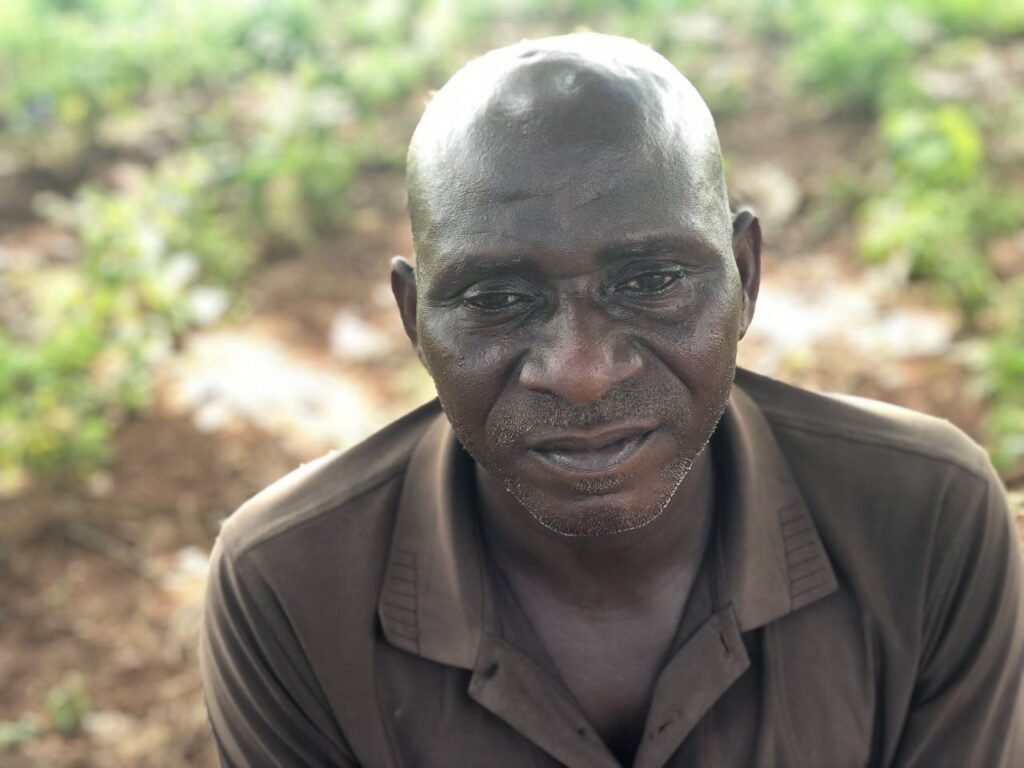
    Furniture Speaking with this reporter  photo credit: Yunusa Umar| AfriCast

    One of the residents in Malete town, Nurudeen Ishaq who had asked to be referred to as Oga Furniture , expressed surprise when asked about the location of the Ranching project in his community. A minute of silence engulfed him and left him repeatedly saying ‘Ranch project in Malete’ before adding that students of Kwara State University would know better if there was any such project. 

    He added  in pidgin language, “I no sure o say Ranch project Dey for Malete here”. 

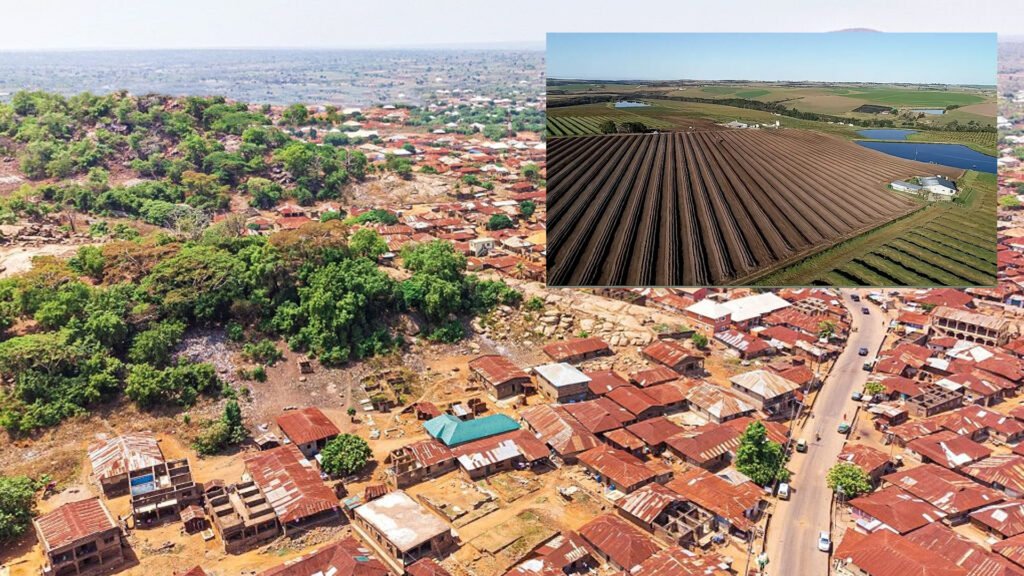
    Malete is a town in Kwara State, Nigeria, known primarily for being the location of Kwara State University. The community is part of the larger Ilorin metropolitan area, and located in the Moro Local government area of the state.

     Residents Not Aware Of  Ranch Project

    A quick chat with residents in several spots around the community indicated that no one was aware of any ranch project in the community.  We met Jimoh Olaiya, a middle aged-man sitting under a shade and sorting out files. When asked about the location of the ranch, he said “There is no Agricultural ranch project in Malete.

    Other residents interviewed similarly dismissed questions about the location of the ranch project built by Abdulrahman’s led administration but none could confirm the exact location where the project was built.

    A woman simply identified as Sharifat Yusuf (Iya-guguru) was sitting on the veranda of her house, with her grand-children when this reporter  met her.  The aged-woman told AfricCast that the government had promised several times to establish a Ranch but has not done so.

    “The government is just saying that they would build but they have not done anything about it. Since last year, the government came to clear land to build but didn’t build there”, the aged woman said, while sitting under her Veranda.

    According to her, “The three conjoined communities allocated land for them but they didn’t build anything on it”. Multiple residents who spoke to Africast said government’s emissaries came to the community a day before this reporter’s visit on December, 4, 2024. 

    We also visited  nearby communities__Ajagbe and Kogba within Moro local government area but all the residents we spoke to said there was no ranching project in the areas visited. A further 20-minute walk within the two communities by our reporter showed no sign of government-owned  properties in the villages.

    Our Company Is Not Aware Of  Any Other Livestock Company in Malete”, Says Agro Programmer Manager

    When this reporter visited hamlet communities in Malete, he was informed about Agro Company, a private enterprise in the town, primarily involved in Livestock development.

    Arowojobe, Agro Programme Manager With His Colleague/ photo credit: Yunusa Umar| AfriCast

    The company manager of Agro company,  Eng. Tolulope Arowojobe, stepped out of his official vehicle with his colleagues when this reporter approached him. 

    “When it is all about livestock, it is not here. I am the programme manager and I am not aware of any Ranch or livestock project in Malete”, Arowojobe told Africast. 

     Agro company in Malete/ photo credit: Yunusa Umar| AfriCast

    The manager repeatedly mused over the question then told this reporter that if there was any ranch project then it had to be in another place, not Malete. “We are in charge of Agro development but we are yet to build any ranch so far for livestock here,” he said. 

    Government Bumps Over N800 Million For Ghost Ranching Project

    AfriCast reviewed the 2022 and 2023 budget performance of Kwara State to verify if the N6,100,000,000 allocated to establish the Ranch project in Malete community, Moro local government was disbursed. 

    The budget performance between January 2022 and September, 2023, showed that a total sum of N889,005,731 had been spent on the construction of the project yet it doesn’t exist in the area designated for the project. 

       The community’s monarch.

    The community’s monarch, Abdulkareem Babatunde Oreoluwa, known as Magaji Malete further confirmed this when he told AfriCast that there was no ranching project in his community.

    “The government had acquired land from the community almost 50 years ago, but each person who owned the land was only given a sum of N2000 for their land”.

    He further empahsised that there was no ranch built on the lands acquired while noting that a ranch would have been helpful as there has been conflict between the herdsmen and farmers in the community. 

    “What we have done so far is to establish a committee that monitors the activities of the Fulani herdsmen in the community and ensures that they adhere to the rules and regulations set by the community,” he said. 

     Obatunde Toyin, a community development leader  in Malete told AfriCast said he was certain that the local government had no ranch project from the government.. He was shocked to hear that funding had been allocated  to establish a Ranch project in his community.

    “They have not done any project in Malete apart from a farming initiative for young people. That is the only project the state government has done in Malete. 

    “The government collected land to plant soybean due to shortage of rain but the crops failed. Apart from that one, there is no other project”, he told this reporter. 

    Kwara Government Keeps Mum 

    When AfriCast reached out to the Commissioner for Agriculture and rural development in the state, Oloruntoyosi Thomas, she was not available for comments. Neither text and WhatsApp Messages sent to her remained unanswered as of press time.

    Also, Rafiu Ajakaye, the press secretary to Kwara State Governor neither answered calls nor responded to SMS sent to him as of press time. All subsequent remainders sent to both commissioner of Agriculture and Press Secretary to the governor were not attended to.

    This report is produced with support from Civic Media Lab (CML).

  • Benue Farmers Seek Government, Security Intervention as They Lose Farmlands, Loved Ones to Herders Invasion

    Benue Farmers Seek Government, Security Intervention as They Lose Farmlands, Loved Ones to Herders Invasion

    By Yunusa Umar

    Across several communities in Benue State, North-central Nigeria, farmers are fleeing for their lives as their multi-million naira plantations are destroyed in the wake of a worsening farmers-herders crisis. AfriCast’s Yunusa Umar spoke to these farmers, who alleged that the security agencies and authorities in Guma local government area of the state have turned a blind eye to their plight. 

    It was a sunny September Monday morning in Torkula community, Benue State when Pius Azahaa, who had just returned from his farm, spoke to this reporter. The farmer, aged 74, sat under a Mango tree in his compound, where he also had a small-sized Groundnut and Maize farm. Ahazaa is one of several farmers in Benue State who has lost millions of naira to the farmers-herders crisis and now struggles to survive.

    Azahaa in the farm behind his thatched house/ photo credit: Yunusa Umar| AfriCast

    “Herdsmen destroyed my Rice and sesame farmland worth about N1.2 million. My farming land is 18 hectares but only Rice alone took four hectares and it has all been destroyed  by the herders”, Azaaha recounted. Once known for planting Rice, Maize, Soybean, Sesame, Melon and Yam in commercial quantities, the aged man now struggles to earn a living and service his debts. 

    He said, “I can not pay those who gave me a loan as Fulanis’ cows ate up my plantation. Whenever I remember those destroyed crops, I feel bad”.

    The Farming Crisis In Benue State 

    The conflict between farmers and pastoralists in Nigeria has led to loss of livelihood for farmers in affected communities.  This conflict has intensified over the past decade, with Benue state becoming one of the hardest hit in the country. Amnesty International recorded that over 2,600 people died from the humanitarian crises in the state between January 2023 and February 2024. The same report notes that 18 out of the 23 Local Government Areas in the state are affected, stressing that this has fuelled displacement, kidnapping and rape.

    One of the local government areas most affected is Guma, made up of several communities including Uleva, Kaseyo, Adai, Uhuwe and Tse-Akenyi. 

    Authorities’ Refusal to Punish Culprit Fuels  Unending Destruction, Farmers Allege

    Azaaha, echoing the sentiments of many farmers whom we later spoke to, accused the government and security operatives of a  lack of proactiveness and paying lip service to solving the crises. 

    “Fulani keeps creeping into our crops. I often feel bad but I have nothing to do about it. I reported to vigilante groups and nothing was done. I told civil defense and soldiers but the Fulani ran away,” he said.

    A forty-eight year-old farmer, Patrick Dam narrating his experience to this reporter, recalled how his brother was murdered in cold blood following the invasion of Fulani cattle herders in his community.

    Dam sitting on a bench in front of his house/ photo credit: Yunusa Umar| AfriCast

    “The cattle-herders have been disturbing us for long to the point that I lost one of my brothers”, he recounted, noting that he barely escaped the attempt to hack him to death.  He further alleged that the refusal of Soldiers, Police and Civil Defense’s refusal to intervene enables the continued killing and destruction of crops including properties.

    “Police are afraid to go there, especially soldiers. And soldiers are even closer to us. We selected some people to be reporting to them. Sometimes, they won’t come and herdsmen continue to destroy our crops.

    “Police always tell us that we should negotiate with Fulani people. I once had a heated argument with them (Fulanis) and left that day

    “It affects me. I’m still suffering with my family. We don’t have any way to feed ourselves. We have been managing”, he said. “When things happen, we report to the Police with a promise that they will come but they turn a blind eye to our plea”,  Dam said.

    Aondakaa Vincent started farming in Kaseyo community village to feed his seven children, after he became displaced following the farmers-herders crisis in his community. He told AfriCast, “I spent N350,000 for Rice and N50,000 for Maize but it was destroyed by the herdsmen. For me to farm this year, I collected a N200,000 loan and my crops are now destroyed which means I do not have anything to payback. If only the Government can provide a way for them not to destroy our crops.

    “My children caught one of the herders on my farm and we reported them to the vigilante chairman. He didn’t do anything.”

    Vincent in front of his house/ photo credit: Yunusa Umar| AfriCast
    Azahan in front of his friend’s house/ photo credit: Yunusa Umar| AfriCast

    Tyav Azahan, a 35-year-old farmer whose dream of earning a living through farming has been cut short as a result of the crises, says many farmers are now being forced to cultivate crops a few meters from their house to mitigate circumstances when herders invade their farms.

    “Our crop’s destruction and the non-responsiveness of authorities has caused more hunger into this community. I have not seen hunger like that of last year since I was born because we used to have everything intact. 

    “Although many farmers in the community have made it their duty to give security operatives gifts to boost their morale. Unfortunately, the situation only gets worse as the destruction of their crops persist, Azahan said. 

    He pointed to abandoned farmlands in the community, saying that no farmer would cultivate there because herdsmen would destroy their crops.

    Agreement To Hold Culprits Responsible Yields No Result 

    Speaking on the crisis, the village chief of Uhuwe, Zaki Yangega Usongu said there had been a series of meetings after the crisis lingered and an agreement was reached that anyone caught destroying crops would pay for damages. Further interviews revealed that the agreement exists only on paper and farmers continue to suffer the destruction of crops and their farmlands.

    “When we report to the security operatives like, police and Civil Defence, they would claim that farmers have no evidence. I have not been able to report directly but the intermediaries have been forwarding the issues to them. Sometimes, they urge farmers to settle with the Fulanis,” explained Zaki Usongu

    When contacted, Alhaji Ibrahim Galma, the Secretary-general of the Miyetti Allah Cattle Breeders Association of Nigeria, (MACBAN) in Benue State   confirmed that farmlands are being invaded but insisted that there is a penalty for culprits. 

    He said , “I don’t know the mission of your media because the crisis situation has certain dimensions on the way you see it. It might not be the way people you interviewed view it. You will get different opinions from me simply because we are not from the same background. And everybody looks at his own interests”.

    He added that herders have also lost thousands of livestocks to the crisis.

    No Official Response From Authorities 

    Adum, the head of the farmer-herder desk officer under the ministry of Agriculture in Benue State, including their Staff officer, Veronica, were unwilling to speak to this reporter, citing that they ought to get permission from their boss before speaking to our reporter.

    Adum said, “There are certain things I’m not politically correct about that those who are closer to politicians or the government. there are certain things that they know and I won’t know”, 

    When this reporter requested contact from the permanent secretary and commissioner of the ministry, they declined, stating that the duo might not have much to say.

    The Police Public Relations Officer in the state, Catherine Anene confirmed to AfriCast that she is aware of the situation in Guma council but could not provide details of efforts by the command to salvage the crisis. 

    She further emphasised that she would send the contact of the Commissioner of Police in Benue State but subsequent messages and calls put to her as reminders were ignored. 

    This report was published with support from Civic Media Lab