Category: Community Voices

  • How Abandoned Dump Sites Take Over Sokoto Metropolis, Endanger Public Health

    How Abandoned Dump Sites Take Over Sokoto Metropolis, Endanger Public Health

    Ibrahim Ali, a 65-year-old resident of the Kofar Dundaye area in Sokoto metropolis, is thankful to God for surviving after falling seriously ill from inhaling smoke at a burned dump site.

    Ali suffered severely from smoke exposure, to the point where he required hospital treatment and spent a significant amount of money on medication, despite the high cost of living in the country. Describing his ordeal with distress, he recounted, “The last time the refuse was burned, I inhaled the smoke and immediately fell ill. I had to visit the hospital for treatment, incurring expenses despite not having the money.”

    Ali further lamented that the refuse and dump sites have been causing significant disturbances for both residents and commuters, as the waste nearly covers the main road. He added that he couldn’t recall the last time the government cleared the site.

    Ibrahim Ali observing Askar after Asr prayer. Photo credit: Shehu Muhammad Shehu

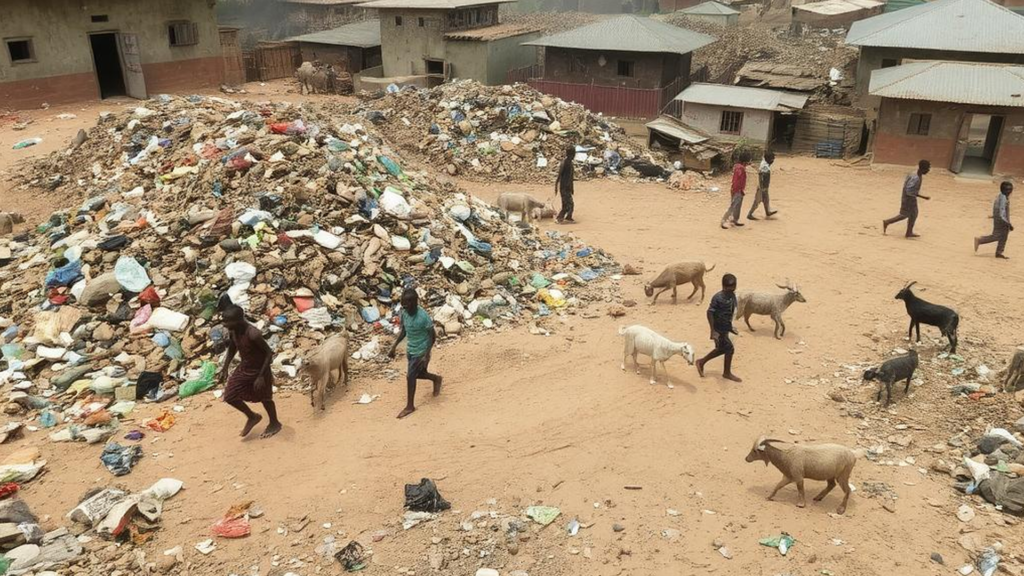
    As you leave the Sokoto cattle market and approach Aliyu Magatakarda Wamakko Jumu’atu Mosque along the Sokoto Western Bypass in the Kofar Ɗunɗaye area, the abandoned dump site—where waste has been indiscriminately disposed of for years—stands as a stark reminder of this ongoing issue.

    The dump has grown so large that it now spills onto the main road, raising serious concerns for commuters navigating the highway.

    Ƙofar Ɗunɗaye abandoned dump site. Photo credit: Shehu Muhammad Shehu

    A study highlights that indiscriminate solid waste disposal is one of the major environmental challenges facing developing countries. Health hazards, traffic congestion, unpleasant odors, and the blockage of drainages are just some of the problems caused by poor waste management practices in Nigeria.

    “It Affects Our Health and Our Business” Small-Scale Business Owners Groan

    Muhammadu Abacha, a meat seller near the dump site, said he cannot remember the last time the government cleared or evacuated the site. He noted that it has been over six months, and only the government can address the issue.

    Abacha lamented that the site was never intended for waste disposal, but due to the absence of an officially designated dump site in the area, people have been using it. He added that some residents come on foot, while others use vehicles to dispose of their refuse.

    He explained, “I sell meat here, and when people come to buy and are greeted by the odor, they are discouraged. The dump site has almost occupied the main road, as you can see.”

    He urged the government to either remove the refuse from the road or help clear the site.

    Similarly, Anwar Aliyu, a food vendor in the area, described the dump site as a threat to his business and public health, especially during the rainy season.

    Aliyu said, “The smell of the abandoned refuse, particularly during the rainy season, deters my customers. After rainfall, the air becomes so foul that it is hard to breathe. Consequently, people cannot comfortably stay and buy my food.”

    Aliyu explained that the refuse has been accumulating for about five years, and they are unsure when it will be cleared, as the plot owner appears to be using refuse to fill the area.

    Anwar Aliyu’s business site. Photo credit: Shehu Muhammad Shehu

    He expressed concern over the lack of a proper dump site, stating that the current site was once bought by someone who left it, leading to improper waste disposal. He called on the plot owner to either start working on the area or clear the refuse, as it is impacting their health and businesses.

    This report gathered that the land belongs to the owner of a nearby filling station, but residents have turned it into a dump site due to the absence of a designated waste disposal in the area.

    Government’s Failure

    To ensure a clean and safe environment, the Sokoto State Government established the then Sokoto Urban Development Authority (SUDA) which is now known as the State Urban and Regional Planning Board (SURPB), and the State Environmental Protection Agency (SEPA), to monitor the environmental quality and to ensure a refuse-free environment.

    In the 2024 Sokoto state-approved budget, 4.3 billion naira was allocated to the Ministry of Environment, while the State Environmental Protection Agency received only 13.2 million naira. This shows a significant underfunding of the SEPA considering the population of the Sokoto metropolis. However, in the 2023 approved budget, the same amount was allocated for the agency and the performance of the 2023 budget indicated that no single naira was spent under the agency.

    As a result of this inadequate funding, several areas in the Sokoto metropolis continue to struggle with improper waste disposal and inadequate waste evacuation. In areas like Kofar Ɗunɗaye, Dambuwa, Bafarawa Estate, Tamaje area, Kasuwar Daji, Gagi, Manna-ƙarama, Mabera and many areas it’s difficult to find designated waste disposal sites, leading residents to dump refuse wherever they choose.

    This situation contributes to open defecation in many areas, which experts warn could lead to outbreaks of cholera and other airborne diseases.

    A young girl defecating openly on a dump site at Manna ƙarama. Photo credit: Shehu Muhammad Shehu

    According to the Nigeria Center for Disease Control (NCDC), as of August 11, 2024, there have been 5,951 suspected cases of cholera, including 176 deaths, reported across 36 states of Nigeria, including Sokoto State. The disease is believed to be caused by drinking contaminated water, poor personal and environmental hygiene which is one of the major issues Sokoto metropolis is facing.

    Comparatively, suspected cholera cases this year have increased by 108% compared to the same period in 2023. Additionally, cumulative deaths have risen by 105% in 2024.

    These challenges hinder efforts to achieve Sustainable Development Goal Number Six of the United Nations which aims to end open defecation by 2030 and achieve access to adequate and equitable sanitation and hygiene for all.

    Most areas in Sokoto metropolis burn their refuse instead of evacuating, which endangers public health, contributes to global warming, and leads to environmental pollution and climate change.

    One beautiful Friday morning, people gathered outside a house in the Dambuwa area to buy waina, (a local food made from rice) while the smoke and smell from the large dump site nearby greeted them.

    Hussaini Alƙasim, who usually collects money from people to buy waina (traditional dish made with rice) for them, lamented the abandoned dump site situated near their house, opposite Total Child School. He noted that nobody has ever visited the site to clear it. “During the dry season, farmers evacuate the refuse to their fields, but in the rainy season, they burn it because no one will remove it, despite its proximity to the main road of the eastern bypass” he recounted.

    He emphasized that they understand the implications of burning refuse, but they have no other options since the government has not evacuated it and has failed to provide designated waste disposal sites.

    Hussaini Alƙasim standing close to the abandoned dump site with concern on his face. Photo Credit: Shehu Muhammad Shehu

    For people like Aliyu Magaji, who sells phone accessories by the roadside on the Eastern Bypass, it is shameful and painful for an ancient city like Sokoto to be as dirty as it is today. Visitors to Sokoto would be surprised by the level of dirt and dust in the city.

    He mentioned that he cannot even remember the last time he saw road sweepers in the area, let alone waste evacuation services, especially where there are no officially designated places for waste disposal. They are forced to gather their refuse and burn it, despite the fact that they are aware of the implications, noting that they were compelled to do so because they have no option.

    “We Are Trying Our Best”—Government

    On a sunny Thursday, in October, 2024, this reporter visited the office of the Executive Director of the Sokoto Environmental Protection Agency, located within the Ministry of Environment, but only met with his personal assistant.

    When contacted, Nasiru Muhammad, the agency’s executive director, acknowledged the challenges that residents face and stated that they have asked the governor to provide the necessary facilities to increase the number of dump sites, saying that the current dump sites in the Sokoto metropolis are insufficient due to overpopulation.

    Signboard of Sokoto state Ministry of Environment. Photo credit: Shehu Muhammad Shehu.

    He said N13.2 million allocated to the agency in the state budget is purely for fuel and vehicle maintenance, adding that they also receive a grant of N20 million for vehicle services required for their activities.

    Muhammad stressed that the state government forwarded these requests to the State House of Assembly for approval, seeking new bankers and vehicles to help them sensitize the community and improve waste management

     Experts Opinion

    Environmental expert Nasir Lawal warned that indiscriminate waste disposal has significant implications for both public health and the environment.

    He admonished that residents are at the risk due to indiscriminate waste disposal as antimicrobial resistance is increasing. Consequently, antibiotics may become ineffective, leading to inadequate relief for patients. These issues are directly related to improper waste management.

    Lawal also noted that such refuse can lead to cholera outbreaks, particularly affecting waste pickers like children. “Refuse can cause cholera outbreaks for waste pickers like children and other airborne diseases, which could result in the loss of many lives due to the disease’s transmissible nature.”

     He emphasized the need for proper treatment of waste before disposal, as it often contains microbial diseases that pose a threat to public health.

  • The Road to Nowhere: How a Stalled Project Left Enugu Community in Limbo

    The Road to Nowhere: How a Stalled Project Left Enugu Community in Limbo

    The Federal Government’s abandonment of a multi-billion-naira road project in Enugu State has taken a serious toll on agriculture and maternal health in Ugwueme. Residents endure hazardous travel conditions to reach healthcare facilities, putting pregnant women, especially at risk. Although a contract was awarded to IDC Construction Limited in 2017, construction has stalled, leaving the community frustrated and vulnerable.

    By Arinze Chijioke

    In a remote part of Enugu State, Nigeria, Peace Okonkwo braced herself for the familiar bumpy journey to her antenatal clinic in Awgu town. Though Ugwueme, her village, has a primary healthcare centre, it lacks a doctor to attend to complex cases like her pregnancy. The nearest well-equipped facilities are a few kilometres away, requiring a trip over treacherous, unpaved roads that residents describe as “a nightmare.”

    On that August morning, Okonkwo joined others on a bus bound for Awgu, but it wasn’t long before their vehicle got stuck in the mud, halting their journey. After an hour of passengers pushing the vehicle, it finally came loose, but the incident underscored a harsh reality: even routine trips to the doctor can become an ordeal. 

    “We spent over an hour trying to pull the bus out,” Okonkwo recalls, adding that her journey was “always filled with bumps, stops, and discomfort.” For years, Ugwueme’s residents have had no choice but to brave these challenging roads, especially women like Okonkwo who face repeated delays and exhaustion when trying to access healthcare.

    Yet this story is not just about poor roads; it’s about a community held hostage by broken promises. In 2017, the Federal Ministry of Works awarded a N14.6 billion contract to IDC Construction Limited to connect Ugwueme and surrounding communities in what was intended as a life-changing project, Theinvestigator probe revealed. 

    The 36-kilometer road, spanning Ugwueme, Nenwenta, Nkwe Ezere, Awgunta Obeagu, Mgbidi, and Nmaku, was supposed to end years of isolation for these communities. For the residents of Anike land, this multi-billion-naira project represented a promise of smoother journeys, better access to healthcare, and, ultimately, a brighter future.

    However, residents are still waiting years later, as the project remains largely abandoned.

    The Broken Promise

    Initially, the news of the road construction had brought hope and excitement to Ugwueme. Many residents, like President-General of Agulese, Sunday Okafor, believed it would finally mark the end of their community’s longstanding struggle with poor infrastructure. But as the years rolled by, hope faded. Residents began to wonder if they had been forgotten again.

    According to Frederick Okeke, a local leader in Ugwueme, IDC Construction arrived shortly after the contract was awarded in 2017. The contractors conducted a survey, raising community expectations that construction would soon begin. However, the work started from the opposite end, in Nmaku, and only progressed eight kilometres before abruptly stopping at Obeagu. Okeke and other community leaders say that was the last they saw of the company.

    Blame And Broken Roads

    When asked why the project stopped, IDC Construction claimed that the Ugwueme community had demanded compensation for crops and buildings along the road. This, they explained, led the government to reroute the project to avoid inhabited areas, opting to build in areas without homes or farmland to bypass compensation.

    However, the residents tell Theinvestigator a different story. “At no point did the community insist on compensation,” Okeke said. According to him, federal surveyors had visited and informed residents that they might receive compensation, but no demands were made. Okeke said the community had even marked their buildings with “Not Affected” inscriptions to reassure the government that they would not hinder the project. Their primary goal, he said, was to see the road built.

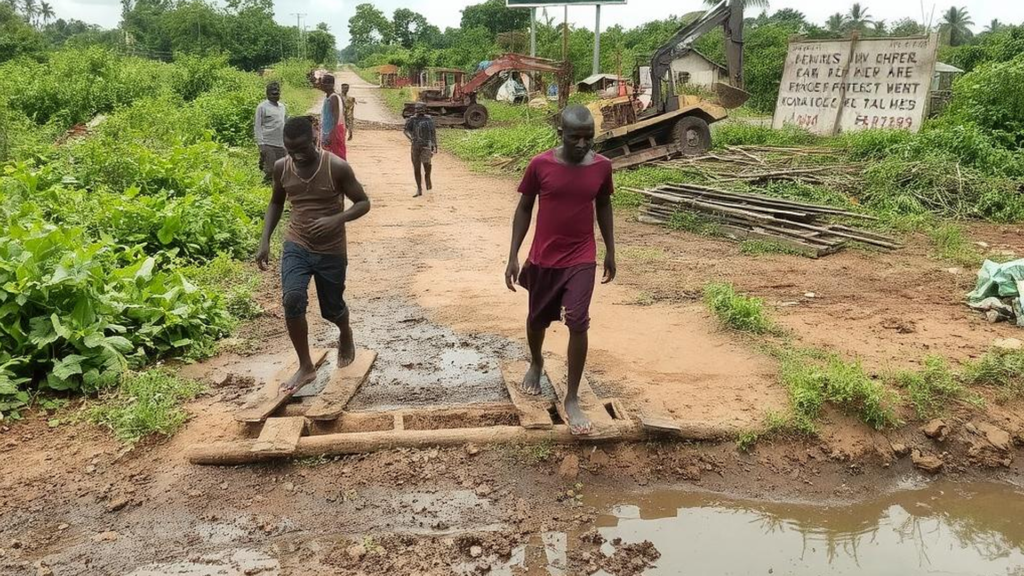
    Without this essential road, residents must often trek long distances to avoid the most impassable stretches or detours through neighbouring Isuochi in Abia State, a risky endeavour on poorly maintained motorcycles. In the rainy season, travellers endure slippery, muddy roads, and during the dry season, the terrain becomes a maze of potholes and deep cracks. 

    Many residents, like Okorie Chioma, describe coming back from these trips as exhausting, sore, and in need of pain relievers to cope with the physical strain.

    A Community In Decline

    The incomplete road project has impacted every aspect of life in Ugwueme, from healthcare to business to education. Many local women report missing medical appointments because of travel difficulties. Okorie Chioma, a resident, recalls returning from the market with bags of food, only for her car to get stuck on the road. When she finally made it home, her husband was outside, worried about her delayed return. “It took us hours because we had to keep stopping to avoid bad spots,” she remembers. “When I got back, I was too sore to sleep,” she added.

    Travel costs have soared as motorcyclists, the primary mode of transportation, charge high fees to navigate the rough terrain. What would be a brief drive on a good road now takes time and a steep price. Going from Ugwueme to Awgu town can cost between N2,000 and N2,500 while reaching Newenta costs up to N3,000 — fees that are prohibitive for many.

    Nwabueze Ifeanyi says he has fixed his motorcycle tyres severally.

    But TheInvestigator inquiry shows that the effects of the abandoned road project stretch beyond the immediate inconvenience. Ugwueme and its neighbouring villages, known for their rice, cocoyam, cassava, and palm oil, struggle to move goods to market. Farmers are forced to carry produce on their backs, and perishable goods often spoil before they reach buyers. 

    Many businesses that once operated in the community have shut down, and traders from other communities, like Isuochi, no longer visit. Okafor described this situation as “a terrible economic waste,” noting that perishables are thrown away regularly due to transportation obstacles.

    Women Taking The Lead

    Frustrated with government inaction, the women of Ugwueme decided to take matters into their own hands. Through the Global Ugwueme Women Initiative (GUWI), they began monthly contributions, raising over N50 million since 2019. Their funds have helped make portions of the road temporarily passable, with about one kilometre patched with concrete asphalt.

    “We contribute as low as N200 each,” says Uzoamaka Ogor, GUWI’s spokesperson. “We’ve received support from our daughters abroad and those here at home, and this effort has been ongoing for years. We cannot keep waiting for the government,” she told TheInvestigator. But even Ogor acknowledges that their efforts are unsustainable. Each rainy season, the repaired portions suffer new damage, creating potholes that hinder travel once again.

    The broader community has also pooled resources, raising N1.5 million to grade certain sections of the road. But they know these are only temporary solutions. Without government intervention, they fear the repairs will amount to little more than a band-aid on a wound that needs real healing.

    A Project Stalled

    Since IDC left the project site in 2021, the company claims it cannot return without receiving the N1.3 billion owed by the federal government. According to Okeke Anderson, spokesperson for IDC, their hands are tied. “We cannot return to the site without money,” he said, noting that the cost of materials and labor has surged since the contract was signed. “Back then, a layer of asphalt cost N3,700 per square meter. Today, it costs over N30,000. Without an updated contract to reflect these costs, no work can continue.”

    The contract for the 36-kilometre road project was awarded at N14.6 billion. GovSpend data reveals that between December 2018 and September 2024, IDC Construction Ltd received 10 payments totalling N2.5 billion for the project. 

    In August 2023, Works Minister David Umahi visited the project site, giving residents hope that action might finally follow. He promised that funding issues would be addressed and urged contractors to return to work. “The availability of funds will not be a challenge,” he assured the community. “I will ensure the money is paid,” he reiterated.

    But a further probe by TheInvestigator shows that as of November, no funds have been released, and the project remains dormant. A civil engineer with the Federal Ministry of Works, who spoke anonymously, echoed the financial concerns. He pointed out that contract rates are outdated, making it impossible for IDC to resume work under the current terms. “You can’t expect a company to work at a loss,” he said, adding that the government’s slow funding is a recurring issue for infrastructure projects in Nigeria.

    Hope, Deferred

    Ugwueme’s road remains a striking example of the impact of stalled infrastructure on rural communities. The people of Anike land have waited for decades for this road, believing that it would bring transformation and hope. For now, though, that hope remains just out of reach, another promise unfulfilled.

    As the dry season approaches, the residents brace themselves for another round of temporary fixes. The women of GUWI plan to hire a bulldozer to grade the road and make it somewhat passable. But they are fully aware that these fixes are temporary. “It’s not sustainable,” Ogor admits. Adding that “This road needs proper construction.”