Tag: All

ALL

  • From Lifeline to Liability: How Oil Pollution Ruined a Community’s 20-Year-Old Water Well.

    From Lifeline to Liability: How Oil Pollution Ruined a Community’s 20-Year-Old Water Well.

    By Omowumi Abraham

    The residents of Omikunle, Yemetu, in the Ibadan North Local Government Area of Oyo State, have cried out over the government’s failure to deliver on a promised borehole after their only reliable source of water became contaminated.
    Many residents have been waiting for a long time for the borehole, as they continue to suffer from a lack of potable water, essential for their daily survival in the community.

    “The government promised to provide a well, but we’ve not heard anything from them since then,” said a resident, Alhaja Falilatu Raji.

    “We want the government to help us build another well,” Ade Aderiyigbe in his statement, said this during a visit by this reporter to the community.

    HOW THE CRISIS BEGAN

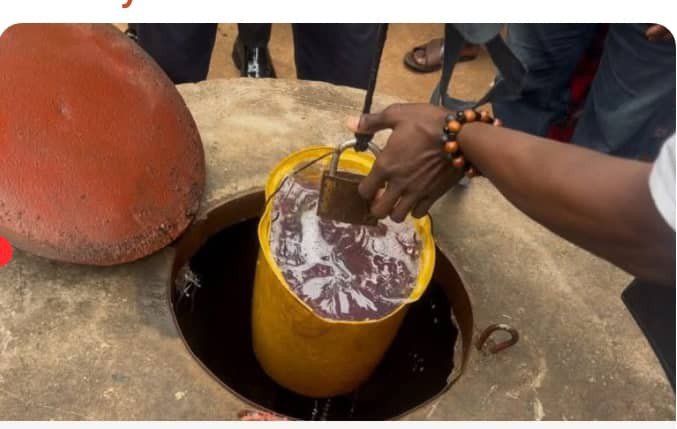
    On September 6, 2025, news spread about the discovery of crude oil in Yemetu. The Oyo State Police Command also confirmed a report at about 6:50 p.m. the same day, that an unusual liquid had appeared in a community well. Officers from the Yemetu Division arrived shortly after and discovered a thick, diesel-like substance inside the water source.

    As residents gathered around the well, some attempted to fetch the strange liquid, but the police cordoned off the area, while the Oyo State Ministry of Environment conducted tests confirming it was diesel, and not crude oil.

    As a temporary measure, the Oyo State Water Corporation supplied 5,000 liters of clean water to affected residents.

    However, what was once a hopeful assurance that clean water would soon return has turned into deep frustration, as months have passed without a single sign of progress and action.

    The affected well, co-owned by three wives in their 80s, who also now lack water supply, had served the community for more than two decades before suddenly turning oily and unsafe for use.

    One of the wives, and the spokesperson for the three women, Alhaja Falilatu Raji Faramade, narrated their ordeals despite government promises. She said, “We just woke up one morning to fetch water for ablution and discovered that our water had turned into something we could not comprehend (due to the oily substances). It was surprising, so we raised an alarm. It’s been 20 years since we drilled this well, and nothing of such had happened before.”

    Speaking of government intervention, the octogenarian said, “The government promised to provide a well, but we’ve not heard anything from them ever since. We had to start buying water at ₦200 per washing container, also known as Tub. That’s how we cook, bathe, feed, and do other necessary things that need water.”

    Alhaja Falilatu Raji Faramade

    Recounting their discomfort since the incident, Alhaja Falilatu said things have not been easy due to their old status. “The well, even though privately owned by us, serves the whole community. We used to cook with it, drink, bathe, and so on.  Now, the government instructed us not to drink it or use it for any purpose. They pumped out everything in the well, hoping to get fresh water, but the water remains contaminated.”

    The Nation newspaper had reported on the 17th of September that investigators under the directives of the Oyo state Ministry of the Environment also inspected a telephone mast located less than three meters from the affected well, but confirmed there was no evidence of linkage of the facility to the affected well.

    However, the owners of the mast have been directed by the ministry to provide a borehole for the community as part of their corporate social responsibility.

    As to whether the mast was being purportedly regarded as the source of the contamination, Alhaji Falilatu expressed uncertainty and appealed to the government for help.

    She said, “We cannot say for sure. Only the policemen and government agencies who came can confirm that. I don’t understand how it happened. The transformer beside it has been there for a long time and nothing happened until now. Getting water has been stressful for us at this age. The government should help us with a new borehole.”

    The elderly women, too frail to fetch water themselves, now depend on neighbors and daily purchases of water to survive, a burden made heavier by rising costs and limited finances available to them as they cannot work again to earn an income.

    NO ALTERNATIVE

    Sharing the events as they unfolded, a woman in her mid-40s, Ade Aderiyigbe, took a deep breath as she began to recount the events she witnessed.

    “The very day it happened; I went there to fetch water but was told some substances had been poured into the well. Surprisingly, when I tried, the first draw was like diesel, the same as the second draw.

    “Then we stopped and made a video of it that went viral and drew the attention of government agencies. When the government came, they drew out everything until it was dry. They also supplied us with a tank of water and promised to fix the well, but since then, we have not heard anything from them.”

    Recounting how useful the well had been and how difficult life has become without it, she said, “The well serves everyone in this community. We even drink from it, but now that there is no alternative, we’ve been left to fend for ourselves by buying water from another community. We want the government to help us build another well.”

    Another resident, Motunrayo Akanji, shared her ordeal, corroborating the accounts of other witnesses.

    “That day, we noticed that the surface of the water looked unusually shiny. Out of curiosity, we drew out what we thought was water, but it turned out to be pure diesel. The police later secured the well until government officials arrived. They evacuated the contaminated water and left it overnight to see if fresh water would emerge. Unfortunately, the new water that surfaced the next day was still contaminated. Since then, we have been left to our fate; the well has become completely useless.

    She further stressed that, “The owners of the well are elderly women who can no longer move around, so they depend on us, their neighbors’, to fetch water from another community not just for them but for ourselves as well

    Speaking of the effort of the Oyo State government, she said “After the government removed the oily substances and took it away, they supplied us with water that lasted only a day. Since then, we haven’t heard anything from them.”

    Another eyewitness, Kabirat Adebiyi, while expressing her distress, lamented the situation with clear frustration, saying, “It was like a miracle when we opened the well to fetch water that morning. We did not even know what it was, despite lots of speculations, until government agencies came and said it was diesel.

    “We thought it was the mast beside the well, but there is no link or connection between the mast and the well. Since then, we have not been able to use the water. Despite promises made by the government to build another well for us, nothing has been done.”

    “Please help us to do something about it. We are tired of buying water for our daily use. I sell tomatoes, and I need a lot of water to wash them before sale. Its not been easy,” she pleaded.

    A student, Olamide Faramade, who also is as a resident of the community, shared her ordeals during a brief interaction with this reporter.

    “The government promised to give us water, but we have not heard anything from them. They said the diesel was from the mast close to the well. They pumped out the content and left. It has been taking a toll on me in particular as a student because I have to buy water to cook and so on and I have no choice,”, she stated.

    According to Chapter II, Section 20 (Environmental Objectives) of the Federal Republic of Nigeria’s Constitution, “The State shall protect and improve the environment and safeguard the water, air and land, forest and wildlife of Nigeria.” This implies that the government is responsible for ensuring safe and adequate water resources.

    The Oyo State Water Corporation Edict (1977, amended 2006) also empowers the state government to provide potable water to residents.

    As the government-maintained silence on the stalled intervention, a call was placed to a top official in the state’s Ministry of Environment, who requested anonymity.

    In his brief response, he said: “I’m not permitted to speak on this matter, but as colleagues, I can tell you this: the crude-oil claim is a rumour. It appears someone may have poured something into the well; no crude oil was discovered. I’m also not aware that the government promised them another well. However, through the Ministry and the Oyo State Water Corporation, a water tanker was provided for the community’s use.”

    When asked if the mast owner had been directed to take responsibility for the well, as earlier reported by The Nation, he declined to respond, simply stating: “No comment.”

    When contacted, the Oyo State Commissioner of Information and Orientation, Prince Dotun Oyelade said he’s sure something is being done.

    Oyo State Commissioner of Information and Orientation, Prince Dotun Oyelade

    According to him, the government doesn’t promise something and does not fulfill it. So if it was claimed that crude oil was discovered and it was later disclaimed, not even that will stop the governor from fulfilling his promise if he had said so. “So, the only thing I can confirm for you is to seek an audience with the Ministry of Environment or Ruwassa, the people in charge of water in Oyo state, and I will do that presently. They are the only people that can confirm it. I’m sure something is being done.  I will confirm after my meetings today.  If the governor promises, the governor fulfills and that’s what he’s been doing for over six years.”

    In a separate interview with a water rights advocate, Gideon Adeyeni, he spoke about the contamination while sharing his experience in advocating for access to clean water.

    He said, “Based on my experience over the past years advocating for access to clean drinkable water, especially in marginalised communities, contamination, aside from privatisation (of public water assets) is another means through which communities are denied access to clean drinkable water.

    The water rights advocate noted it was the government’s responsibility while also highlighting the impact on the communities. He said, “Sometimes, as is the case here, contamination aids privatisation.  It is not uncommon to find communities where the underground water has been contaminated, usually with petroleum or some other chemicals, leaking through a poorly maintained or burst pipeline or storage.

    “Whichever way the underground water gets contaminated, it is the duty of the government to ensure that people have access to clean drinkable water by ensuring the prevention of such contamination or quick cleanup.

    “Unfortunately, the government and its agencies have been negligent in preventing or cleaning up such contamination, leaving many marginalised communities across the country without access to clean drinkable water for a long period of time.

    Adeyeni linked contamination to privatisation, calling for resistance to water injustice. “This often leads to a situation in which communities are left at the mercy of private water providers, indicating how contamination could aid privatisation in the denial of the right to clean drinkable water.

    “The denial of the right to clean drinkable water to any individual or community constitutes water injustice, and must be resisted. The way forward is for us to continue to demand water justice, that is, the fulfillment of the right to clean drinkable water for all, which means challenging water privatisation and calling out the government to prevent and clean up contamination, and thereby build the water justice movement.”

    An Environmental Health Officer, Daniel Akande, raised concerns from a professional standpoint. He said, “I must say that clean and safe water is a fundamental right, and continued exposure to petroleum-contaminated water can cause severe health challenges and environmental hazards. So, this needs urgent intervention.”

    Sharing his view on who should be taking the lead in addressing this issue, Akande said the government has a legal and moral responsibility to immediately provide a replacement borehole as promised, conduct proper remediation (risk assessment) of the polluted well, and hold whoever is responsible for the contamination accountable.

    He added, “The government directly or indirectly profits from the telecommunications that own the mast that is allegedly responsible for the pollution.”

    The Environmental Health Officer advised the community to take proactive measures by petitioning the Environmental Health Council of Nigeria or some climate change groups or NGOs, if the local or state government is already aware of the incident and takes no sustainable measures to address the menace.

    With the growing crisis of climate change, which has caused droughts in some communities, access to potable water continues to be a major concern for many, especially community dwellers who have always relied on local sources of water.

    ***************

    This report was produced with support from Civic Media Lab

  • Journalism Stakeholders Call for AI Training, Ethical Guidelines in Newsrooms

    Journalism Stakeholders Call for AI Training, Ethical Guidelines in Newsrooms

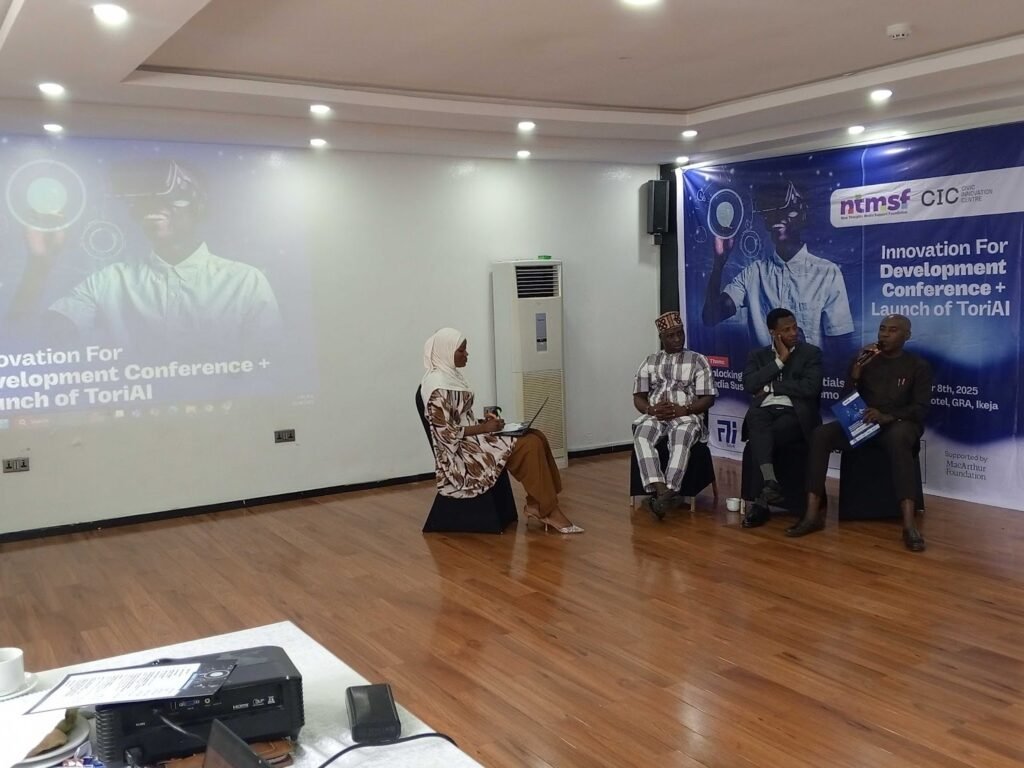
    Nigerian civic and media executives called for mandatory AI training programs and ethical guidelines for newsrooms at Wednesday’s Innovation for Development Conference in Lagos, organised by The New Thoughts Media Support Foundation, NTMSF.

    The one-day conference, themed “Unlocking Nigeria’s AI Potentials for Media Sustainability and Democracy,” brought together journalists, technologists, media managers, policymakers, academics, and civil-society actors to explore how artificial intelligence can strengthen media innovation, transparency, and democratic accountability.

    Delivering the keynote address, Dapo Olorunyomi, Publisher and Editor-in-Chief of Premium Times and CEO of the Centre for Journalism Innovation and Development, CJID emphasised the need for ethical, inclusive, and purpose-driven AI adoption in the media industry. Olorunyomui, who was represented by Monsur Hussain, Head of Innovation, CJID, noted that while AI offers immense opportunities for innovation, it must be deployed responsibly to safeguard democracy and journalistic integrity.

    The conference also featured the launch of Tori AI, a platform designed to support journalists in producing multilingual and multimedia content, to broaden audience engagement. Seun Akinfolarin, Executive Director of NTMSF, said the development of ToriAI aligns with the foundation’s mission to promote accountability and empower communities through digital tools and journalism. 

    Participants witnessed firsthand how ToriAI can transform traditional reporting into podcasts, audio briefs, local-language outputs, and platform-specific social media posts. The discussions produced several key outcomes and recommendations on responsible AI adoption, capacity building, local solutions and a collaborative ecosystem.

    Policy experts at the event also urged NTMSF to initiate pilot projects with small and mid-sized newsrooms, calling for sustained dialogue among regulators, technologists, and journalists to shape inclusive AI governance frameworks.

    Founded in 2023, NTMSF is a non-profit organisation dedicated to advancing media development, transparency, and citizen empowerment. Its initiatives include training journalists in investigative and data journalism, leveraging civic tech for accountability, and promoting sustainable business models for independent media.

  • Plastic Waste For Candy

    Plastic Waste For Candy

    Plastic Waste For Candy 

    Abdullahi Kano parked his waste cart by the side of the road, he pressed the air horn mock in his hand, and the popping sounds filled the air: Popopi! Popopi!. The sound is infectious, and soon, children start to emerge from their homes carrying plastic bottles. They giggled and smiled, drawn to the playful noise they gathered around him, one after another they handed him plastic bottles of different beverage companies, and in return, he handed them Alewan Mecca, a pinky local candy in northern Nigeria.  

    Abdullahi is a plastic and metal waste collector who left his home in Rijiyar Lemu in Kano State Northwest Nigeria for Lapai, in Niger State North Central Nigeria five years ago when he realized the economic opportunities in waste recycling. 

    “I left Kano after a friend, who owns a recycling business in Lapai, informed me about the opportunities in the sector. Since arriving in Lapai, there has been a change in my financial life,” Abdullahi said.

    Abdullahi Kano, a plastic and waste collector, with his waste cart parked by the side of the road waiting for the children. 
    Air horn mock
    A group of children gathered around Abdullahi Kano to hand out their plastic bottles.

     Luring Children With Candy 

    In Lapai, Abdullahi roams from one street to another, using the popopi sound of his air horn to inform the children of his arrival and the Alewan Mecca to lure them into helping him collect plastic waste.

    “As a waste collector, I exchange candies with children for plastic bottles, which I then sell to recycling companies in Ikorodu, Lagos State, or Sabon Wuse, Niger State. These companies transform the waste into new products,” he explained. “When I arrive in a neighborhood, I simply press my air horn, and children come out with plastic bottles in exchange for Alewan Mecca.”

    Abdullahi Kano, a plastic and waste collector, collects plastic bottles from a girl in exchange for candy. 
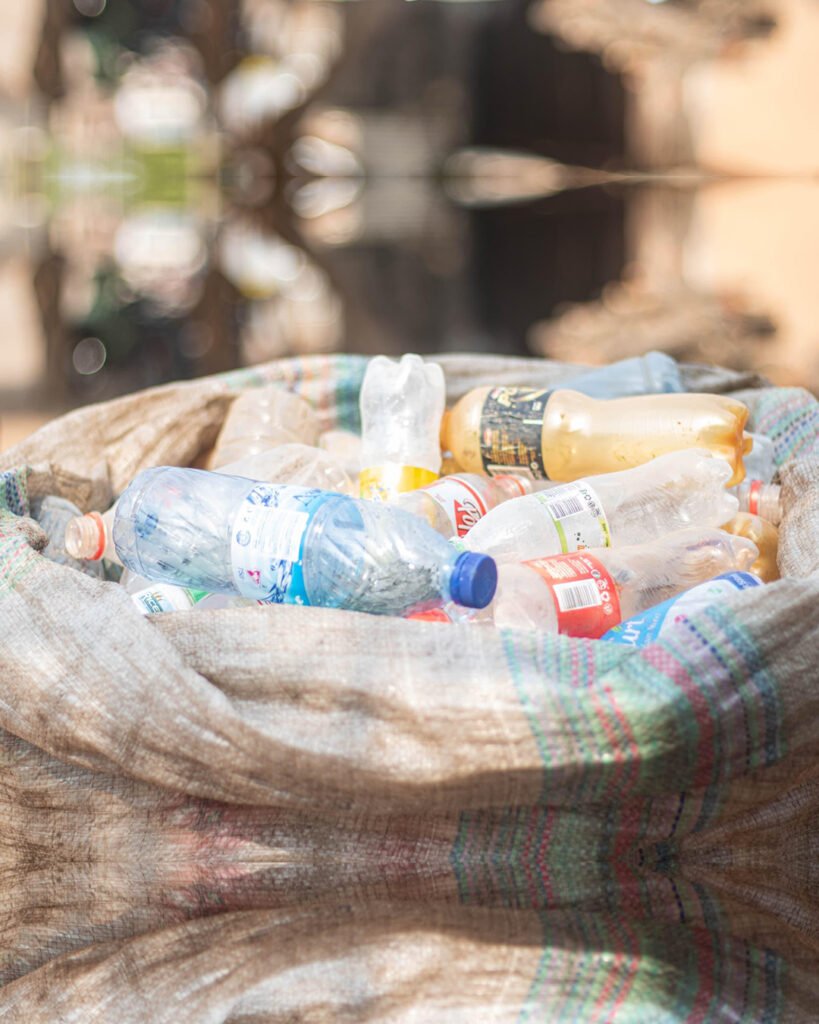
    Plastic bottles collected by Abdullahi 

    The children on Ibrahim Road, Lapai, Niger State, know the days Abdullahi usually comes and before then, they would have collected plenty of bottles from their homes or the neighborhood. Even when they forget, the sound of his air horn reminds them.

    “As soon as we hear the sound, we rush outside to meet him with our bottles,” Yukubu Umar, one of the children who exchanges plastic bottles for candy, mentioned. “He usually comes before we head to Islamiyah. Sometimes, I even collect bottles from the drainage where people dump them.”

    Abdullahi Kano hands children candy from a sack. 
    Yakubu Umar holding a candy after exchange with plastic bottles 
    Another child holds the candy after exchange with plastic bottles 
    Aisha Halihu waits to exchange a plastic bottle for candy. 
    Children posing with their candy after exchanging it with plastic bottles.

    Removing One Tonne of Plastic Bottles From the Environment Monthly 

    According to Shop Without Plastic (2023), approximately 1.6 billion plastic bottles are produced daily, polluting the environment throughout their lifecycle. Improper disposal of these bottles is a leading cause of marine wildlife deaths and contributes substantially to air pollution. Abdallahi Kano collects one tonne of plastic bottle waste monthly, equivalent to 74,074 plastic bottles of 50cl, by incentivizing children with candies to help remove these bottles from the environment.

    “It takes me a month to collect one tonne of plastic bottle waste, as they aren’t as heavy as metal waste. I sell a kilogram of bottle plastic waste for between ₦120-₦150, while shoes and other types of plastic waste fetch between ₦150-₦170. Now, I sell them at Sabon Wuse”

    A child hands Abdullahi plastic bottles for exchange with candy

     Abdullahi’s collection efforts extend beyond plastic bottles but include shoes and other household items. However, for these more valuable items, he pays the children in cash instead of candies. 

    “For heavy plastics, I pay with money because most of these items, like shoes, belong to the children’s mothers,” Abdullahi explained, as he carefully inspected a pair of shoes brought  by one of the children.

    shoe plastic waste 
    A boy hands Abdullahi an Old Plastic jar
    A boy carries a basket filled with old household items of plastic. 

    Unknown to Abdullahi Kano, his endeavor of collecting plastic waste not only earns him a living but also contributes to saving the world’s biodiversity from the impacts of plastic pollution.

  • Kwara Govt Denies N800m Ranch Project Despite Evidence

    Kwara Govt Denies N800m Ranch Project Despite Evidence

    By Zainab Sanni

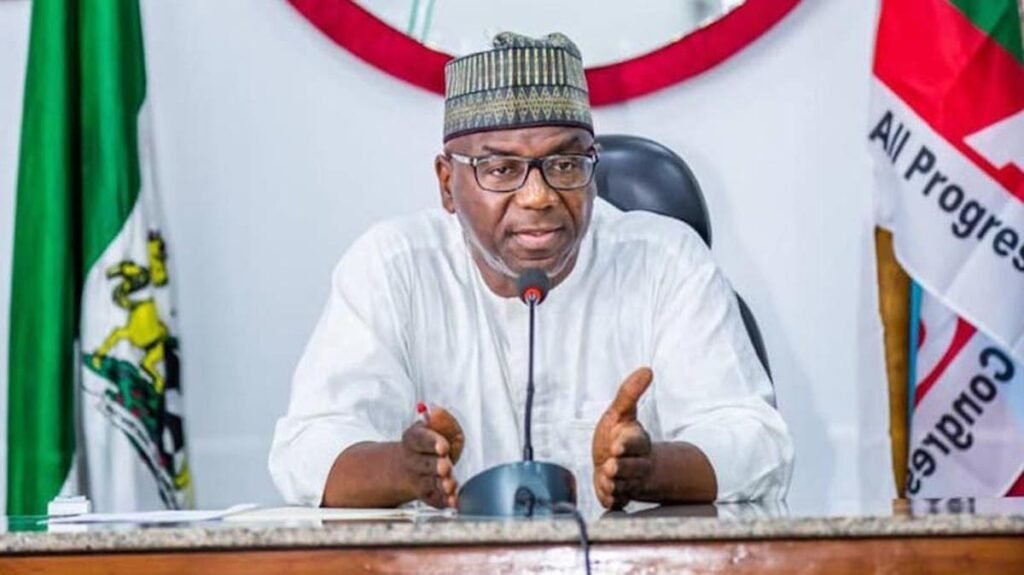
    The Kwara State Government has said that it did not spend N800m on a ranch project, stating that such a project does not exist. This was contained in a press statement issued on Wednesday, February 12, by the Commissioner for Agriculture and Rural Development, Oloruntoyosi Thomas. 

    This is in response to an AfriCAST investigation published on Monday, February 10, on the state government spending 800 million naira on a non-existent ranch project. AfriCAST had revealed that the AbdulRahman AbdulRazaq-led administration budgeted a total of over 6 billion naira in  the 2022 and 2023 budget for the establishment of a ranch in Malete town, Moro Local government area of Kwara State to boost the agricultural sector in the state. AfriCAST’s review of the budget performance document prepared by the state government for 2023-2024 confirms that the sum of N860,005,731 was released for the project, indicating that the ranch project had commenced. However, our investigations revealed that there is no ranching project in Malete town.

    Despite existing evidence to the contrary, the government insists it has not spent any money on the proposed Malete ranch between 2022 and 2023, as noted in the AfriCAST investigation. In her rebuttal to the claimed amount in the investigation, Thomas stated that the only related expenditure in the said years was N29,000,000 spent in 2022 for essential services such as topographic survey, environmental impacts assessment, and drone flights across the Malete site for the Kwara Special Agro Industrial Processing Zone project dated February 28, 2022.

    She also said that the other closest volume of government’s expenditure in that category was the payment on October 9, 2023 of N779,506,155.08, another counterpart funds for the Special Agroprocessing Zone (SAPZ).

    Thomas added that: “SAPZ is an ongoing five-year project funded by the African Development Bank, AfDB, and Islamic Development Bank. At the moment under SAPZ, there are four Agricultural Transformation Centres (ATCs) in Baruten (Okuta), Kaiama (Kaiama), Ifelodun (Olodan), and Asa (Afon). All the ATCs serve as production and aggregation centres, while Malete is the industrial hub.”

    “The description in the budget for this expenditure is ‘Federal Government Contributions for Livestock Development (State Govt).’ These livestock programmes included L-PRES and SAPZ, a component of which ranching/grazing reserve is. This is normal in the national charts of accounts format. It is disturbing that the media refused to mention SAPZ (the real basis for the closest expenditure) in its report, even when not a dime was actually spent on ranch.”

    “This clarification is for innocent members of the public who may have been misled by the mischievous publication. The intention of such publications is neither to inform nor encourage healthy debates around public expenditure, but to give negative portrayals of anything Nigerian and its government,” Thomas concluded

    Recall that in our report, AfriCAST reached out to Thomas but she was not available for comments. Neither text nor WhatsApp messages sent to her were answered at press time. Also, the press secretary to Kwara State Governor, Rafiu Ajakaye, neither answered calls nor responded to SMS sent to him. All subsequent reminders sent to both the commissioner of Agriculture and Press Secretary to the governor were not responded to until the report was published.

  • INVESTIGATION: Kwara State Government  Spent Over 800 Million Naira On A Ranch That Does Not Exist

    INVESTIGATION: Kwara State Government  Spent Over 800 Million Naira On A Ranch That Does Not Exist

    The Kwara State Government, led  by AbdulRahman AbdulRazaq budgeted a total of over 6 billion naira in  the 2022 and 2023 budget for the establishment of a ranch in Malete town, Moro Local government area of Kwara State to boost the agricultural sector in the state.

    A review of the budget performance for the two years confirmed that the sum of N860,005,731 was released for the project, an indication that the construction of the ranch project had commenced. However, investigations by Africast reveal there is no ranching project in Malete town. 

    ________________________________

    Students hoping into their various Vehicles / photo credit: Yunusa Umar| AfriCast

    It was a busy Wednesday in Malete village when this reporter arrived in the students’ community where passengers including students were jostling for Tricycles, Buses and Motorcycles.

    Furniture Speaking with this reporter  photo credit: Yunusa Umar| AfriCast

    One of the residents in Malete town, Nurudeen Ishaq who had asked to be referred to as Oga Furniture , expressed surprise when asked about the location of the Ranching project in his community. A minute of silence engulfed him and left him repeatedly saying ‘Ranch project in Malete’ before adding that students of Kwara State University would know better if there was any such project. 

    He added  in pidgin language, “I no sure o say Ranch project Dey for Malete here”. 

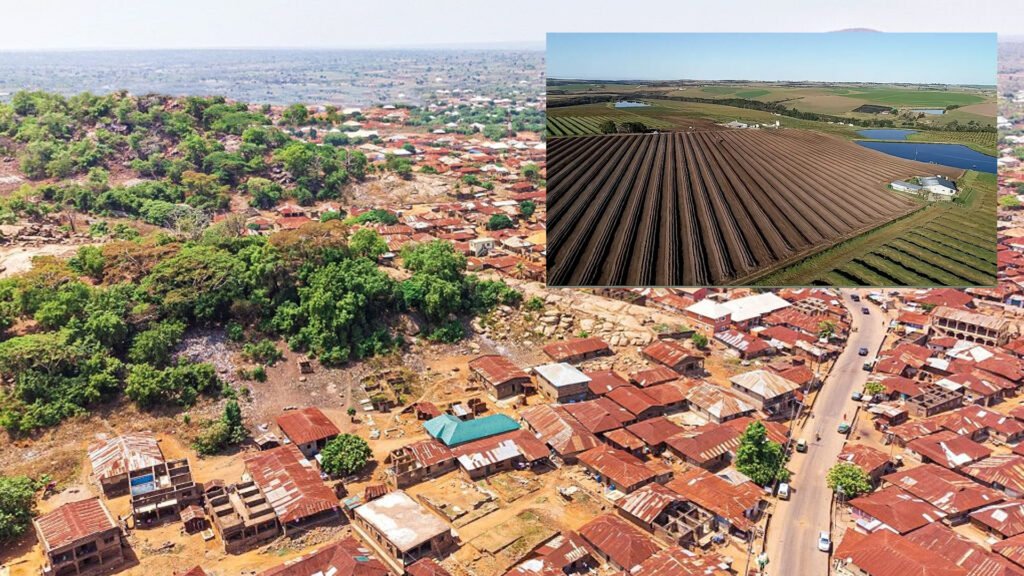
    Malete is a town in Kwara State, Nigeria, known primarily for being the location of Kwara State University. The community is part of the larger Ilorin metropolitan area, and located in the Moro Local government area of the state.

     Residents Not Aware Of  Ranch Project

    A quick chat with residents in several spots around the community indicated that no one was aware of any ranch project in the community.  We met Jimoh Olaiya, a middle aged-man sitting under a shade and sorting out files. When asked about the location of the ranch, he said “There is no Agricultural ranch project in Malete.

    Other residents interviewed similarly dismissed questions about the location of the ranch project built by Abdulrahman’s led administration but none could confirm the exact location where the project was built.

    A woman simply identified as Sharifat Yusuf (Iya-guguru) was sitting on the veranda of her house, with her grand-children when this reporter  met her.  The aged-woman told AfricCast that the government had promised several times to establish a Ranch but has not done so.

    “The government is just saying that they would build but they have not done anything about it. Since last year, the government came to clear land to build but didn’t build there”, the aged woman said, while sitting under her Veranda.

    According to her, “The three conjoined communities allocated land for them but they didn’t build anything on it”. Multiple residents who spoke to Africast said government’s emissaries came to the community a day before this reporter’s visit on December, 4, 2024. 

    We also visited  nearby communities__Ajagbe and Kogba within Moro local government area but all the residents we spoke to said there was no ranching project in the areas visited. A further 20-minute walk within the two communities by our reporter showed no sign of government-owned  properties in the villages.

    Our Company Is Not Aware Of  Any Other Livestock Company in Malete”, Says Agro Programmer Manager

    When this reporter visited hamlet communities in Malete, he was informed about Agro Company, a private enterprise in the town, primarily involved in Livestock development.

    Arowojobe, Agro Programme Manager With His Colleague/ photo credit: Yunusa Umar| AfriCast

    The company manager of Agro company,  Eng. Tolulope Arowojobe, stepped out of his official vehicle with his colleagues when this reporter approached him. 

    “When it is all about livestock, it is not here. I am the programme manager and I am not aware of any Ranch or livestock project in Malete”, Arowojobe told Africast. 

     Agro company in Malete/ photo credit: Yunusa Umar| AfriCast

    The manager repeatedly mused over the question then told this reporter that if there was any ranch project then it had to be in another place, not Malete. “We are in charge of Agro development but we are yet to build any ranch so far for livestock here,” he said. 

    Government Bumps Over N800 Million For Ghost Ranching Project

    AfriCast reviewed the 2022 and 2023 budget performance of Kwara State to verify if the N6,100,000,000 allocated to establish the Ranch project in Malete community, Moro local government was disbursed. 

    The budget performance between January 2022 and September, 2023, showed that a total sum of N889,005,731 had been spent on the construction of the project yet it doesn’t exist in the area designated for the project. 

       The community’s monarch.

    The community’s monarch, Abdulkareem Babatunde Oreoluwa, known as Magaji Malete further confirmed this when he told AfriCast that there was no ranching project in his community.

    “The government had acquired land from the community almost 50 years ago, but each person who owned the land was only given a sum of N2000 for their land”.

    He further empahsised that there was no ranch built on the lands acquired while noting that a ranch would have been helpful as there has been conflict between the herdsmen and farmers in the community. 

    “What we have done so far is to establish a committee that monitors the activities of the Fulani herdsmen in the community and ensures that they adhere to the rules and regulations set by the community,” he said. 

     Obatunde Toyin, a community development leader  in Malete told AfriCast said he was certain that the local government had no ranch project from the government.. He was shocked to hear that funding had been allocated  to establish a Ranch project in his community.

    “They have not done any project in Malete apart from a farming initiative for young people. That is the only project the state government has done in Malete. 

    “The government collected land to plant soybean due to shortage of rain but the crops failed. Apart from that one, there is no other project”, he told this reporter. 

    Kwara Government Keeps Mum 

    When AfriCast reached out to the Commissioner for Agriculture and rural development in the state, Oloruntoyosi Thomas, she was not available for comments. Neither text and WhatsApp Messages sent to her remained unanswered as of press time.

    Also, Rafiu Ajakaye, the press secretary to Kwara State Governor neither answered calls nor responded to SMS sent to him as of press time. All subsequent remainders sent to both commissioner of Agriculture and Press Secretary to the governor were not attended to.

    This report is produced with support from Civic Media Lab (CML).

  • Ondo Farmers Left Vulnerable Despite Agro-Ranger Promise

    Ondo Farmers Left Vulnerable Despite Agro-Ranger Promise

    During the campaign leading to the 2023 elections President Bola Tinubu, then the flag bearer of the ruling All Progressives Congress (APC) promised the establishment of the Agro- rangers to solve the incessant farmers-herders’ crises.

    Therefore when the Federal Government of Nigeria, in the middle of 2024, announced the deployment of 10,000 Agro Rangers, many of the farmers in Ondo State felt relieved.

    According to one of the president’s media aides Olusegun Dada who spoke via his X handle, the Agro Rangers are expected to solve the problem of incessant clashes and reduce food inflation

    “The Agro Rangers will, among other things, safeguard farmlands and protect farmers from escalating attacks, mediate conflicts between farmers and herders, and prevent malicious destruction of farmlands,” Dada said

    “While the food inflation crisis in the country is a function of many factors, insecurity has been a long-term challenge.
    “This collaboration between the NSCDC and the Federal Ministry of Agriculture and Food Security is expected to solve a major challenge faced by farmers across the country,” he said
    However, the relief was short-lived as kidnapping, killing of farmers, and clashes continued to happen in Ondo and Ekiti State.


    Death And Fear

    In August 2024, one Sunday Ayeni a native of Uba Akoko, Akoko Southwest Local Government was hacked to death by herdsmen.

    Ayeni who had previously complained about the destruction of his farms by herdsmen grazing their cattle on his farms and had received some compensation for his destroyed crop

    s, was murdered in cold blood by suspected herdsmen who were unhappy that he was compensated for his crops.

    Two weeks before the murder of Ayeni, Jatto Oluwaseyi another indigene of the community had also met his untimely death in the hands of suspected herders.

    A week after Ayeni’s murder 18 years 18-year-old Joshua Gbolahan was also killed by herdsmen in Ifira Akoko.

    On 7th of September 2024 less than a month after the 10,000 Agro Rangers were supposedly deployed across Nigeria three persons were killed by suspected herders of Fulani ancestry at Ago Oyinbo, Igbatoro Familugba Akure North Local Government.

    An unidentified commercial motorcyclist carrying one Sunday Oladele and a woman identified as Iya Samuel was waylaid and the three passengers were killed by the herdsmen.

    A female farmer at Dada camp who identified as Iya Bright told this reporter that kidnapping for ransom is very common.

    “ Farmers get kidnapped regularly here, some families had to sell their properties to get their loved ones freed. We don’t know who is next.”

    When Abiodun Akinwalere returned from Libya, where he had been trafficked by a man posing as a legitimate travel agent promising to give him passage to Europe, he decided to embrace Cocoa farming.

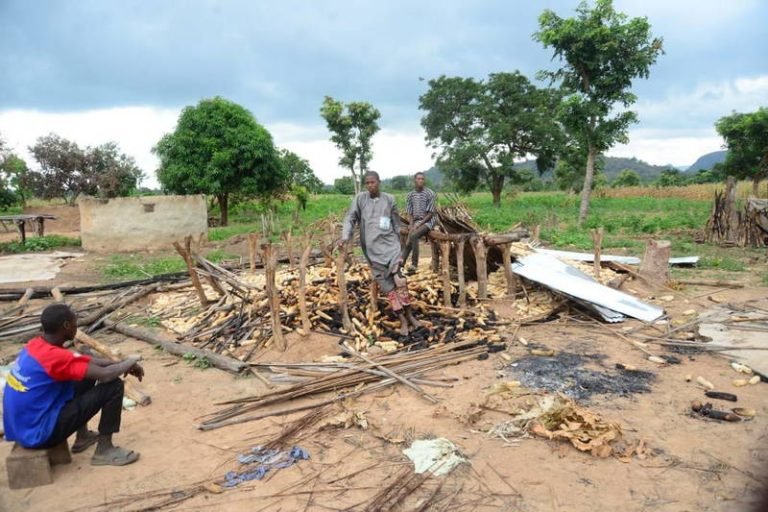
    “ My biggest regret is that I chose to invest in farming.I spent over 3 million on the farm in Ala Elefosan but I had to abandon it when herdsmen continued to set it ablaze repeatedly.

    “ Only the brave and armed moving in large numbers still go to that area to farm,many have been wounded and some persons have been killed too. I wished I had used my money to open a shop in town” he lamented.

    PC: People Gazette


    Amotekun And Hunters Bikers


    While the farmers go to farm scared, Ondo State owned Amotekun Corps was engaged in a superiority battle with the Ondo State branch of the Nigerian Hunter And Forest Security Services (NHFSS).

    A bill seeking the establishment of NHFSS has been before the federal parliament for over two years but has not received the needed approval.

    In a press statement released on the first day of October,the voluntary vigilante organisation accused the Amotekun Corps of taking the glory for their efforts without proper recognition for the organisation.

    “ Amotekun Corps Commander, Akogun Tunji Adeleye always claiming (sic)the credit of most successful operations without giving us adequate and correct mention.

    “Whenever he even wants to mention at all he just mention hunter, which is not supposed to be. The proper mention is Nigeria Hunters and Forest Security Service, NHFSS not just hunters because there are different groups claiming to be hunters nowadays, but NHFSS has been passed by the National Assembly.”

    The Organisation also claimed that many of the successes recorded by the Amotekun corps in Ondo State were the product of the organisation’s efforts.

    “I want to state that men of Nigeria Hunters and Forest Security Service carried out operations in Familugba forest and succeeded by nabbing kidnapping suspects and handed them over to Amotekun Corps.

    “Precisely last week, our men in Owo division rescued four kidnappers’ victims and apprehended one of the kidnappers and handed him over to Amotekun Corps, but unfortunately Amotekun Corps Commander, Akogun Tunji Adeleye claimed the credit.

    “Even, yesterday Monday 30th September, 2024, our men in Oba Akoko combed Oba forest on the information that someone had been kidnapped, they succeeded in the operation by rescuing the victim and apprehended the kidnapper, the kidnapper was handed over to Amotekun Corps in Akure.

    “I want to seriously state that if Akogun Tunji Adeleye, the Commander of Amotekun Corps can not be giving us correct mention on any operation succeeded by NHFSS and made handing over to them, then, it might be difficult to continue handing over suspects to them (Amotekun Corps), I want the government under the able leadership of Hon. Lucky Orimisan Aiyedatiwa to please come to our aide.”

    In his response, the commandant of the Amotekun Corps Adetunji Adeleye simply said “We are all hunters”.

    He implied that anyone who is keeping his environment safe is a hunter in Yoruba land and it will not be appropriate to arrogate the name to one group

    While these two organisations are engaged farmers move around in fear while no farmer spoken to by this reporter seems to have seen any Forest Ranger supposedly deployed by the Federal Government.

    Monarch and Politicians

    A native of Igbatoro who pleaded anonymity fingered traditional Chiefs in the area as part of the problem.
    “ Don’t let me deceive you,there are many angle to this problem. Many of the cattle used as a decoy by this criminals are owned by some traditional rulers in Akure North Local government.when your farm is destroyed and you report to them,yo will never get justice. Amotekun is trying but the problem lies with our traditional institution.”

    When asked if he has seen Agro Rangers in his community he said no.

    Like him many of the local farmers across the state have never seen an Agro Ranger, months after they were supposedly deployed.

    In a chat with the National Public Relations officer of the Nigeria Security And Civil Defence Corps Babawale Afolabi, the spokesperson confirmed that Agro Rangers are deployed in every state of the federation and they are present in Ondo State.

    On 29th of December 2024 the leader of herdsmen in Ondo state was attacked and killed by persons suspected to be cattle rustlers at ilu Abo junction,Akure North Local Government.

    The Commander of Ondo Amotekun Corps, Chief Adetunji Adeleye, who confirmed this said Yunusa was killed by individuals believed to be fellow Fulani herdsmen who wanted to rustle his cattle.

    They had earlier kidnapped his wife, but he fought them off and retrieved her.

    Unfortunately, they (gunmen) returned, overpowered, and killed him while trying to steal his cows.

    “A distress call was placed to the Amotekun Corps’ at the Ogbese outpost by fellow herdsmen who discovered Yunusa’s body at the scene.

    Upon arriving at the location, Amotekun officers found Yunusa’s body with multiple machete wounds. His motorcycle was also been set ablaze by the assailants”

    This incident once again proves that the Agro Rangers are not known to the farmers and herders and are not working in Ondo State.


    This report was supported by the Civic Media Lab

  • FCT World Bank-Assisted Clinics May Collapse Due To Govt’s Neglect

    FCT World Bank-Assisted Clinics May Collapse Due To Govt’s Neglect

    It was just past midnight when Sam Yakubu’s phone rang, waking him up from a deep sleep. He wasn’t startled, though, as he has grown accustomed to midnight calls from families with medical emergencies.

    Advertisement

    The call was not different from the other calls he usually received: a woman in labour was waiting anxiously at the clinic for his arrival.

    Yakubu, a volunteer at a World Bank-assisted Clinic in Dokuma Community, in Bwari Area Council of the Federal Capital Territory (FCT), has been catering to the health needs of the community ever since the clinic was established in 2019.

    Sam Yakubu, in the  Dokuma clinic.
    Sam Yakubu, in the Dokuma clinic.

     While the midnight calls from women in labour had become a normal thing for Yakubu, what happened that fateful night would become an experience he would never forget.

     “When I arrived and checked the woman, I noticed that it was not yet time for her to give birth, so I told her to walk around the clinic. We were at it for three hours when I noticed it was time. I hurriedly put on my hand gloves and bent to gently pull out the baby and that was when I blacked out,” he narrated.

    When Yakubu regained consciousness, he was lying on his bed at home with many members of his community wailing outside, thinking that he had given up the ghost.

    While some members of the community have attributed the incident to an attack by an ‘evil spirit’, Yakubu thought otherwise.

    He suspected he was exhausted from lack of sleep caused by the enormous task of catering to the health needs of over 1000 members of his community.

    This harrowing incident of 2022, left Yakubu severely traumatized, and rendered him incapacitated and unable to work for several days as he struggled to get back on his feet.

    Advertisement

    “I was scared after that. But I had to put myself together and continue again. For me, failure is not an option. I had to encourage myself and continue,” he said.

     The graduate of Shehu Idris College of Health, Kaduna, stated that the burden of providing healthcare services for his community would have been significantly reduced if the government had adopted the clinic.

    The clinic, a Community Social Development Programme (CSDP), was established through a Community-Driven Development (CDD) Approach project, where the community contributed 10 percent  of the project’s total cost.

    Clinic in Gawu, Kuje Area Council of the FCT.
    RClinic in Gawu, Kuje Area Council of the FCT.

    Essentially, Yakubu believes that government involvement would have alleviated some of the financial and administrative pressures associated with running the clinic, allowing for more effective healthcare delivery to the community.

     Yakubu uses his money to run the clinic, and with the current inflation and hike in prices of drugs, he barely has enough to live on as many of the residents cannot afford the drugs.

    The plea for government adoption of the clinic is even more urgent now than ever before, Yakubu explained as he attends to not just his community but also seven other neighbouring communities, some of which fall under Kaduna State.

     “In a single day, I can attend to up to five people or more,” he said.

    While the pregnant women receive antenatal care by day time at Kaduna, as the nearest Primary Health Care (PHC) Center in FCT is far from them, Yakubu steps in to provide critical support at the unholy hours of the night when help was very difficult to access, and this was despite the insecurity that held sway in such areas.

    The struggle to offer healthcare services to his people has grounded the 27-year-old volunteer as he could not progress in his career or engage in other endeavours.

     “Last year, I got admission to study Medical Laboratory Science at the University of Sokoto, but I couldn’t go because the chief and the people were crying, asking who would take care of their health needs when I leave. So I stayed back,” he  narrated.

     Yakubu is not alone in this struggle. Luka Peter, a volunteer in another World Bank-assisted clinic in Gawu, Kuje Area Council, also faces the same challenge.

    According to him, many of the babies he helped deliver were at night.

    “When labour starts, sometimes, I had to go to their houses because the pregnant women could not trek to the clinic,” he said.

    The graduate of the College of Health Science and Technology, Lafia, Nasarawa State, worries that his people would die from the absence of healthcare services if he eventually leaves, and pleads that the government employs staff, including himself, for the clinic.

     “If I leave, my people will suffer and they will be abandoned as no government will remember that there is a community called Gawu when it comes to immunization and distribution of drugs that are given for free.

    “Pregnant women will suffer more because no one will offer them antenatal care,” the 28-year-old volunteer said.

    Wheel chair in Dokuma Clinic
    Wheel chair in Dokuma Clinic

    The Project

     The clinic is part of the  FCT Community and Social Development Project, a World Bank-assisted project.

    The FCT Community and Social Development Project started in 2008, and additional funding was provided in 2014; First Additional Financing and 2016; Second Additional Financing.

    According to Shuaibu Adamu, General Manager of FCT/CSDP, during an interview in 2020, the project’s success “lies in its community-driven approach, which fosters a sense of ownership among community members.”

    The project selected communities to be attended to based on recommendations from the FCT area councils and the communities’ commitment to the project.

     Shuaibu had noted that the FCT/CSDP had funded over 160 micro-projects, with the World Bank funding an additional 40 supplementary projects.

    The projects include rural electrification, water provision, and building of healthcare centres.

    Consultation room in Gawu community
    Consultation room in Gawu community

     Communities’ Struggles

    Though the project is tailored towards empowering community members to take ownership of projects, the communities where these clinics are situated, however,  fear that without government presence, the clinics will at a point fail to exist.

    The community members told THE WHISTLER that ever since the clinic was established, they have been calling on the government to take ownership of the health institutions to no avail.

    Documents provided by Dokuma Community showed that the community contributed N988,094 from the N9,880,941 that was utilized in constructing the clinic and drilling a borehole in it.

    David Yakubu, one of the Dokuma community members instrumental in the initiation of the project, explained how he had written severally to the Bwari area council administration to send their staff to the clinic or recruit volunteers from the community who were ready to work, but got no response from them.

     David, who also provided THE WHISTLER with copies of the letters he had written, also stated that the community had escalated the matter and had written to the Federal Capital Territory Primary Health Care Board, yet the issues remained unattended.

     “We have been crying and nobody is giving us a listening ear. When CSDP finished the work, they called the area council and handed over the project to them. They refused to come and take charge. The facility is saving lives. If the area council had added its voices to our cry, I am sure that the FCT Primary Health Care Board would have listened and taken ownership of the clinic,” he said.

     He noted that the need for a clinic in the area became urgent due to the activities of kidnappers, adding that the people cannot travel long distances at night to seek medical services.

     “There was a time when the FCT was agog with kidnapping, particularly in the Bwari axis. We recorded over 37 kidnap cases where over 200 people were kidnapped. Though none of them is presently in captivity, over 27 people were killed. The government has not paid attention to the people in this community. When you move around, you hardly feel government presence here,” David lamented.

    Luka Elesha, from the Gawu Community, also shared the same feeling as David, stating that his community is tired of writing letters to the authorities to come to their aid.

    Elesha, who however did not produce copies of the letters, stated that though the Kuje Area Council administration had assigned medical personnel to the clinic some years back, the personnel eventually stopped work in 2023, and all efforts made to get a replacement for him had proved abortive, making it extremely difficult for the lone health volunteer in the community to shoulder the burden of administering healthcare to the community.

    Communities like Dokuma and Gawu are among many of the communities that are located far from the urban centers. It took THE WHISTLER over an hour from Bwari Town, on a motorcycle, through an untarred bad and dusty road, to get to Dokuma Community. While the journey to Gawu from Kuje required a shorter bike ride, this reporter had to wade through a stream at some point, before getting to the community. The remote locations of the visited villages underscore the urgent need for functional clinics to serve the local population.

     Area Council’s Nonchalant Attitude

    THE WHISTLER reached out to the Bwari Area Supervisory Councillor for Health, Sabwaya Morris Atnadu, to ascertain why the council seemed to be ignoring the community’s pleas for help, despite the projects being situated based on the council’s recommendations.

    Atnadu, after several phone calls, scheduled a meeting with THE WHISTLER and the chairman of the Area Council, Hon. John Gabaya. However, on getting to the area council, the councillor told this reporter that he was unable to reach the Chairman, claiming that the Chairman’s phones were switched off.

    “I can’t say anything to you without the chairman’s approval and now his phone is off. I can’t reach him,” he said.

     A Visit To FCT Primary Health Care Center Board

    Armed with a letter addressed to the FCT Primary HealthCare Center Board and written by the Dokuma Community in 2020, THE WHISTLER  visited the Board and was directed to the Head of the Planning Department of the board, Dr. Sebastian Esomonu.

    He immediately requested for the letter written by the community, and then went on to trace its location and status. From the mail department, Esomonu found out that it was sent to the Department of Monitoring.

    He immediately put a phone call to someone from the department named Joy. Joy, after enquiring about the name of the community, the ward, and the area council, exclaimed that Kawu ward in the council had been bedevilled by insecurity, adding that the Board’s services were halted due to insecurity.

    They however blamed the community for not doing a follow-up after delivering the letters.

    “We usually get such requests but it requires follow-ups. Since this letter came here, we have had like three executive chairmen. The department heads have also been changed,” Esomonu said.

    He asked the communities to write reminder letters while attaching the ones they had written before, and to also come for follow-ups.

    Asked what benefit the clinics could get if the government got involved, Esomonu said, “The community can have access to “Seed drugs” which are essential medicines that are provided free of charge or at a subsidized rate to healthcare facilities, especially in rural or underserved areas. There are also intervention drugs from NGOs.”

    This story was sponsored by the Civic Media Lab

  • Despite Govt Ban, Illegal Mining Flourish in Bauchi, Children Abandon Schools

    Despite Govt Ban, Illegal Mining Flourish in Bauchi, Children Abandon Schools

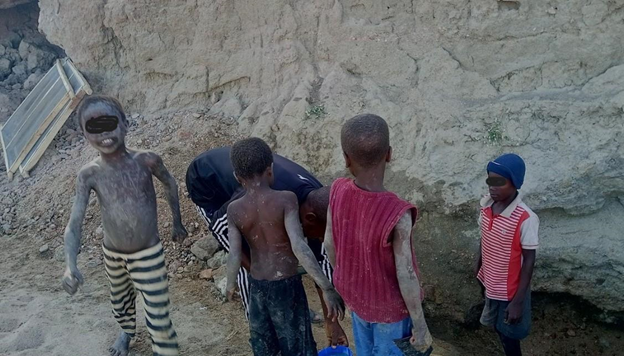
    Sulaiman, 12, under a scorching sun, carries a small bucket of sand on his head, balancing it carefully as he navigates the rough ground. 

    His face stained with filth and sweat, the young miner endures long hours under the hot sands and mud at Jirr mining site about 25 kilometres from Bauchi, the State capital.

    His hands blistered from shovelling heavy loads of sand to extract monoxide with his aspirations buried beneath the weight of his family’s economic struggles. 

    Like many others, Sulaiman’s parents, unable to make ends meet, withdrew him from Nadabo Primary School, seeing mining in their community as a lifeline in their fight against poverty.

    The children miss out on education and face the risks of accidents, health hazards, and exploitation at the sites. 

    The Rise of School-Child Miners

    For many families in such communities, the immediate income outweighs the intangible benefits of education.

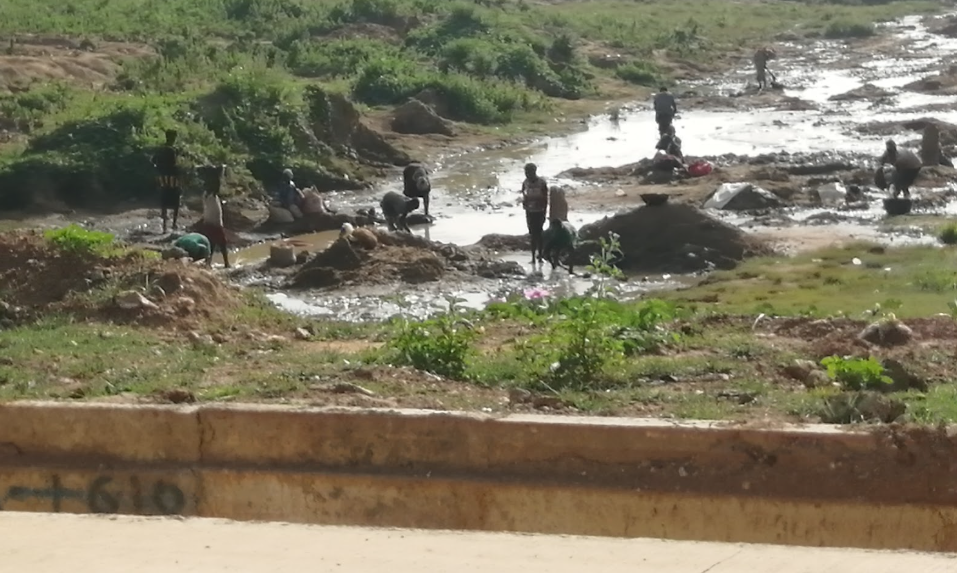
    Here, in Jirr, children as young as 10 work in sand pits, shovelling and carrying loads under the scorching sun and soggy pits in some instances.

    Like Sulaiman, Abdulrahman Musa, a 13-year-old boy, shared his daily routine with this reporter. “I used to go to school,” he said, his hands calloused from sand mining days. 

    Abdurrahman Musa and his friends at Jirr mining site

    “But my father said we need money to eat, so I had to stop. Now I work here almost every day,” he added.

    For communities like Jirr and Wandi in Dass LG of Bauchi State, the cycle of poverty deepens with many school children lost to the mines, jeopardising education which is the very foundation of their better future.

    In GDSS Wandi, the local Upper Basic school, over half of the students did not show up in a dimly lit classroom when this reporter visited in November 2024. 

    “Our classrooms are nearly empty. Parents prioritise mining because it solves some of their immediate needs, but it’s at the expense of their children’s future,” Malam Husaini, the administrative officer at the school lamented. 

    According to the officer, the ripple effects of sand mining in schools extend beyond individual families, noting that the dwindling number of students has brought some schools, particularly in Dass to the brink of closure. 

    According to school officials in Wandi, the school has seen attendance drop by more than 50% over the past year. 

    Schoolchildren processing sand

    Some classes are empty, as families pull their children out to contribute to household incomes.

    Malam Husaini identified sand mining as a leading factor contributing to student absenteeism in schools in the mining communities. 

    “Very few students are attending classes now, and this trend is alarming,” Husaini said, urging the government and parents to take action to address the issue. 

    He emphasized that poverty, the root cause of the problem, must be tackled through comprehensive measures by governments at all levels.

    Husaini’s position is supported by the World Bank report that about 87 million Nigerians lived below the poverty line in 2024. 

    A recent report by PricewaterhouseCoopers International Limited (PwC) said 13 million more Nigerians could be pushed below the poverty line due to some government policies in 2025. 

    UNICEF report also confirmed that children from the poorest families benefit least from national education funding.

    Children are often the first to bear the brunt of this crisis. Parents, struggling with economic hardship, often see no option but to involve their children in mining activities. 

    Husaini further called for initiatives to alleviate the hardships faced by families in the region, stressing that unless the economic struggles of communities are mitigated, efforts to keep children in school will remain futile. 

    Out-of-School Children in Bauchi

    Analysis by StatiSence on a survey conducted by Nigeria’s Multidimensional Poverty Index, a private data hub in Nigeria, showed that Bauchi had about 1.37 million out-of-school children in 2022.

    In 2023, Governor Bala Mohammed in his half-hour presentation, claimed that the number of out-of-school children had dropped to about 700,000 thousand.

    He said, “We have so far leveraged the number of out-of-school children from 2.3 million in 2018 when I took office to merely 700,000.”

    However, the governor did not clarify on how they arrived at the figure, even though the new figure is still alarming.

    The state government officials in 2024 also claimed that the state recorded a drastic reduction in the number of out-of-school children, bringing the total figure down to 521,000, though they did not provide any evidence on the ground that shows the changes.

    Women, Girls in the Mines

    The crisis has also drawn women into mining, compounding their already heavy burdens. 

    They combine mining labour with household responsibilities, often working long hours in hazardous conditions.

    Fatima Umar, a widow in her early 40s, works alongside her teenage daughters in the mines. 

    “We know it’s dangerous, but what choice do we have? If we don’t work, we don’t eat. We need the money to eat, so my son and three daughters go to the mines instead of school.” 

    Women at the mining site at Jirr

    This trend is widespread across several communities in the state, with economic hardship forcing families to prioritize short-term survival over long-term opportunities. 

    Like their boy counterparts, the girls exchange their quest for education for mining in their efforts to survive and support their families.

    Halima Usman, a 35-year-old mother of four in Toro LG, described her ordeal after the death of her husband in a society where most of her prospective helpers were reeling in poverty themselves. “My husband passed on two years ago,” she said. 

    “We have nothing. My son brings home N5,000 from the mine every week. It’s not much, but it keeps us alive.”

    In Bayara, a community on the outskirts of Bauchi, stands a sand-processing machine. Women and children push to the point with their faces etched with fatigue after long hours spent labouring at mining pits. 

    Some children, as young as 10, can be seen burdened by the weight of labour far beyond their years. 

    Women, often carrying babies strapped to their backs, work tirelessly with bags of sand in packages.

    Monoxide extracting machine at Bayara 

    An investigation revealed that besides Bauchi, Toro, and Dass local governments, illegal mining is taking place in Alkaleri, Ningi, and some parts of Tafawa Balewa. 

    More prevalent in 20 different sites in Toro where tin ore, gold, columbite, and monoxide, among other minerals, are mined.

    However, the residents of the communities expressed concern over the influx of illegal miners from Zamfara, Niger, Kaduna and foreigners to the mining communities, hence, gradually becoming a hideout for criminals.

    Bauchi Ban Illegal Mining 

    In a bid to curb illegal mining and its adverse effects, the Bauchi State Government in July 2024, banned any unauthorised mining of the resources in the state. 

    However, the ban’s enforcement has been weak, and illegal mining flourished, with rural areas becoming hotspots for the illicit trade, and with devastating impacts on children’s education in addition to other economic, social and environmental ills. 

    The ban was aimed at preserving the state’s mineral resources and protecting communities from environmental degradation and for security reasons. 

    “The ban was a good idea, but it has no impact here,” said Malam Yusuf, a father of nine in the Rimin-Zayam community in Toro. 

    “The truth is there is no alternative provided. The people are hungry, how can you stop them without providing them with what to eat?”

    With the absence of law enforcement, mining activities moved further. 

    Here, a joint at Goltukurwa, a community along Bauchi-Tafawa Balewa Road serves as the hub where the mined sand is transported for processing to extract monoxide or to the local markets.

    Goltukurwa mined sand loading joint

    Children, like adults, are not spared in this labour as they work for hours to earn a living and support families. The lure of quick financial gains drew them away from schools and into mining pits.

    Security Challenges Linked to Mining

    One of the most pressing consequences of illegal mining is its contribution to the growing insecurity. 

    Mining sites, often located in remote and poorly governed areas, serve as hubs for armed groups, including bandits and insurgents. 

    These groups exploit the lucrative nature of mining to fund their activities, purchasing weapons and sustaining operations.

    WikkiTimes reports that criminals and bandits that terrorise Ningi LGA of Bauchi State do visit some mining sites in Burra district of the State. 

    The Zamfara gold prey is a more explicit example, where competition over control of mining sites has fueled violent conflicts, leading to loss of lives, mass displacement, and destruction of livelihoods.

    In some cases, corrupt officials and security personnel have been complicit, either turning a blind eye or actively benefiting from the illegal trade.

    Recently, Senator Adams Oshimole alleged that some retired generals in the country are among the top beneficiaries of the illegal mining business.

    Environmental and Economic Effects

    The unchecked mining activities have also left a trail of environmental harm. Vast stretches of farmland have been rendered unusable, water sources contaminated, and landscapes scarred by deep pits and erosion.

    Degraded land by miners
    Women fetching contaminated water at Jirr mining site for use

    “Our lands are gone,” said Alhaji Buba, a farmer. “The soil is no longer good for cultivation, and the rivers are dirty. Even our livestock can’t drink the water.”

    The environmental consequences further fuel the poverty cycle, pushing more families into mining as agriculture becomes less viable.

    Economically, the informal nature of illegal mining deprives governments of substantial revenue. 

    While these activities generate profits for individuals and criminal networks, they contribute nothing to state coffers.

    Jibrin Saleh, a retired head of school services, and one of the stakeholders in Dass, said the sand mining activity has drawn many children out of classrooms. 

    To mitigate its impact, he explained, efforts are underway at the community level to implement a schedule aimed at balancing education and mining activities.

    “We are trying to create a system where students in upper basic schools can engage in mining in the morning and attend school in the afternoon. Similarly, pupils in primary schools would mine in the afternoon after returning from their morning classes,” Saleh said.

    Experts’ Perspectives

    Experts believe that addressing the illegal mining crisis requires a multi-pronged approach. 

    Dr. Rabi’u Barau, a sociologist at Bauchi State University, argues that education and livelihood programs must go hand-in-hand with enforcement measures.

    “You cannot just ban mining without providing alternatives. These families need sustainable ways to earn a living. Combining mining with education can work,” he added.

    He added that community engagement is also critical. “Traditional leaders, often influential in rural settings, can play a key role in advocating for education and discouraging child labour. 

    According to Dr Rabiu, the government’s efforts to address illegal mining are also undermined by a deep-seated mistrust between the authorities and the people. 

    Agency Speaks

    In response to children abandoning classes, the Bauchi State Universal Basic Education Board (SUBEB) said it has intensified efforts to combat the menace through community engagement and collaboration with traditional leaders. 

    Abdullahi Mohammed, the SUBEB spokesman outlined ongoing strategies to address the out-of-school children crisis.

    “We are actively working to address it. We have initiated a campaign in collaboration with community stakeholders to tackle this pressing issue in particular and the general issue of out-of-school children which is a nationwide challenge.”

    He further explained that the agency is leveraging traditional leadership to amplify its efforts. 

    “At the end of last year (2024), our Chairman met with the Emirs, who pledged their support and assured us they would cascade the campaign down to their subordinates. This partnership is vital in ensuring the message reaches every corner of the state,” the spokesman added.

    Ministry Clarifies 

    Sale Umar, the information officer for the Bauchi State Ministry of Natural Resources, clarified that the government’s intention was not to impose an outright ban on mining activities. 

    Instead, he explained, the focus is on formalizing and regulating the operations of local artisanal miners to ensure better oversight and organization.

    “The government aims to make mining activities official and structured. Local artisans need to be identified and supported to transform their work into formal businesses,” the officer told WikkiTimes. 

    He revealed that the state had signed a Memorandum of Understanding (MoU) with a Chinese firm to aid in the formalization process. This initiative, he said, is designed to streamline operations, ensure security, and enable the government to monitor activities effectively.

    He added that the ministry is also encouraging artisan miners to form associations, which would allow them access to mentorship from technical officers and support from the Ministry of Commerce and Industry. 

    The associations, according to the officer, would link miners to entrepreneurship programmes that align with federal initiatives. 

    He, however, emphasized that mining activities fall under the jurisdiction of the federal government, which complicates the state’s ability to enforce policies independently. 

    While the state government said it is working toward formalization, the continued involvement of school-aged children in mining remains a pressing concern, emphasizing the need to prioritize education and protect minors from exploitation.

    This report is produced with support from Civic Media Lab (CML)

  • Niger Govt Promised Security But Illegal Mining Continues Unchecked After Miners Attacked M.I Wushishi Residents

    Niger Govt Promised Security But Illegal Mining Continues Unchecked After Miners Attacked M.I Wushishi Residents

    Niger Govt Promised Security But Illegal Mining Continues Unchecked After Miners Attacked M.I Wushishi Residents

    By Umoh Umoh

    On the morning of  September 2, 2024, there was an attack on residents of the over 500 housing units at the M.I Wushishi Housing Estate in Minna, Niger state, leading to the reported death of one person and destruction of properties.. Emerging reports about the attack varied, with some media houses tagging the attackers as bandits while others described them as suspected illegal miners or hoodlums. Subsequently, the Nigeria Police Force, Minna State Command released a statement describing the attack as  the outcome of resistance by residents of the estate to illegal miners, noting that normalcy and calm had been restored. Investigations by AfriCast to establish the facts of the case have now revealed that the community remains at risk and illegal mining continues unchecked. 

    Miners Rush for Gold Puts M.I Wushishi Residents At Risk 

    Mining of minerals in Nigeria accounts for only 0.3% of its gross domestic product but the industry has gained significant media attention in recent years owing to an increase in illegal mining activities across the country and their connection to national security concerns. The Chairman, House of Representatives Committee on Solid Minerals,  Jonathan Gbefwi, had in July 2024, disclosed that illegal mining activities in Nigeria are costing the country about $9bn annually, with only 3 per cent royalty paid into government coffers by the few miners licensed to operate legally across the country. For many communities where these mining activities take place, this has led to destruction of livelihood and properties, with a rise in armed conflict, banditry, crime, widespread violence and kidnapping.

    M I Wushishi  is located in a part of Niger state said to be richly blessed with solid mineral deposits, especially gold, making it attractive to illegal mining businesses, and the neighbourhood has since become highly volatile and vulnerable to violent crimes. Residents who spoke to AfriCast confirmed that indeed, the recent attack on the estate was perpetuated by illegal miners who were aggrieved because the community had reported them to the police. The chief security officer of the estate, Mr Yahaya Abdulkabir said he was badly hit during the attack and has now been forced to relocate his family. “They singled out my house in particular for the attack because they know I am one person that usually comes out to pursue them from the estate. As I am speaking with you, my family is not safe,”  he said. 

     “They all know my house since it is just at the bank of this small river they mine from. As the man in charge of security in this estate, I am not allowing them rest and anytime I go out to work, I can’t concentrate because my wife and children are home, since they still find their way into the estate to mine,” Yahaya added.

    Like several other residents, he has since relocated his family to another location but those who remain mourn the incurred expenses from the attack and nurse fears that another attack is imminent.

    Dr Sani Ibrahim, a resident, explained that the attack was timed to coincide with when most people would have gone to work. “These boys came into this estate after we reported them to the police because of the damage they are causing to our homes. They decided to come after all the able men had gone out to their normal businesses,” he said. Meanwhile a resident who pleaded anonymity said the community was concerned about subsequent attacks. “I know of many people who have moved out of this estate after the attack because they feel these boys might likely come back for another attack. This is how banditry started. Most of these boys are from Zamfara and Sokoto states. The government has to come to our aid,” they noted. 

    Illegal Exploration Breeds Insecurity, Explain Stakeholders 

    Nigeria’s mineral sector is regulated by the Minerals and Mining Act 2007 (“the Act”). The Act repealed the Minerals and Mining Act, No. 34 of 1999 and vests control and ownership of all properties and minerals in, under or upon any land in Nigeria in the Federal Government. It further prohibits the exploration or exploitation of minerals without the grant of requisite permit.  Earlier this year, the Nigerian Mining and Geoscience Society (NMGS), had expressed security concerns, while accusing the government of not being interested in stopping illegal mining . NMGS President, Prof. Shedrack Olatunji who spoke at the society’s  255th Council Meeting of Nigerian Mining and Geoscience Society (NMGS) said the lack of qualified, well-funded, and well regulated personnel saddled with the responsibility of monitoring mining activities was evident that government was paying lip service to the idea of stopping illegal mining. He further advocated for the involvement of the private sector like NMGS to carry out oversight functions in collaboration with the Inspectorate unit in the mines office.

    Security consultant  agrees while noting that attacks on communities  by illegal miners are often carried out with the backing of authorities including the police, politicians and public officials , further noting that this would explain why there had been no arrest since the attack on Wushishi. 

    Miracle Ebube, a security expert in Abuja with Sapphire Security Consultants asserts that no crime of such magnitude can go on unabated without the backing of top figures in the society. He alleged that security personnel and top politicians are often accomplices in such practices. Ebube drew attention to the insecurity in the south east and also in the northern region, stating that most of those perpetrating these crimes are members of the society, well known by all. 

    He noted that when “bigger unknown forces are the ones backing a crime, even the security agents have little or no power to make arrests, reasons it is difficult for the security agents to step in. I go to Niger state regularly and I see and know what is happening.” 

    Residents of the community agree with him. They alleged that these illegal miners have the backing of registered recognised miners who use them to mine without ascertaining how the gold is obtained. Niger state government has granted mining rights to some registered companies to carry out legal mining activities within the state but according to Bello Musa, a resident in the estate, “these companies do not follow the standard procedures of mining. They are not even on the mining site. All they do is that there are some makeshift shanties with write-ups like ‘washer,’ opposite Wushishi estate to the other side of the road, that is where representatives of these companies stay. Once those illegal miners get those stones, they take them to locations like that and are paid off, while the stones are taken to the company for processing. How the gold is gotten, if lives were lost or properties destroyed during the process of digging is not their business.

    Shortly after the incident, the honourable chairman of Chanchaga local government council, Rt. Hon. Aminu Yakubu Ladan paid a courtesy visit to condole with victims of the attack, promising that security will be provided for the estate.

    Police Intervenes Briefly  But Illegal Activities Go Unchecked

    Residents of the community  confirmed to AfriCast that the security, which was provided by the Nigerian Police, were only stationed at the gate for two weeks, after which they withdrew. Even with the police at the gate, the illegal miners were reported to use some alternative tracks to their mining site.  The estate’s CSO, Yahaya also  pointed fingers at the National Drug Law Enforcement Agency, NDELA  for being unresponsive despite efforts from the residents  to inform them of the proliferation of hard drugs into the community by the illegal miners. 

    According to Yahaya Illiya, “the estate’s association had petitioned the NDLEA on the activities of the illegal miners, stating that hard drugs are being sold in the camp of these miners, which is just a stone throw from the estate’s fence, but we are yet to get any response in form of raiding the camp or a written reply,” and this makes these guys hardened.”

    Commenting on the unresponsiveness of NDLEA, Assistant Superintendent of Narcotics in Abuja, ASN Adebayor Adebisi said that “the agency does not go around drumming its accomplishment.” Adebisi drew attention to the fact that in May 2023, NDLEA intercepted explosives that were intended for bandit camps in Niger state.

    He stated that “since this has to do with classified information, I cannot speak much about what the agency is doing or intending to do to curb illegal drug abuse in Niger state”, but assured that residents of the state should be patient, as the war on illegal substance abuse is not a day’s job.

    When contacted on the developments since the attack and the promised security. The state Police Public Relations Officer, Wasiu Abiodun said that some security men were assigned to patrol the axis regularly, and normalcy has been restored to the area but the police are continuing their investigation to identify and apprehend those involved.

    In allegations to concerns that the investigation appears to be dragging and no arrested individual has been prosecuted, the police said “arrests are made regularly either by us or the estate’s security but most times, members of the estate don’t show up to press charges. As a civil institution that is bound by rules of engagement, an individual cannot stay beyond 24 hours in custody without trial.”

    The police further said that fear of reprisal or isolated personal attack might be one factor residents do not show up, so that their faces will not be marked

    This report is produced with support from Civic Media Lab (CML).

    By Umoh Umoh

  • Hopping to Riches: How Jigawa Residents Make Fortune Selling Frogs

    Hopping to Riches: How Jigawa Residents Make Fortune Selling Frogs

    For Muhammad Isah, a 32-year-old graduate of Crop Science, life after university was far from what he had imagined. Despite his aspirations for a white-collar job, unemployment forced him to explore unconventional options. Eventually, he found himself trading in frog meat, a business that has transformed his life. 

    “After graduation, I was idle and had nothing to do. I decided to join the frog hunting business to be self-reliant. Through this business, I make money and take care of my family,” Muhammad explained. 

    Today, he earns at least ₦150,000 monthly, a far cry from the uncertainty he once faced. His dreams now include building a house, getting married, and continuing to support his parents.

    Hadejia, located in Jigawa State, has become the hub of Nigeria’s thriving frog trade. With growing demand for frog meat both domestically and internationally, this trade sustains livelihoods and generates significant revenue. 

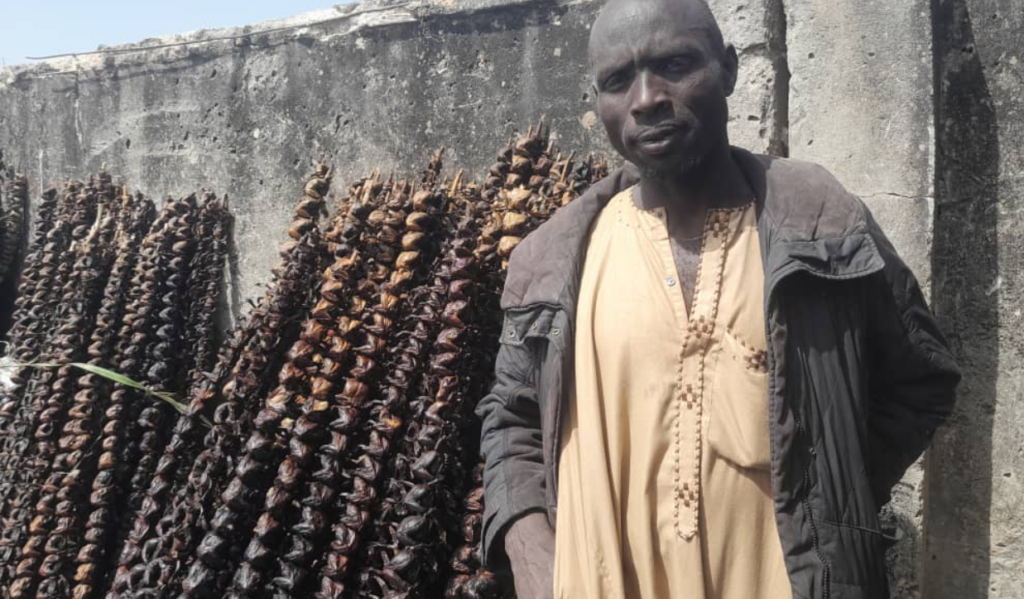
    Yusufu Dapchi, a seasoned trader with 20 years of experience, shared how the business has enabled him to provide for his family of two wives and several children. “I was even able to perform the pilgrimage through this business,” he said. 

    Yusufu Dapchi, a seasoned frogs dealer, in Hadeja. Credit: Muhammad Tahir

    But he noted challenges such as rising costs. “Previously, large frogs sold for ₦1,000 to ₦1,500 each, but now they go for ₦6,500,” he explained.

    Chibuke Alex, a trader in Guri Local Government Area, transitioned from fish farming to frog harvesting 15 years ago and has not looked back since then. “The frog business is more profitable,” he said. Earning at least ₦15,000 daily, he now supports his family despite concerns about the impact of farmers-herders clashes and climate change in Jigawa.

    Revenue Generation and Economic Contributions

    The frog trade is not only a lifeline for individual traders but also a significant source of revenue for local and state governments. 

    Mr. Godwin Idu, chairman of the Frog Buyers Association in Jigawa State, emphasised its economic impact: “Aside from profits made by traders, we generate at least ₦90,000 in loading fees alone for the government. Each truck that transports frogs to the southern part of the country pays ₦30,000, and sometimes we load more than four trucks every Sunday.” This cumulates to over ₦1.4 million annually from truck loading alone.

    Additionally, buses transporting traders and their goods generate weekly contributions ranging from ₦60,000 to ₦100,000. The demand spans across southern Nigeria and even international markets, including exports to China, the United States, and the Europe.

    Godwin Idu, Jigawa state chairman of the Frog Buyers Association. Credit: Muhammad Tahir

    The frog trade provided a lifeline to internally displaced persons (IDPs) affected by the Boko Haram insurgency. Many IDPs who relocated to Hadejia from Borno and Yobe states have found economic stability through the trade. 

    Different sizes sticks of roasted frogs on display at Hadeja market. Credit: Muhammad Tahir

    Alhaji Sulaiman, an IDP from Mallam Fatori, expressed gratitude for the opportunities the trade has provided: “Some members of our group now own houses, cars, and plots of land, thanks to this business.”

    Similarly, Malam Aba-Borr Baga, another displaced individual, has built a successful frog trading business over the past decade. Supporting a family of two wives and 19 children, he also mentors four apprentices. Despite his success, he dreams of returning to his homeland in Borno State. “We are emotionally attached to our home. Many of us wish to go back one day,” he shared.

    Read: How Hunger, Insecurity Push Underage Children in Niger State Communities to Abandon Schools, Embrace Illegal Mining

    Frog meat is not a traditional menu in Jigawa State, where the predominantly Muslim population avoids its consumption due to religious belief. Islamic scholars have long debated the permissibility of eating frogs, with many citing prophetic traditions forbidding their killing and consumption. The prophet said, “Its (frog) croaking is tasbeeh (praising Allah).

    However, demand for frog meat remains high in southern Nigeria and among international markets, sustaining the trade in regions like Hadejia.

    Challenges and Environmental Concerns

    Despite its profitability, the frog trade faces numerous challenges. Seasonal availability, rising costs, and inadequate infrastructure are recurring issues. Traders like Moses Classic, who relocated to Hadejia for the business, lament the lack of a conducive environment for their work. 

    Rising transportation costs, exacerbated by the removal of fuel subsidies, have also taken a toll. “Before subsidy removal, we spent ₦14,000 for a round trip. Now it costs almost ₦30,000,” said Mrs. Christina Akpepo, a trader from Benue State.

    Frog traders open for business at Guri market. Credit: Muhammad Tahir

    Environmental experts warn against the unchecked exploitation of frog populations, which could lead to habitat destruction and ecological imbalances. 

    “Stricter regulations are needed to prevent overexploitation,” urged Mr. Audu Oseni, an environmentalist. 

    Meanwhile, nutritionists highlight the benefits of frog meat, which is rich in essential amino acids, but caution against consuming toxic species.

    Read: How Jigawa Govt Abandoned Multi-Million Naira Electrification Projects, Deny Youth, Women Opportunities, Cripples NTA Hadeja

    As frog farming, or raniculture, gains traction, there are calls for government intervention to ensure sustainability. Traders and community leaders are advocating for a permanent market site and access to financial support. 

    “Over 5,000 people, including both natives and strangers, earn their livelihood through the frog trade,” said Mr. Idu.

    This report is produced with support from Civic Media Lab (CML).