Tag: Investigative

Investigative

  • Eroded Future: The Untold Story of Kano’s Fishery Center Crippled By Sand Miners

    Eroded Future: The Untold Story of Kano’s Fishery Center Crippled By Sand Miners

    Lukman Abdulmalik

    From a beacon of hope for young Nigerians who had dreams of a future in aquaculture, the School of Fisheries now lies in ruins with its classrooms buried under heaps of sand and the foundations exposed to the sun.

    What was supposed to nurture knowledge has been transformed into a wasteland carved out by illegal sand miners.

    Dredging machines, replacing students along the riverbanks, have left behind gaping craters and shattered dreams where once a place of learning and sustainable livelihoods thrived.

    On the dusty plains of Tassa in Dawakin Kudu Local Government Area of Kano State stands the shell of what was once a beacon of hope: the Entrepreneurship Fishery Center, established in 2019, was a school meant to train young people in modern aquaculture and open up new vistas for rural livelihoods.
    Student at the Entrepreneurship Fishery Center in Tassa, Dawakin Kudu LGA, before it was turned into a dusty plain PC: Stallion Times

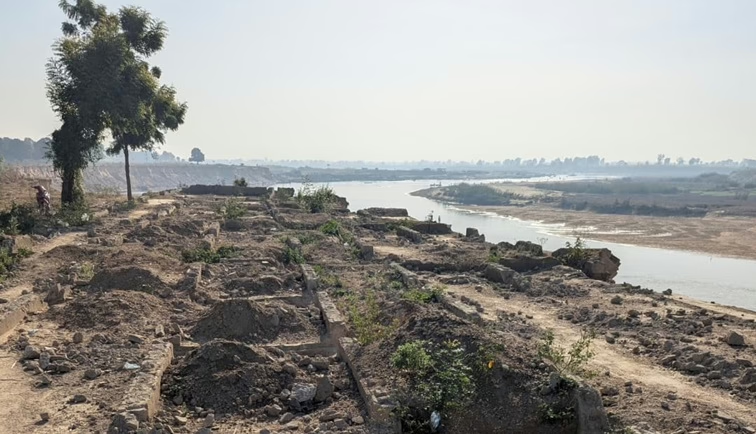
    Today, the structures are cracked, the ponds caved in, and the access road turned into a jagged trail carved by the relentless movement of trucks hauling sand from illegal mining sites.

    For Ibrahim Bala, the founder of the center, the devastation is not just physical, it is deeply personal.

    Sitting on a wooden bench beside what used to be his demonstration fish pond, he recounts the years of sweat invested in the project, his voice tinged with resignation.

    “I think today fishery is actually a multi-billion-naira venture,” he says.

    “That has always been my aim.

    “But the dreaded activity that spoiled the road and destroyed our investments brought that entire era to an end.

    “If we are able to get an intervention to stop the illegal mining, things can return. But for now, nothing can survive here.”

    The Entrepreneurship Fishery Center had been envisioned as a rural innovation hub, a place where youths and farmers could learn hatchery management, pond construction, feed formulation, and value addition.

    Its ponds were stocked, its hatchery was built, and its training plans were approved.

    But all of that was short-lived and destroyed in 2022.

    The miners who came at night

    Residents say that destruction started gradually. First, a few trucks rolled in at sundown to scoop sand from the riverbanks.

    Miners at work close to the Entrepreneurship Fishery Center PC: Stallion Times

    Then more came. With each passing day, grooves on the road grew deeper.

    Each week, houses shook with more force, as tippers roared through the village. In a few months, both the road approaching and the land abutting the school started to collapse.

    Bala desperately tried to fight back. “I personally sponsored some journalists to investigate. I hired lawyers.

    “But nothing was done, the cost of standing up to the miners, he explains, was too high.

    “I’m just a private entrepreneur trying to survive.”

    A school buried before it could grow

    For a rural training institution, Bala invested massively: the land was purchased for N4 million, and another N6 million was used to carve out the primary hatchery pit, a heavy engineering job involving excavators, drainage channels, and reinforced walls.

    One of the many ponds at the Entrepreneurship Fishery Center before it collapsed PC: Stallion Times

    The pond collapsed after repeated vibrations from the excavators weakened the soil.

    “That site alone had about N20 million sunk into it,” he explains quietly.

    “If you calculate everything, the total cost today would be running into hundreds of millions.

    “But how do you quantify the value of the fingerlings we lost? The broodstock? The equipment? The years we put in?”

    He pauses, staring at the rubble from the collapsed fish pit, a 20-meter stretch of earth now swallowed by a gaping hole.

    “This was supposed to train young people. It could have changed lives,” he adds.

    Usman Haruna, a resident of Tassa who voluntarily served as a security guard, narrated that he watched the center “die slowly.” From his post at the gate, he saw the first sand trucks arrive at night, then multiply until the ground trembled with every trip.

    “The day the main wall cracked, I heard it like a gunshot,” he recalls.

    “I tried to raise the alarm, but what could one man do?” Usman still visits the site, though the gate he once guarded now hangs crooked. “I protected this place from thieves,” he says, “but I couldn’t protect it from the people destroying the land.”

    Malla Ibrahim Bala, the founder of the center, with students at one of the fishery ponds PC: Stallion Times

    Villagers left to count their losses

    For the people of Tassa, the collapse of the fishery school is only one among many wounds.

    Aisha Abdullahi, a mother of four whose children had been hoping to study at the center, speaks of the frustration the community feels.

    “This school was our pride,” she says.

    “My son wanted to learn fish farming so he wouldn’t have to run to Kano city looking for work.

    “When the illegal miners destroyed the road, they destroyed our children’s future.

    “Now nobody wants to come here to teach or invest.”

    Another parent, Malam Shuaibu Nuhu, said authorities’ silence made him angry.

    “Every day these trucks pass, the ground shakes. Our houses have cracks.

    “The water sources are drying up because the miners have diverted the river. Nobody cares.

    “The school that was supposed to help our youth is gone.”

    Even students who once trained briefly at the center before it shut down have been left with nowhere to continue.

    “We were learning fish breeding and how to run small ponds,” says 19-year-old Rabi’u Ibrahim.

    “Now the place is empty. We just stay at home.”

    For 15-year-old former student Salisu Ibrahim, the school was the first real dream he ever had.

    He had hoped to learn hatchery management and start his own small fish farm.

    “When I held a fingerling for the first time, I thought I was holding my future,” he says.

    “But as the mining activities grew louder and the classrooms shook, learning became impossible.

    “The day he arrived to find the school was wrecked, he knew the dream was gone. “I still keep my notes,” he says.

    We lost more than a school, we lost a purpose – Instructor

    Before the school collapsed, the hatchery manager, Musa Abdullahi, lived for the sound of splashing water inside the training ponds.

    EThe remains of the Entrepreneurship Fishery CenterTassa PC: Stallion Times

    Every morning, he would arrive before sunrise, check the oxygen levels in the tanks, feed the broodstock, and prepare his materials for the day’s lessons.

    Today, he stands in silence before the same place which is now a broken crater.

    “I still go there sometimes,” he admits quietly.

    “Maybe because part of me refuses to believe it’s gone.”

    Musa was one of the first instructors hired to teach hatchery operations. He had left a job in Kano city because he believed so strongly in the rural development mission of the school.

    “When the center opened, we saw excitement in the students’ eyes,” he recalls.

    “Many had never seen a proper hatchery before.

    “Some had only heard about aquaculture on radio programmes. To teach them was a privilege.”

    But the day the main pond collapsed, Musa says he felt something collapse inside him too.

    He shakes his head.

    Musa now does odd consulting jobs in neighbouring communities, but he admits nothing matches the sense of purpose the school gave him.

    “I didn’t just lose a job,” he says softly. “I lost a place where I felt I was making a difference.

    “The future we were building together was destroyed before it even started.”

    Experts warn of looming enviromental disaster

    Environmental scientists say that the situation in Tassa is not unique: Illegal sand mining has turned into a national threat, destabilizing soil structures, damaging farmlands, contaminating waterways, and rendering infrastructure unusable.

    Dr. Nafisa Shehu, a geographer at Bayero University, explained that sand extraction that lacks regulation weakens the natural cohesion in the soil.

    “When heavy mining occurs near roads or buildings, truck vibrations spur erosion.

    “As land starts to cave in, the channels for water shift. What happened in Tassa is a predictable result of unregulated sand removal,” she says.

    She added that besides causing damage to the school, the activity is a long-term danger to the entire community.

    “They could experience flooding. Their groundwater could be polluted.

    “Houses could collapse. And if the miners continue, the village may become uninhabitable in the coming years.”

    The loss of the center is also seen by fisheries experts as a setback for rural economic empowerment.

    Dr. Yahaya Adamu, an aquaculture specialist in Kano, says the center could have helped hundreds of young people start sustainable fish businesses.

    “A functional fishery school provides technical skills, reduces youth unemployment, and boosts protein supply in the state,” he says.

    “Losing such an institution to illegal sand mining is a tragedy for both the community and the state’s agricultural development.”

    A struggle between power and survival

    Despite years of petitions, community protests, and media reports on the issue, residents claim the sand miners remain active and protected by what they describe as “big names in government.”

    One of the village elders who has been actively pursuing to end this ming, Tsoho Abdulwahab, says,  “We have tried all we can. Those controlling the sand business are powerful.

    Mallam Abdulwahab Tsoho, a village elder in the community PC: Stallion Times

    “When we complain, police come but nothing changes. They even threaten us.”

    Tsoho recalled that violent clashes erupted between villagers and miners in June 2022 and again in November 2023, following what residents described as unauthorized excavation of their farmlands.

    “The situation became so tense that we blocked the road leading to the riverbank,” he said. “After some hours, security operatives intervened, dispersed us, and allowed the miners to continue.”

    Tsoho, who also heads the Tassa Farmers’ Association, alleged that influential figures including some traditional rulers within and outside the area were backing the mining activities and had links to the state government.

    Entrepreneurship Fishery Center, Tassa washed away PC: Stallion Times

    According to him, residents have been dealing with harassment and destruction of farmland for more than 15 years.

    He listed those allegedly involved as: the Ward Head of Tamburawa, Auwalu; the Village Head of Tassa, Sani Umar; the Ward Head of Yanbarau, Abdullahi Dikko; and the Village Head of Fagi, Hassan Chiroma.

    Others he mentioned included: Ado Garba, Musa Umar, Adamu Abdulmumuni, Nura Yunusa, Abubakar Umar Dantube, and Kabiru Danmaje.

    He alleged that these individuals are among those suspected of benefiting from illegal mining activities with the backing of political interests.

    To verify the claims, this reporter contacted several of the individuals named. However, they either declined comment, ended the calls, or questioned the reporter’s interest in the matter.

    The fear is confirmed by Bala, its founder. “Their lives are at risk,” he says of the villagers.

    “The activity sweeping their land can sweep their life.

    “That is why whatever is done should focus on their own testimonies.

    “I have my documents and evidence, but the priority should be the people.”

    The Kano State Commissioner of Solid Minerals and Natural Resources, Hamza Safiyanu, expressed concern over illegal sand and mineral mining in the state, particularly the involvement in loss of properties.

    “We are aware of the situation and taking steps to address it.

    “We are working with stakeholders to identify and regulate these activities.”

    A community waiting for justice

    Today, it is almost impossible to pass through the road leading to the Entrepreneurship Fishery Center.

    The craters from where sand was illegally taken away are like open wounds on the landscape.

    The dream of an aquaculture training hub had been buried under the weight of unchecked greed.

    What remains is a community pleading for help, for the government to enforce environmental regulations, for security agencies to stop the intimidation, and for development partners to step in where private investment has been destroyed.

    “We just want our land back,” Aisha says softly.

    “We want our children to have opportunities. If the fishery school can be revived, it will save this village.”

    The future of Tassa hangs in the balance for now, eroded like the land that once held so much promise.

    On 26 December 2025, this reporter visited the Ministries of Agriculture and Education to seek clarification on the demolition of the fishery project in Tassa.

    After waiting for about an hour at the reception, no official attended to him.

    He was later directed to the Public Relations Units of both ministries, but no staff members were available.

    A staff member eventually provided the phone contacts of the Commissioners for Agriculture and Education.

    On 28 and 29 December, calls were placed to both ministries, but although the phones rang, there was no response or call-back.

    Follow-up text messages were also sent, yet no reply was received.

    This report was published with support from Civic Media Lab under its Grassroots News Project (GNP)

  • From Lifeline to Liability: How Oil Pollution Ruined a Community’s 20-Year-Old Water Well.

    From Lifeline to Liability: How Oil Pollution Ruined a Community’s 20-Year-Old Water Well.

    By Omowumi Abraham

    The residents of Omikunle, Yemetu, in the Ibadan North Local Government Area of Oyo State, have cried out over the government’s failure to deliver on a promised borehole after their only reliable source of water became contaminated.
    Many residents have been waiting for a long time for the borehole, as they continue to suffer from a lack of potable water, essential for their daily survival in the community.

    “The government promised to provide a well, but we’ve not heard anything from them since then,” said a resident, Alhaja Falilatu Raji.

    “We want the government to help us build another well,” Ade Aderiyigbe in his statement, said this during a visit by this reporter to the community.

    HOW THE CRISIS BEGAN

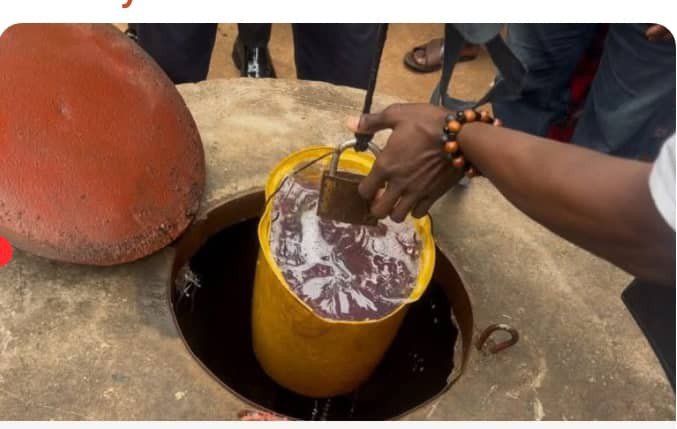
    On September 6, 2025, news spread about the discovery of crude oil in Yemetu. The Oyo State Police Command also confirmed a report at about 6:50 p.m. the same day, that an unusual liquid had appeared in a community well. Officers from the Yemetu Division arrived shortly after and discovered a thick, diesel-like substance inside the water source.

    As residents gathered around the well, some attempted to fetch the strange liquid, but the police cordoned off the area, while the Oyo State Ministry of Environment conducted tests confirming it was diesel, and not crude oil.

    As a temporary measure, the Oyo State Water Corporation supplied 5,000 liters of clean water to affected residents.

    However, what was once a hopeful assurance that clean water would soon return has turned into deep frustration, as months have passed without a single sign of progress and action.

    The affected well, co-owned by three wives in their 80s, who also now lack water supply, had served the community for more than two decades before suddenly turning oily and unsafe for use.

    One of the wives, and the spokesperson for the three women, Alhaja Falilatu Raji Faramade, narrated their ordeals despite government promises. She said, “We just woke up one morning to fetch water for ablution and discovered that our water had turned into something we could not comprehend (due to the oily substances). It was surprising, so we raised an alarm. It’s been 20 years since we drilled this well, and nothing of such had happened before.”

    Speaking of government intervention, the octogenarian said, “The government promised to provide a well, but we’ve not heard anything from them ever since. We had to start buying water at ₦200 per washing container, also known as Tub. That’s how we cook, bathe, feed, and do other necessary things that need water.”

    Alhaja Falilatu Raji Faramade

    Recounting their discomfort since the incident, Alhaja Falilatu said things have not been easy due to their old status. “The well, even though privately owned by us, serves the whole community. We used to cook with it, drink, bathe, and so on.  Now, the government instructed us not to drink it or use it for any purpose. They pumped out everything in the well, hoping to get fresh water, but the water remains contaminated.”

    The Nation newspaper had reported on the 17th of September that investigators under the directives of the Oyo state Ministry of the Environment also inspected a telephone mast located less than three meters from the affected well, but confirmed there was no evidence of linkage of the facility to the affected well.

    However, the owners of the mast have been directed by the ministry to provide a borehole for the community as part of their corporate social responsibility.

    As to whether the mast was being purportedly regarded as the source of the contamination, Alhaji Falilatu expressed uncertainty and appealed to the government for help.

    She said, “We cannot say for sure. Only the policemen and government agencies who came can confirm that. I don’t understand how it happened. The transformer beside it has been there for a long time and nothing happened until now. Getting water has been stressful for us at this age. The government should help us with a new borehole.”

    The elderly women, too frail to fetch water themselves, now depend on neighbors and daily purchases of water to survive, a burden made heavier by rising costs and limited finances available to them as they cannot work again to earn an income.

    NO ALTERNATIVE

    Sharing the events as they unfolded, a woman in her mid-40s, Ade Aderiyigbe, took a deep breath as she began to recount the events she witnessed.

    “The very day it happened; I went there to fetch water but was told some substances had been poured into the well. Surprisingly, when I tried, the first draw was like diesel, the same as the second draw.

    “Then we stopped and made a video of it that went viral and drew the attention of government agencies. When the government came, they drew out everything until it was dry. They also supplied us with a tank of water and promised to fix the well, but since then, we have not heard anything from them.”

    Recounting how useful the well had been and how difficult life has become without it, she said, “The well serves everyone in this community. We even drink from it, but now that there is no alternative, we’ve been left to fend for ourselves by buying water from another community. We want the government to help us build another well.”

    Another resident, Motunrayo Akanji, shared her ordeal, corroborating the accounts of other witnesses.

    “That day, we noticed that the surface of the water looked unusually shiny. Out of curiosity, we drew out what we thought was water, but it turned out to be pure diesel. The police later secured the well until government officials arrived. They evacuated the contaminated water and left it overnight to see if fresh water would emerge. Unfortunately, the new water that surfaced the next day was still contaminated. Since then, we have been left to our fate; the well has become completely useless.

    She further stressed that, “The owners of the well are elderly women who can no longer move around, so they depend on us, their neighbors’, to fetch water from another community not just for them but for ourselves as well

    Speaking of the effort of the Oyo State government, she said “After the government removed the oily substances and took it away, they supplied us with water that lasted only a day. Since then, we haven’t heard anything from them.”

    Another eyewitness, Kabirat Adebiyi, while expressing her distress, lamented the situation with clear frustration, saying, “It was like a miracle when we opened the well to fetch water that morning. We did not even know what it was, despite lots of speculations, until government agencies came and said it was diesel.

    “We thought it was the mast beside the well, but there is no link or connection between the mast and the well. Since then, we have not been able to use the water. Despite promises made by the government to build another well for us, nothing has been done.”

    “Please help us to do something about it. We are tired of buying water for our daily use. I sell tomatoes, and I need a lot of water to wash them before sale. Its not been easy,” she pleaded.

    A student, Olamide Faramade, who also is as a resident of the community, shared her ordeals during a brief interaction with this reporter.

    “The government promised to give us water, but we have not heard anything from them. They said the diesel was from the mast close to the well. They pumped out the content and left. It has been taking a toll on me in particular as a student because I have to buy water to cook and so on and I have no choice,”, she stated.

    According to Chapter II, Section 20 (Environmental Objectives) of the Federal Republic of Nigeria’s Constitution, “The State shall protect and improve the environment and safeguard the water, air and land, forest and wildlife of Nigeria.” This implies that the government is responsible for ensuring safe and adequate water resources.

    The Oyo State Water Corporation Edict (1977, amended 2006) also empowers the state government to provide potable water to residents.

    As the government-maintained silence on the stalled intervention, a call was placed to a top official in the state’s Ministry of Environment, who requested anonymity.

    In his brief response, he said: “I’m not permitted to speak on this matter, but as colleagues, I can tell you this: the crude-oil claim is a rumour. It appears someone may have poured something into the well; no crude oil was discovered. I’m also not aware that the government promised them another well. However, through the Ministry and the Oyo State Water Corporation, a water tanker was provided for the community’s use.”

    When asked if the mast owner had been directed to take responsibility for the well, as earlier reported by The Nation, he declined to respond, simply stating: “No comment.”

    When contacted, the Oyo State Commissioner of Information and Orientation, Prince Dotun Oyelade said he’s sure something is being done.

    Oyo State Commissioner of Information and Orientation, Prince Dotun Oyelade

    According to him, the government doesn’t promise something and does not fulfill it. So if it was claimed that crude oil was discovered and it was later disclaimed, not even that will stop the governor from fulfilling his promise if he had said so. “So, the only thing I can confirm for you is to seek an audience with the Ministry of Environment or Ruwassa, the people in charge of water in Oyo state, and I will do that presently. They are the only people that can confirm it. I’m sure something is being done.  I will confirm after my meetings today.  If the governor promises, the governor fulfills and that’s what he’s been doing for over six years.”

    In a separate interview with a water rights advocate, Gideon Adeyeni, he spoke about the contamination while sharing his experience in advocating for access to clean water.

    He said, “Based on my experience over the past years advocating for access to clean drinkable water, especially in marginalised communities, contamination, aside from privatisation (of public water assets) is another means through which communities are denied access to clean drinkable water.

    The water rights advocate noted it was the government’s responsibility while also highlighting the impact on the communities. He said, “Sometimes, as is the case here, contamination aids privatisation.  It is not uncommon to find communities where the underground water has been contaminated, usually with petroleum or some other chemicals, leaking through a poorly maintained or burst pipeline or storage.

    “Whichever way the underground water gets contaminated, it is the duty of the government to ensure that people have access to clean drinkable water by ensuring the prevention of such contamination or quick cleanup.

    “Unfortunately, the government and its agencies have been negligent in preventing or cleaning up such contamination, leaving many marginalised communities across the country without access to clean drinkable water for a long period of time.

    Adeyeni linked contamination to privatisation, calling for resistance to water injustice. “This often leads to a situation in which communities are left at the mercy of private water providers, indicating how contamination could aid privatisation in the denial of the right to clean drinkable water.

    “The denial of the right to clean drinkable water to any individual or community constitutes water injustice, and must be resisted. The way forward is for us to continue to demand water justice, that is, the fulfillment of the right to clean drinkable water for all, which means challenging water privatisation and calling out the government to prevent and clean up contamination, and thereby build the water justice movement.”

    An Environmental Health Officer, Daniel Akande, raised concerns from a professional standpoint. He said, “I must say that clean and safe water is a fundamental right, and continued exposure to petroleum-contaminated water can cause severe health challenges and environmental hazards. So, this needs urgent intervention.”

    Sharing his view on who should be taking the lead in addressing this issue, Akande said the government has a legal and moral responsibility to immediately provide a replacement borehole as promised, conduct proper remediation (risk assessment) of the polluted well, and hold whoever is responsible for the contamination accountable.

    He added, “The government directly or indirectly profits from the telecommunications that own the mast that is allegedly responsible for the pollution.”

    The Environmental Health Officer advised the community to take proactive measures by petitioning the Environmental Health Council of Nigeria or some climate change groups or NGOs, if the local or state government is already aware of the incident and takes no sustainable measures to address the menace.

    With the growing crisis of climate change, which has caused droughts in some communities, access to potable water continues to be a major concern for many, especially community dwellers who have always relied on local sources of water.

    ***************

    This report was produced with support from Civic Media Lab

  • Kwara Govt Denies N800m Ranch Project Despite Evidence

    Kwara Govt Denies N800m Ranch Project Despite Evidence

    By Zainab Sanni

    The Kwara State Government has said that it did not spend N800m on a ranch project, stating that such a project does not exist. This was contained in a press statement issued on Wednesday, February 12, by the Commissioner for Agriculture and Rural Development, Oloruntoyosi Thomas. 

    This is in response to an AfriCAST investigation published on Monday, February 10, on the state government spending 800 million naira on a non-existent ranch project. AfriCAST had revealed that the AbdulRahman AbdulRazaq-led administration budgeted a total of over 6 billion naira in  the 2022 and 2023 budget for the establishment of a ranch in Malete town, Moro Local government area of Kwara State to boost the agricultural sector in the state. AfriCAST’s review of the budget performance document prepared by the state government for 2023-2024 confirms that the sum of N860,005,731 was released for the project, indicating that the ranch project had commenced. However, our investigations revealed that there is no ranching project in Malete town.

    Despite existing evidence to the contrary, the government insists it has not spent any money on the proposed Malete ranch between 2022 and 2023, as noted in the AfriCAST investigation. In her rebuttal to the claimed amount in the investigation, Thomas stated that the only related expenditure in the said years was N29,000,000 spent in 2022 for essential services such as topographic survey, environmental impacts assessment, and drone flights across the Malete site for the Kwara Special Agro Industrial Processing Zone project dated February 28, 2022.

    She also said that the other closest volume of government’s expenditure in that category was the payment on October 9, 2023 of N779,506,155.08, another counterpart funds for the Special Agroprocessing Zone (SAPZ).

    Thomas added that: “SAPZ is an ongoing five-year project funded by the African Development Bank, AfDB, and Islamic Development Bank. At the moment under SAPZ, there are four Agricultural Transformation Centres (ATCs) in Baruten (Okuta), Kaiama (Kaiama), Ifelodun (Olodan), and Asa (Afon). All the ATCs serve as production and aggregation centres, while Malete is the industrial hub.”

    “The description in the budget for this expenditure is ‘Federal Government Contributions for Livestock Development (State Govt).’ These livestock programmes included L-PRES and SAPZ, a component of which ranching/grazing reserve is. This is normal in the national charts of accounts format. It is disturbing that the media refused to mention SAPZ (the real basis for the closest expenditure) in its report, even when not a dime was actually spent on ranch.”

    “This clarification is for innocent members of the public who may have been misled by the mischievous publication. The intention of such publications is neither to inform nor encourage healthy debates around public expenditure, but to give negative portrayals of anything Nigerian and its government,” Thomas concluded

    Recall that in our report, AfriCAST reached out to Thomas but she was not available for comments. Neither text nor WhatsApp messages sent to her were answered at press time. Also, the press secretary to Kwara State Governor, Rafiu Ajakaye, neither answered calls nor responded to SMS sent to him. All subsequent reminders sent to both the commissioner of Agriculture and Press Secretary to the governor were not responded to until the report was published.

  • INVESTIGATION: Kwara State Government  Spent Over 800 Million Naira On A Ranch That Does Not Exist

    INVESTIGATION: Kwara State Government  Spent Over 800 Million Naira On A Ranch That Does Not Exist

    The Kwara State Government, led  by AbdulRahman AbdulRazaq budgeted a total of over 6 billion naira in  the 2022 and 2023 budget for the establishment of a ranch in Malete town, Moro Local government area of Kwara State to boost the agricultural sector in the state.

    A review of the budget performance for the two years confirmed that the sum of N860,005,731 was released for the project, an indication that the construction of the ranch project had commenced. However, investigations by Africast reveal there is no ranching project in Malete town. 

    ________________________________

    Students hoping into their various Vehicles / photo credit: Yunusa Umar| AfriCast

    It was a busy Wednesday in Malete village when this reporter arrived in the students’ community where passengers including students were jostling for Tricycles, Buses and Motorcycles.

    Furniture Speaking with this reporter  photo credit: Yunusa Umar| AfriCast

    One of the residents in Malete town, Nurudeen Ishaq who had asked to be referred to as Oga Furniture , expressed surprise when asked about the location of the Ranching project in his community. A minute of silence engulfed him and left him repeatedly saying ‘Ranch project in Malete’ before adding that students of Kwara State University would know better if there was any such project. 

    He added  in pidgin language, “I no sure o say Ranch project Dey for Malete here”. 

    Malete is a town in Kwara State, Nigeria, known primarily for being the location of Kwara State University. The community is part of the larger Ilorin metropolitan area, and located in the Moro Local government area of the state.

     Residents Not Aware Of  Ranch Project

    A quick chat with residents in several spots around the community indicated that no one was aware of any ranch project in the community.  We met Jimoh Olaiya, a middle aged-man sitting under a shade and sorting out files. When asked about the location of the ranch, he said “There is no Agricultural ranch project in Malete.

    Other residents interviewed similarly dismissed questions about the location of the ranch project built by Abdulrahman’s led administration but none could confirm the exact location where the project was built.

    A woman simply identified as Sharifat Yusuf (Iya-guguru) was sitting on the veranda of her house, with her grand-children when this reporter  met her.  The aged-woman told AfricCast that the government had promised several times to establish a Ranch but has not done so.

    “The government is just saying that they would build but they have not done anything about it. Since last year, the government came to clear land to build but didn’t build there”, the aged woman said, while sitting under her Veranda.

    According to her, “The three conjoined communities allocated land for them but they didn’t build anything on it”. Multiple residents who spoke to Africast said government’s emissaries came to the community a day before this reporter’s visit on December, 4, 2024. 

    We also visited  nearby communities__Ajagbe and Kogba within Moro local government area but all the residents we spoke to said there was no ranching project in the areas visited. A further 20-minute walk within the two communities by our reporter showed no sign of government-owned  properties in the villages.

    Our Company Is Not Aware Of  Any Other Livestock Company in Malete”, Says Agro Programmer Manager

    When this reporter visited hamlet communities in Malete, he was informed about Agro Company, a private enterprise in the town, primarily involved in Livestock development.

    Arowojobe, Agro Programme Manager With His Colleague/ photo credit: Yunusa Umar| AfriCast

    The company manager of Agro company,  Eng. Tolulope Arowojobe, stepped out of his official vehicle with his colleagues when this reporter approached him. 

    “When it is all about livestock, it is not here. I am the programme manager and I am not aware of any Ranch or livestock project in Malete”, Arowojobe told Africast. 

     Agro company in Malete/ photo credit: Yunusa Umar| AfriCast

    The manager repeatedly mused over the question then told this reporter that if there was any ranch project then it had to be in another place, not Malete. “We are in charge of Agro development but we are yet to build any ranch so far for livestock here,” he said. 

    Government Bumps Over N800 Million For Ghost Ranching Project

    AfriCast reviewed the 2022 and 2023 budget performance of Kwara State to verify if the N6,100,000,000 allocated to establish the Ranch project in Malete community, Moro local government was disbursed. 

    The budget performance between January 2022 and September, 2023, showed that a total sum of N889,005,731 had been spent on the construction of the project yet it doesn’t exist in the area designated for the project. 

       The community’s monarch.

    The community’s monarch, Abdulkareem Babatunde Oreoluwa, known as Magaji Malete further confirmed this when he told AfriCast that there was no ranching project in his community.

    “The government had acquired land from the community almost 50 years ago, but each person who owned the land was only given a sum of N2000 for their land”.

    He further empahsised that there was no ranch built on the lands acquired while noting that a ranch would have been helpful as there has been conflict between the herdsmen and farmers in the community. 

    “What we have done so far is to establish a committee that monitors the activities of the Fulani herdsmen in the community and ensures that they adhere to the rules and regulations set by the community,” he said. 

     Obatunde Toyin, a community development leader  in Malete told AfriCast said he was certain that the local government had no ranch project from the government.. He was shocked to hear that funding had been allocated  to establish a Ranch project in his community.

    “They have not done any project in Malete apart from a farming initiative for young people. That is the only project the state government has done in Malete. 

    “The government collected land to plant soybean due to shortage of rain but the crops failed. Apart from that one, there is no other project”, he told this reporter. 

    Kwara Government Keeps Mum 

    When AfriCast reached out to the Commissioner for Agriculture and rural development in the state, Oloruntoyosi Thomas, she was not available for comments. Neither text and WhatsApp Messages sent to her remained unanswered as of press time.

    Also, Rafiu Ajakaye, the press secretary to Kwara State Governor neither answered calls nor responded to SMS sent to him as of press time. All subsequent remainders sent to both commissioner of Agriculture and Press Secretary to the governor were not attended to.

    This report is produced with support from Civic Media Lab (CML).

  • Hopping to Riches: How Jigawa Residents Make Fortune Selling Frogs

    Hopping to Riches: How Jigawa Residents Make Fortune Selling Frogs

    For Muhammad Isah, a 32-year-old graduate of Crop Science, life after university was far from what he had imagined. Despite his aspirations for a white-collar job, unemployment forced him to explore unconventional options. Eventually, he found himself trading in frog meat, a business that has transformed his life. 

    “After graduation, I was idle and had nothing to do. I decided to join the frog hunting business to be self-reliant. Through this business, I make money and take care of my family,” Muhammad explained. 

    Today, he earns at least ₦150,000 monthly, a far cry from the uncertainty he once faced. His dreams now include building a house, getting married, and continuing to support his parents.

    Hadejia, located in Jigawa State, has become the hub of Nigeria’s thriving frog trade. With growing demand for frog meat both domestically and internationally, this trade sustains livelihoods and generates significant revenue. 

    Yusufu Dapchi, a seasoned trader with 20 years of experience, shared how the business has enabled him to provide for his family of two wives and several children. “I was even able to perform the pilgrimage through this business,” he said. 

    Yusufu Dapchi, a seasoned frogs dealer, in Hadeja. Credit: Muhammad Tahir

    But he noted challenges such as rising costs. “Previously, large frogs sold for ₦1,000 to ₦1,500 each, but now they go for ₦6,500,” he explained.

    Chibuke Alex, a trader in Guri Local Government Area, transitioned from fish farming to frog harvesting 15 years ago and has not looked back since then. “The frog business is more profitable,” he said. Earning at least ₦15,000 daily, he now supports his family despite concerns about the impact of farmers-herders clashes and climate change in Jigawa.

    Revenue Generation and Economic Contributions

    The frog trade is not only a lifeline for individual traders but also a significant source of revenue for local and state governments. 

    Mr. Godwin Idu, chairman of the Frog Buyers Association in Jigawa State, emphasised its economic impact: “Aside from profits made by traders, we generate at least ₦90,000 in loading fees alone for the government. Each truck that transports frogs to the southern part of the country pays ₦30,000, and sometimes we load more than four trucks every Sunday.” This cumulates to over ₦1.4 million annually from truck loading alone.

    Additionally, buses transporting traders and their goods generate weekly contributions ranging from ₦60,000 to ₦100,000. The demand spans across southern Nigeria and even international markets, including exports to China, the United States, and the Europe.

    Godwin Idu, Jigawa state chairman of the Frog Buyers Association. Credit: Muhammad Tahir

    The frog trade provided a lifeline to internally displaced persons (IDPs) affected by the Boko Haram insurgency. Many IDPs who relocated to Hadejia from Borno and Yobe states have found economic stability through the trade. 

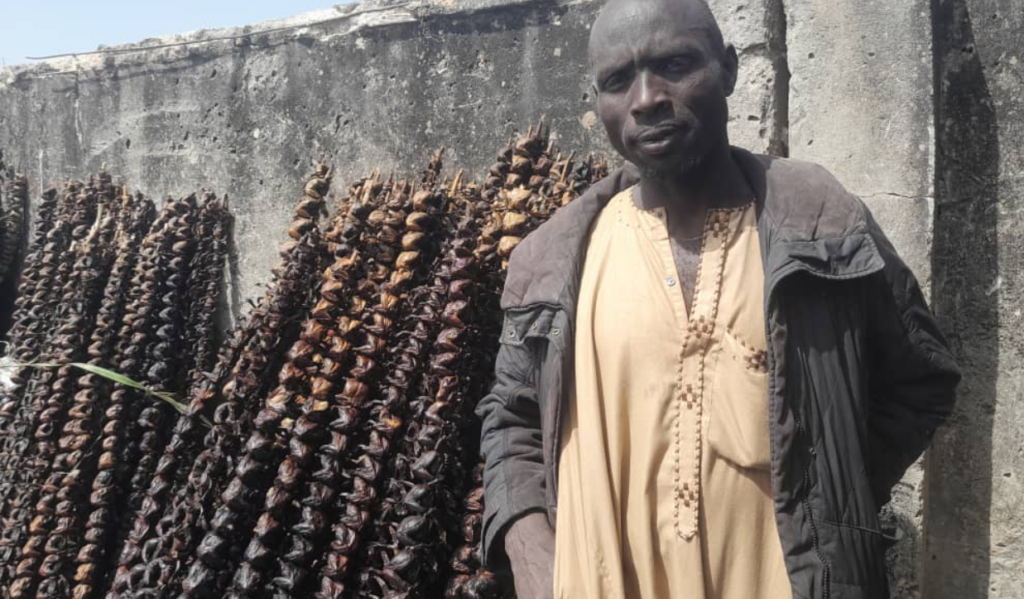
    Different sizes sticks of roasted frogs on display at Hadeja market. Credit: Muhammad Tahir

    Alhaji Sulaiman, an IDP from Mallam Fatori, expressed gratitude for the opportunities the trade has provided: “Some members of our group now own houses, cars, and plots of land, thanks to this business.”

    Similarly, Malam Aba-Borr Baga, another displaced individual, has built a successful frog trading business over the past decade. Supporting a family of two wives and 19 children, he also mentors four apprentices. Despite his success, he dreams of returning to his homeland in Borno State. “We are emotionally attached to our home. Many of us wish to go back one day,” he shared.

    Read: How Hunger, Insecurity Push Underage Children in Niger State Communities to Abandon Schools, Embrace Illegal Mining

    Frog meat is not a traditional menu in Jigawa State, where the predominantly Muslim population avoids its consumption due to religious belief. Islamic scholars have long debated the permissibility of eating frogs, with many citing prophetic traditions forbidding their killing and consumption. The prophet said, “Its (frog) croaking is tasbeeh (praising Allah).

    However, demand for frog meat remains high in southern Nigeria and among international markets, sustaining the trade in regions like Hadejia.

    Challenges and Environmental Concerns

    Despite its profitability, the frog trade faces numerous challenges. Seasonal availability, rising costs, and inadequate infrastructure are recurring issues. Traders like Moses Classic, who relocated to Hadejia for the business, lament the lack of a conducive environment for their work. 

    Rising transportation costs, exacerbated by the removal of fuel subsidies, have also taken a toll. “Before subsidy removal, we spent ₦14,000 for a round trip. Now it costs almost ₦30,000,” said Mrs. Christina Akpepo, a trader from Benue State.

    Frog traders open for business at Guri market. Credit: Muhammad Tahir

    Environmental experts warn against the unchecked exploitation of frog populations, which could lead to habitat destruction and ecological imbalances. 

    “Stricter regulations are needed to prevent overexploitation,” urged Mr. Audu Oseni, an environmentalist. 

    Meanwhile, nutritionists highlight the benefits of frog meat, which is rich in essential amino acids, but caution against consuming toxic species.

    Read: How Jigawa Govt Abandoned Multi-Million Naira Electrification Projects, Deny Youth, Women Opportunities, Cripples NTA Hadeja

    As frog farming, or raniculture, gains traction, there are calls for government intervention to ensure sustainability. Traders and community leaders are advocating for a permanent market site and access to financial support. 

    “Over 5,000 people, including both natives and strangers, earn their livelihood through the frog trade,” said Mr. Idu.

    This report is produced with support from Civic Media Lab (CML).

  • Investigation: In Kwara Poly, senior lecturer extorts students, demands money to manipulate results

    Investigation: In Kwara Poly, senior lecturer extorts students, demands money to manipulate results

    Investigation: In Kwara Poly, senior lecturer extorts students, demands money to manipulate results

    Home / General News / Investigation: In Kwara Poly, senior lecturer extorts students, demands money to manipulate results

    General News

    Investigation: In Kwara Poly, senior lecturer extorts students, demands money to manipulate results

    ByThe Informant247January 6, 2025

    While the practice of mark-for-grade and extortion is common at the Kwara State Polytechnic, it is far more systematic under Mr. Abdul Olarewaju Hassan, a senior lecturer and former head of the Estate Management and Valuation Department. In this investigation, The Informant247’s Toheeb Omotayo documented, with evidence, how Mr. Hassan has been massively extorting his students. For him, this is a lucrative business that fetches him millions of naira. Students who refused his demands faced dire consequences.

    Advertisements

    He is an ally of the institution’s rector, Dr. Abdul Jimoh, making him very powerful. Several times, petitions and complaints were lodged against him; several times, they were ignored. The one that eventually scaled through, the rector, had reportedly been sitting on its recommendations. Being one of many, the resonating effect casts a shadow on the overall academic integrity of the institution.


    When Adesola* (name changed) was appointed a class representative for final-year students in the Department of Estate Management and Valuation at the Kwara State Polytechnic, Ilorin, he was elated. He believed his primary responsibility was to act as a liaison between his colleagues and lecturers, ensuring effective communication and addressing concerns. However, no sooner had he resumed the role than he quickly realized that it entailed far more than he had anticipated — and in ways he never expected.  

    Instead of focusing on facilitating effective communication, Adesola’s primary responsibility became extorting money from students on behalf of lecturers.  

    “As a class rep, my main role was to collect money from students, record their matriculation numbers, and send the money to lecturers. I also have to submit the list of the students who paid,” he told The Informant247.

    While the practice of exchanging money for marks is common at the Kwara State Polytechnic and other Nigerian institutions, it was far more systematic under Mr. Abdul Olarewaju Hassan, a senior lecturer and former head of the Estate Management and Valuation Department. For Mr. Hassan, this practice appeared to be a lucrative business and a primary source of making a huge income.  

    “It’s either you pay, or you face the consequences. He would instruct me to inform students,”Adesola recounted.  

    For Adesola, this was an unbearable burden. He knew many of his colleagues struggled to make ends meet and saw how they toiled just to gather the money demanded.  

    “They are my colleagues, and I understand the hardships they face. Many had to take on menial jobs to survive. Even as little as N2,000, some of them couldn’t afford it,” he said.  

    ‘I raised millions of naira for him’

    Adesola told The Informant247 that he had personally collected millions of naira for Mr. Hassan on multiple occasions. He noted that the monies were often sent to his Access or Opay bank accounts.  

    “Every time we finished our exams, he would instruct me to collect ‘after-exam money’ from students. After collecting the money, I would send it to him and submit the matriculation numbers of those who paid,” Adesola explained.  

    It wasn’t limited to exams, either. Students were also required to pay for tests and assignments. Refusal to pay came with dire consequences.  

    “If you didn’t pay, you had to face the repercussions — he can do and undo. As our Head of Department and a highly influential figure in the school, other lecturers had no choice but to follow his lead,” Adesola said.

    Verified transaction receipts, exclusively obtained and studied over a period of two months by The Informant247, showed that Mr. Hassan received funds at different times from students through the two class representatives, with the amounts deposited into either of his two personal accounts in multiple tranches.

    “This transaction receipt is for the assignment. These are for exam mark upgrades, while those are for test submissions,” Adesola told our team while explaining what some of the transaction receipts we had earlier exclusively obtained were meant for.  

    He further revealed that some students, who were supposed to graduate in 2023, had to stay for an extra year simply because they couldn’t pay Mr Hassan.

    ‘Students who fail to pay have to stay extra year(s)’

    “I have colleagues who couldn’t pay the money, and because of that, they had to retake courses, which cost them one or two extra years in school. It’s not that these students didn’t want to pay, but they simply couldn’t afford it,” he explained.

    When The Informant247 reached out to these students, they were too afraid to speak up.

    “I can’t afford to do another year. I just want to rewrite my exams, pay, and graduate,” one student said, declining to provide her name or any further details.

    A former student leader who was a victim of Mr. Hassan contacted by The Informant247 said, “I was on my way to Lagos at that time when he called after I finished my exams. He made his demands, but I couldn’t meet up. He failed me, and I had to rewrite the course. Later, he told me that he intentionally wanted to deal with me. He is very ruthless; he has destroyed a lot of students. For him, the higher the money you pay, the higher the grades you get.”

    Students lament extortion for final-year projects in several audio recordings

    In several separate audio recordings obtained exclusively by The Informant247, graduated students lamented how Mr Hassan extorted them with promises of good grades for their final-year projects. They claimed that to pass, students had to pay him; the more money they paid, the higher their grades.

    “My friend and I had to meet him in his office and give him N50,000 in cash, but in the end, he disappointed us. Our GP was very low because Lanre Hassan didn’t give us good grades for our project, which carries the highest marks,” one student said in a voice recording obtained by our team.

    Another student said, “Lanre Hassan didn’t give us very good grade as promised despite us paying him. My friend and I paid him N25,000 each.”A married female student in another audio conversation with a colleague lamented, “I do travel a long distance to come to school. I sat for all my exams and attended all my classes. When we were told we had to pay Mr. Hassan to pass, I scraped together the money, but in the end, those who didn’t attend classes or defend their projects got better results.”

    Further findings by The Informant247 showed that only students who paid higher sums were awarded good grades, while those who paid N25,000 or less were given just a passing mark.

    ‘Attempts cover-up’

    The Informant247 learnt that when the extortion became excessive and students started submitting complaints to the school management, along with screenshots of payment receipts, Mr. Hassan reportedly began contacting students who had made payments to him, advising them on how to justify the transactions if questioned by the management.

    In a voice recording exclusively obtained by The Informant247, one of the students said,“My friend called me yesterday and told me that screenshots of some payments made to the Estate Management HOD, Mr. Hassan, for runz (to get good grades) had been sent to the school management. He is a very close friend of mine. He told me that the HOD called him and advised him on how to defend himself regarding the payment if questioned by the school management. So, the reason I’m calling you is to ask if you didn’t forwarded the screenshot of the payment I made to the HOD for confirmation to anybody.”

    ‘Students who didn’t attend final project defence, failed major courses, scaled through’

    According to petitions sighted by The Informant247, Mr. Hassan reportedly passed several students who didn’t sit for one major course or another. He was also said to have awarded marks to students who didn’t sit for their final project defense.  

    In one of the petitions, he was accused of passing no fewer than 21 students who either didn’t sit for exams, failed and carried a major course, or didn’t attend their final project defense.  

    According to the petition, Mr. Hassan allegedly altered the original version of students’ records by using his influence as Head of Department to pass some students who did not rewrite their carryovers and others who did not sit for certain examinations.

    It further added that Mr. Hassan awarded grades to students who failed to defend their final-year projects, in violation of the institution’s internal policies on academic project implementation.

    Rector reportedly sitting on recommendation: Sources

    After a panel investigated the allegations that he awarded grades to undeserving students in November 2024, a recommendation for Mr Hassan’s sanction was made. However, according to sources, the rector has yet to implement this recommendation.

    “The recommendation paper has been on the rector’s table for nearly two months now. This same panel has recommended the dismissal of some staff over this same issue and the rector has approved their recommendations without delay. Most of them have been sacked. But I wonder why the recommendation for Mr Hassan is still pending,” said a staff member who preferred to remain anonymous.

    “When he was removed from his position as HOD, he claimed that he wasn’t satisfied with the judgment, saying the panel was biased. He belongs to the rector’s caucus, which makes him untouchable eventually,” one source familiar with the situation told The Informant247.

    ‘I don’t have any comment’: Mr Lanre Hassan

    When contacted on phone, Mr Hassan declined to comment and directed The Informant247 to reach out to the school.

    When asked about the petition against him, he said, “Go to the school and verify that one. It has to do with the school. Go to the authorities.”

    Case before the school panel – Mgt

    The institution’s spokesperson, Mrs Halima Garba, confirmed that a panel had reviewed the case, but could not confirm whether a report had been submitted to the rector.

    “I just spoke with Mr Lanre Hassan, and he confirmed that the case is before the staff disciplinary committee. Our position is that we will wait for the report from the committee before taking any action,” she said.

    When The Informant247 further informed her that our findings showed the panel had sent its recommendations to the rector, who had been sitting on it, she replied, “I’ve been trying to reach the chairperson (of the panel), but her number hasn’t been going through. Let me try again, and if it still doesn’t work, I will reach out to the committee secretary to find out whether the report has been submitted.”

    In a later call, Mrs Garba said, “I learned the chairperson travelled and her number was unreachable. The secretary as well. I couldn’t get through to them.” She promised to get back to our team.

    However, subsequent calls to her to confirm whether she had spoken to either the chairperson or the secretary were unanswered.

    Kwara Poly, a haven of corruption

    In October 2024, The Informant247 published an investigative report that revealed a senior lecturer and Director at the institution, Mr. Aremu Garba, diverted a total of N10,285,000 in student funds to various personal accounts, just five months into his appointment.

    Barely three weeks after the publication, he was removed from his directorship position, but sources still say he wields significant power in the institution, himself being a close ally of the Rector.

    Earlier in the year, The Informant247 reported how the Rector, Engr. Abdul Jimoh Muhammed, made false claims about the institution’s financial status and commissioned shoddy, unfinished projects despite millions released for them.

    Additionally, the state government revealed it had uncovered massive corruption involving staff at the Polytechnic. However, no further action has been taken to prosecute the staff implicated in the alleged corrupt practices.

    In 2022, the state government once again accused the Polytechnic Rector of making illegal and backdoor staff recruitments. The government warned that such practices would attract sanctions, yet no further steps were taken afterward.

    *For the protection of this individual, their identity has been kept confidential.

    This report was produced with support and funding from Civic Media Lab

  • How FCT High Court Staff Extort Residents Seeking Affidavit

    How FCT High Court Staff Extort Residents Seeking Affidavit

    Special Reports

    By Chika MEFOR-NWACHUKWU On Dec 30, 2024

    400

    SHARES

    ShareTweetSubscribe

    The Federal Capital Territory (FCT) High Court introduced the Express-Affidavit System in 2023. This method of obtaining affidavits, the court said, is aimed at boosting transparency, efficiency, and speed, aligning with global best practices.

    Advertisement

    The move also sought to safeguard litigants’ and court users’ interests, shielding them from exploitation by touts and fraudsters, and reducing delays and expenses.

    How the E-affidavit process works

    Affidavits are sworn statements used to verify information or facts. Through the FCT High Court website, one can access the Affidavit portal and follow three steps to apply for an affidavit. The steps are: create an account, apply for an affidavit, and print the affidavit.
    According to the court, the system allows individuals and organisations to apply for and process affidavits without needing to physically visit the court.

    However, while payment for the affidavit is N2000 excluding the bank charges, some court staff now ask for extra N1000 from the deponents who come to obtain the affidavits, THE WHISTLER has discovered.

    Advertisement

    The introduction of the Bank Verification Number (BVN) by the Central Bank of Nigeria and the National Identification Number (NIN) by the Federal Government has created a need for many Nigerians to reconcile their documents, thus increasing the demand for affidavits, meaning more extra cash for the court staff that engaged in the extortion.

    For example, court staff in Kubwa and Bwari usually request for additional N1000 from applicants after they’ve paid the main fee which is N2,000 through the Affidavit Registry Management Systems.

    The staff claim that the extra fee is for renting printer and purchasing diesel to generate electricity.

    “We hire printers,” one of the staff in Kubwa told this reporter when she visited the court to obtain an affidavit for her misplaced SIM card.

    While discussing the cost of the affidavit with a staff of the court, this reporter was presented with two options – to pay through her ATM card, the sum of N2,180, with an additional N1,000 which amounts to N3,180, or pay N3,000 cash.

    Once the affidavit is ready, the court staff would ask the deponent to photocopy the form and submit it to the court.

    Stressing the need for the collection of extra money from affidavit applicants, one of the court staff said:

    “Look at this generator,” he said, pointing to the large power-generating unit beside the building where photocopies were made. “We have no diesel, but we must work. It’s inconvenient for people traveling from afar, only to find we can’t print their affidavits due to the power outage. We’ll have to ask them to return another day. That’s why we’re taking these measures,” he explained.

    Investigation begins

    Now, these discoveries prompted a thorough investigation into the practice of charging extra monies for affidavit at the FCT High Court; to determine whether or not there are certain “unwritten laws” that support such a practice.

    THE WHISTLER put a call across to a phone number, 0803 600 2739; obtained from the FCT High Court’s website, and a male voice responded to the reporter’s enquiry, saying that a deponent was not expected to pay more than the stipulated amounts.

    Advertisement

    To verify more, THE WHISTLER visited the FCT High Court in Maitama and found attached to the gate of the court, a huge banner warning deponents not to pay more than the stipulated affidavit fee of N2000, and urging them to report any person who collects more than the said amount to the appropriate authorities.

    At the time this reporter visited Maitama, it was already 3 pm, and the two security guards she met at the gate who were clad in white uniforms, informed her that it was too late for her to get an affidavit and that no one would attend to her.

    “You can go in and check,” they told this reporter.

    The High Court’s interior wore a serene and orderly outlook. On the wall hung another banner like the one at the gate. There were two or three desks where payments for the affidavit could be made. Next is another room with about seven people whose job was to attend to the affidavit applicants. All seven of them had their laptops to work with, unlike at the Kubwa court where only one desktop was available.

    This reporter was however not attended to even though it was just about N3:00pm.

    “Go and beg any of them if they would attend to you,” the lady security operative said; but the people in the room were adamant, claiming that they were all busy even though they were clearly not busy.

    Back at the gate, one of the security men approached this reporter and one other woman.

    “If you are in a hurry, I can get someone to do it for you, but it will cost you N5,000,” he said, not minding the do-not-pay-more-than N2,000 banner on the gate.

    But this reporter opted instead to come back the next day.

    The next day when she returned, the process for the affidavit application was seamless. She made a payment of only N2,000, and was attended to by one of the people in the room, and viola, the affidavit was printed. No one asked for extra money for printing.

    A banner placed at the gate of FCT High Court, Maitama

    Visit to Bwari High Court

    However, at the High Court in Bwari, the story was different. The modalities were just the same as those at Kubwa. On stepping into the office, one of the court staff asked for this reporter’s mobile phone.

    “Bring your phone,” the staff member, who this reporter later identified as Emma, said. The deponent’s personal phone was usually used by the court staff to create an account for them on the affidavit portal. But this reporter, who already knew why she was asked to present her phone, told him that she had some issues with her internet connection and couldn’t log in.

    Emma would later leave for an urgent assignment and Maria, another court staff, would then take over. When she heard that this reporter’s phone was having issues, she decided to use her phone to create the account.

    And then she asked for payment.

    “If you use your ATM card, you have to give us N1,000 extra,” she said.

    When asked why, she explained that it was because she used her own data to fill the reporter’s affidavit, and that “besides, we hire a printer,” she said just like the Kubwa staff.

    This reporter transferred the N3000 to her account and the affidavit was printed. THE WHISTLER has the receipt of the bank transfer.

    THE WHISTLER later visited the Court in Kubwa to be certain that the “additional N1000” practice was still ongoing, and it turned out that it was still ongoing. The reporter approached one of the staff, Nasiru, who gave out ‘queue numbers’ to deponents for the purpose of maintaining orderliness in the process, and asked for the price, and he still said it was N3000.

    This report is produced with support from Civic Media Lab (CML).

  • Hidden Costs: How Cross River Judiciary Exploits Citizens Seeking Affidavits

    Hidden Costs: How Cross River Judiciary Exploits Citizens Seeking Affidavits

    An investigation by TheInvestigator’s Archibong Jeremiah exposed significant overcharging of court affidavit applicants in Cross River State. Relevant authorities have turned a blind eye to these practices, refusing to respond to Freedom of Information requests.

    When Rita Njar woke up one October morning in Ikom, Cross River State, she wasn’t expecting her life to take a bureaucratic turn. Feverish and cash-strapped, she had sent her son to a nearby pharmacy, only for his attempts at using the pharmacy’s Point-of-Sale (POS) machine to fail. Forced to take the medication on credit, she resolved to resolve the banking issue hindering her transactions.

    Three days later, Rita visited her bank, Guarantee Trust Bank (GTB), and learned that her account was restricted due to discrepancies in her name across her Bank Verification Number (BVN) and National Identification Number (NIN). 

    The solution seemed simple: obtain a court affidavit to harmonize her documents. But Rita’s journey into the judicial process would soon expose her to a widespread issue of exploitation.

    Rita arrived at the Ikom Division of the State High Court, where she was informed the affidavit would cost her N5,000—five times the official fee of N1,000. Despite her protests, she paid the amount, only to be sent to a nearby private computer centre for typing and printing, which cost her another N500.

    Rita left with her affidavit, which had “N1,000” recorded as the fee but no receipt for the remaining N4,500 she had paid.

    Affidavit gotten from the Ikom Division of the State High Court.

    Her experience isn’t unique. Across Cross River State, citizens seeking affidavits—whether to correct names, resolve banking issues, or replace lost documents—are being systematically overcharged.


    A Statewide Problem

    A three-week investigation by The Investigation revealed a troubling pattern of exploitation at judicial offices across Cross River State.

    • Ikom High Court: Applicants like Rita are charged as much as N5,000 for affidavits without receipts. 
    • Judiciary Headquarters in Calabar Municipality: Fees are slightly lower at N2,000, but only N1,000 is receipted through the state’s Internal Revenue Service (IRS).

    Receipt issued at the Judiciary Headquarters in Calabar Municipality.

    • Federal High Court in Calabar: Applicants are charged N3,500, with no receipts issued. The affidavits only bear a vague “oat fee” instead of the exact amount paid.

    The affidavit obtained from the Federal High Court in Calabar.

    These practices blatantly contravene the fee structure designed to ensure justice remains accessible and affordable.

    To understand the disparity, TheInvestigatorreached out to the Cross River Internal Revenue Service (CRIRS). In a brief phone call on November 8, 2024, CRIRS spokesperson Mrs Achiane Adams promised to consult the legal department and respond. However, multiple follow-ups, including calls and messages, were met with silence.

    This lack of accountability raises questions about the state’s capacity—or willingness—to regulate and oversee judicial financial practices.

    On November 18, TheInvestigator filed Freedom of Information (FOI) requests to the Chief Registrar and the Registrar of the Federal and State High Courts, seeking clarity on the overcharging and lack of receipts. 

    The Deputy Chief Registrar, Federal High Court Calabar, C.T. Clement Ende replied to the FOI request, asserting that they act professionally. 

    “We write to affirm that all Affidavits deposed to in the Federal High Court, Calabar Division are treated with utmost professionalism in accordance to the Rules of the Federal High Court,” Clement stated, adding that “The fees are paid to the bank electronically by litigants and not by cash.”

    The Deputy Chief Registrar’s reply to TheInvestigator’s FOI request.

    In defence, the Deputy Chief Registrar did not state the actual fee and address why receipts are not issued. Clement’s claim that payments are made electronically is false because cash was what TheInvestigator and three others paid.

    Seven days later, the State High Court had yet to respond, further highlighting the opacity surrounding the issue.

    Legal Community Reacts

    The Nigerian Bar Association (NBA) has condemned the exploitative practices. Barrister Edwardson Ofre, chairman of the NBA’s Ikom branch, explained that the official affidavit fee is N1,000, but extra charges often come from judicial officers enriching themselves.

    “If you come to my chamber, I’ll charge you N4,000 to N5,000 because I’ll buy fuel, print, and drive to the court,” he said. “But in the courts, the clerks and registrars charge these sums for themselves, not the government.”

    Barrister Nsikak Ikpeme, chairman of the NBA’s Calabar branch, added that while affidavits sometimes include an authentication fee of N200 for the red seal, applicants should never pay more than N1,200. He advised citizens to prepare their affidavits independently before submitting them to courts for processing to avoid unnecessary charges.

    For individuals like Rita, the financial burden of overcharged affidavits compounds the frustrations of navigating bureaucratic red tape. In a state where many residents already struggle to make ends meet, these exploitative practices disproportionately harm the most vulnerable.

    “This isn’t just about the money,” Rita said. “It’s about fairness. Why should I pay five times what the government says I should pay, only to be sent to a private centre to do what the court should do?”

    A Broken System

    The judiciary is meant to uphold justice, not obstruct it. Yet the overcharging and lack of transparency around affidavit fees in Cross River State reveal a system prioritizing personal gain over public service.

    From Ikom to Calabar, receipts are inconsistently issued, and judicial officers pocket funds meant to maintain the courts. The lack of accountability from CRIRS and the judiciary further entrenches this exploitation.

    For individuals like Rita, the fight against exploitation in Cross River’s judiciary isn’t just about their wallets—it’s about reclaiming their dignity and trust in the system meant to protect them.

    This report is produced with support from Civic Media Lab (CML).

  • How E-Ticketing Issues and Alleged Sabotage Plague Abuja-Kaduna Train Service

    How E-Ticketing Issues and Alleged Sabotage Plague Abuja-Kaduna Train Service

    By Umoh Umoh

    Following the introduction of affordable train service under the leadership of former President Muhammadu Buhari, led by then-Minister of Transportation Rotimi Amaechi, the federal government launched a 900 million naira e-ticketing platform in January 2021. This platform aimed to address online ticketing challenges, ticket racketeering, and improve accountability.

    However, recent investigations at Idu and Kubwa train stations in Abuja reveal that ticket racketeering persists, and passengers continue to face difficulties in obtaining tickets through the online platform.

    For thousands of commuters who rely on the Abuja-Kaduna train service daily, the promise of convenience, safety, and efficiency is being overshadowed by challenges stemming from a malfunctioning e-ticketing platform, allegations of sabotage, and systemic inefficiencies. 

    Once heralded as a vital alternative to road travel in a region grappling with security concerns, the train service is now mired in complaints from passengers and suspicions of foul play by staff.

    The introduction of the e-ticketing platform was meant to modernise train travel, offering passengers the ease of booking tickets online without the hassle of queuing at ticket counters. However, for many commuters, the platform has become a source of frustration.

    Idu Station building/PC: Umoh Umoh | AfriCast

    Sulaiman Daylop, a regular user of the Abuja-Kaduna route, recounted his ordeal. “At times, the software misbehaves. Today, it rejected my NIN for verification even though I had already paid online. Now, I have to pay again at the counter to board the train because I have an urgent appointment in Kaduna.”

    Kubwa Railway station ticketing office/PC: Umoh Umoh | AfriCast

    For others, like Aisha Yahaya, the experience has been equally frustrating. “I don’t know how they manage this payment platform. I tried making a payment from home, and it told me there was no train available. But when I got to the station, I bought a ticket for 4,000 naira, which is higher than the stipulated 3,500 naira. It makes me wonder if they deliberately lock the platform to force us to buy tickets at the counter.”

    A recurring complaint among passengers is the discrepancy between online and counter ticket prices. The practice not only adds to passengers’ financial burdens but also raises questions about the integrity of the ticketing process.

    Alleged Staff Sabotage and Ticket Racketeering

    Many commuters believe the issues with the e-ticketing platform are not coincidental. A passenger, speaking anonymously, alleged deliberate sabotage by staff to exploit passengers. “It’s as if the platform is intentionally shut down at critical times. You can’t get tickets online, but the counter is always selling.”

    This sentiment is echoed by Abdulkabir Ibrahim who seemed to be a regular face at the train station, and referred to as Alhaji, by the staff. Ibrahim who was traveling with his family, described how he bypassed the platform entirely by dealing directly with railway staff. “I gave them 10,000 naira for tickets for my two wives. Online, it would have cost me 7,000, but I don’t have time for that app. This is Nigeria, and you have to know how to deal with people to get things done.”

    He even offered to help another stranded passenger secure a ticket, but at an extra cost of 1,000 naira “as appreciation.” Such interactions suggest that ticket racketeering may have become a normalised practice among some staff, adding to commuters’ frustrations.

    Overcrowding and Security Concerns

    Beyond financial irregularities, the alleged ticket racketeering has created safety concerns. Software and cloud engineer, Ekemini Johnson who specialises in E-commerce platforms highlighted troubling discrepancies in passenger numbers. “Each train coach is designed for 84 passengers, but I’ve seen up to 100 people in one coach. Worse, some passengers have duplicate seat numbers,” he said.

    Idu Station rail tracks/PC: Umoh Umoh | AfriCast

    Johnson suspects these irregularities are linked to a compromised e-ticketing platform. “The platform may have been cloned, allowing it to function like the original but directing payments into private accounts. This means revenue from extra passengers goes unaccounted for, potentially into the pockets of staff.”

    Certified Security Specialist, with Close Watch Security Services Nigeria Limited, Timipreye Otobo warned of the broader implications. “These practices could pose serious security risks. If someone is willing to pay extra, they can bypass regular checks. This could enable dangerous individuals, like terrorists or kidnappers, to gain access to trains.”

    Despite these challenges, the Nigerian Railway Corporation (NRC) reported impressive revenue growth. Data from the National Bureau of Statistics (NBS) revealed that the NRC generated 1.69 billion naira in the second quarter of 2024, a 53.14% increase compared to the same period in 2023. Other income receipts surged by over 5,000%, rising from 18.74 million naira in 2023 to 994.68 million naira in 2024.

    These figures point to increased patronage, yet they also raise questions about how much revenue may be leaking through unofficial channels. Experts argue that without accountability for irregular ticket sales and overcapacity, the reported growth may not reflect the full story.

    Kubwa Station: A Mirror of the Challenges

    A visit to the Kubwa train station painted a similar picture of commuter frustration. Dozens of passengers crowded the ticket counters, many visibly agitated after failed attempts to secure tickets online.

    Kubwa Station Entrance/PC: Umoh Umoh | AfriCast

    Aisha Yahaya, one of the stranded passengers, expressed disbelief at the inefficiency. “The platform said no trains were available, but here I am, buying a ticket for 4,000 naira over the counter. I don’t understand why this keeps happening.”

    The chaos and confusion at the station reflected the broader dissatisfaction with the system, with passengers demanding answers and solutions.

    The Nigeria Railway Corporation, NRC has acknowledged the complaints and promised to investigate. Yakub Mahmood, NRC’s Deputy Director of Public Relations, stated, “We are aware of the issues and are currently conducting an investigation. Until it is concluded, we will refrain from further comments.”

    While the announcement suggests a willingness to address the problems, commuters are skeptical, given the lack of tangible improvements so far.

    This report was published with support from Civic Media Lab

  • Benue Farmers Seek Government, Security Intervention as They Lose Farmlands, Loved Ones to Herders Invasion

    Benue Farmers Seek Government, Security Intervention as They Lose Farmlands, Loved Ones to Herders Invasion

    By Yunusa Umar

    Across several communities in Benue State, North-central Nigeria, farmers are fleeing for their lives as their multi-million naira plantations are destroyed in the wake of a worsening farmers-herders crisis. AfriCast’s Yunusa Umar spoke to these farmers, who alleged that the security agencies and authorities in Guma local government area of the state have turned a blind eye to their plight. 

    It was a sunny September Monday morning in Torkula community, Benue State when Pius Azahaa, who had just returned from his farm, spoke to this reporter. The farmer, aged 74, sat under a Mango tree in his compound, where he also had a small-sized Groundnut and Maize farm. Ahazaa is one of several farmers in Benue State who has lost millions of naira to the farmers-herders crisis and now struggles to survive.

    Azahaa in the farm behind his thatched house/ photo credit: Yunusa Umar| AfriCast

    “Herdsmen destroyed my Rice and sesame farmland worth about N1.2 million. My farming land is 18 hectares but only Rice alone took four hectares and it has all been destroyed  by the herders”, Azaaha recounted. Once known for planting Rice, Maize, Soybean, Sesame, Melon and Yam in commercial quantities, the aged man now struggles to earn a living and service his debts. 

    He said, “I can not pay those who gave me a loan as Fulanis’ cows ate up my plantation. Whenever I remember those destroyed crops, I feel bad”.

    The Farming Crisis In Benue State 

    The conflict between farmers and pastoralists in Nigeria has led to loss of livelihood for farmers in affected communities.  This conflict has intensified over the past decade, with Benue state becoming one of the hardest hit in the country. Amnesty International recorded that over 2,600 people died from the humanitarian crises in the state between January 2023 and February 2024. The same report notes that 18 out of the 23 Local Government Areas in the state are affected, stressing that this has fuelled displacement, kidnapping and rape.

    One of the local government areas most affected is Guma, made up of several communities including Uleva, Kaseyo, Adai, Uhuwe and Tse-Akenyi. 

    Authorities’ Refusal to Punish Culprit Fuels  Unending Destruction, Farmers Allege

    Azaaha, echoing the sentiments of many farmers whom we later spoke to, accused the government and security operatives of a  lack of proactiveness and paying lip service to solving the crises. 

    “Fulani keeps creeping into our crops. I often feel bad but I have nothing to do about it. I reported to vigilante groups and nothing was done. I told civil defense and soldiers but the Fulani ran away,” he said.

    A forty-eight year-old farmer, Patrick Dam narrating his experience to this reporter, recalled how his brother was murdered in cold blood following the invasion of Fulani cattle herders in his community.

    Dam sitting on a bench in front of his house/ photo credit: Yunusa Umar| AfriCast

    “The cattle-herders have been disturbing us for long to the point that I lost one of my brothers”, he recounted, noting that he barely escaped the attempt to hack him to death.  He further alleged that the refusal of Soldiers, Police and Civil Defense’s refusal to intervene enables the continued killing and destruction of crops including properties.

    “Police are afraid to go there, especially soldiers. And soldiers are even closer to us. We selected some people to be reporting to them. Sometimes, they won’t come and herdsmen continue to destroy our crops.

    “Police always tell us that we should negotiate with Fulani people. I once had a heated argument with them (Fulanis) and left that day

    “It affects me. I’m still suffering with my family. We don’t have any way to feed ourselves. We have been managing”, he said. “When things happen, we report to the Police with a promise that they will come but they turn a blind eye to our plea”,  Dam said.

    Aondakaa Vincent started farming in Kaseyo community village to feed his seven children, after he became displaced following the farmers-herders crisis in his community. He told AfriCast, “I spent N350,000 for Rice and N50,000 for Maize but it was destroyed by the herdsmen. For me to farm this year, I collected a N200,000 loan and my crops are now destroyed which means I do not have anything to payback. If only the Government can provide a way for them not to destroy our crops.

    “My children caught one of the herders on my farm and we reported them to the vigilante chairman. He didn’t do anything.”

    Vincent in front of his house/ photo credit: Yunusa Umar| AfriCast
    Azahan in front of his friend’s house/ photo credit: Yunusa Umar| AfriCast

    Tyav Azahan, a 35-year-old farmer whose dream of earning a living through farming has been cut short as a result of the crises, says many farmers are now being forced to cultivate crops a few meters from their house to mitigate circumstances when herders invade their farms.

    “Our crop’s destruction and the non-responsiveness of authorities has caused more hunger into this community. I have not seen hunger like that of last year since I was born because we used to have everything intact. 

    “Although many farmers in the community have made it their duty to give security operatives gifts to boost their morale. Unfortunately, the situation only gets worse as the destruction of their crops persist, Azahan said. 

    He pointed to abandoned farmlands in the community, saying that no farmer would cultivate there because herdsmen would destroy their crops.

    Agreement To Hold Culprits Responsible Yields No Result 

    Speaking on the crisis, the village chief of Uhuwe, Zaki Yangega Usongu said there had been a series of meetings after the crisis lingered and an agreement was reached that anyone caught destroying crops would pay for damages. Further interviews revealed that the agreement exists only on paper and farmers continue to suffer the destruction of crops and their farmlands.

    “When we report to the security operatives like, police and Civil Defence, they would claim that farmers have no evidence. I have not been able to report directly but the intermediaries have been forwarding the issues to them. Sometimes, they urge farmers to settle with the Fulanis,” explained Zaki Usongu

    When contacted, Alhaji Ibrahim Galma, the Secretary-general of the Miyetti Allah Cattle Breeders Association of Nigeria, (MACBAN) in Benue State   confirmed that farmlands are being invaded but insisted that there is a penalty for culprits. 

    He said , “I don’t know the mission of your media because the crisis situation has certain dimensions on the way you see it. It might not be the way people you interviewed view it. You will get different opinions from me simply because we are not from the same background. And everybody looks at his own interests”.

    He added that herders have also lost thousands of livestocks to the crisis.

    No Official Response From Authorities 

    Adum, the head of the farmer-herder desk officer under the ministry of Agriculture in Benue State, including their Staff officer, Veronica, were unwilling to speak to this reporter, citing that they ought to get permission from their boss before speaking to our reporter.

    Adum said, “There are certain things I’m not politically correct about that those who are closer to politicians or the government. there are certain things that they know and I won’t know”, 

    When this reporter requested contact from the permanent secretary and commissioner of the ministry, they declined, stating that the duo might not have much to say.

    The Police Public Relations Officer in the state, Catherine Anene confirmed to AfriCast that she is aware of the situation in Guma council but could not provide details of efforts by the command to salvage the crisis. 

    She further emphasised that she would send the contact of the Commissioner of Police in Benue State but subsequent messages and calls put to her as reminders were ignored. 

    This report was published with support from Civic Media Lab